
article
What Years of Photography and Video Taught Me About Creating Content People Actually Care About
Years behind cameras taught me that better content is rarely about having the newest gear. It is about deciding what matters, noticing the story and making choices that give people a reason to keep paying attention.
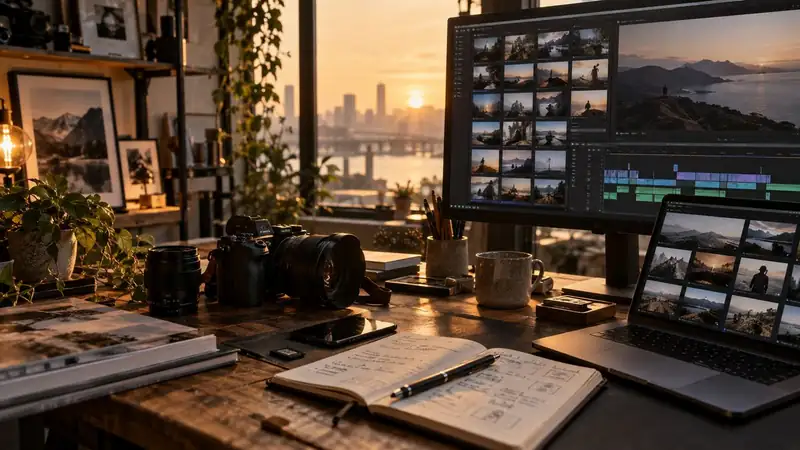
I have spent a lot of years looking at the world through cameras.
Photography came first. Video became another way to tell the story. Over time, both of them changed the way I think about content far beyond photography or filmmaking.
The biggest lesson is probably the simplest one.
Better equipment can improve the technical quality of what you make.
It cannot decide what is worth showing.
That part still belongs to you.
The Camera Forces You to Decide What Matters
A camera creates a boundary.
The world continues in every direction, but the frame does not. The moment you point the lens somewhere, you are deciding that this part matters more than everything happening outside the edges.
That decision is the beginning of storytelling.
It does not matter whether I am photographing a city, shooting food, documenting a trip, recording an investigation or creating something for a marketing project. The first real question is not which camera setting I should use.
It is: what am I trying to show?
That sounds obvious until you look at how much content is created without a clear answer.
A camera can record everything in front of it.
Good content usually comes from choosing less.
More Information Does Not Automatically Make a Better Story
One of the easiest mistakes in content is assuming that more equals better.
More footage. More photos. More details. More words. More graphics. More features.
Sometimes all of that is useful.
Sometimes it is simply more material for the audience to work through before they find the part that matters.
Photography teaches this quickly because clutter is visible.
A strong photo often becomes stronger when unnecessary elements disappear from the frame. Video works the same way in time instead of space. The edit improves when the pieces that are technically fine but emotionally unnecessary stop competing with the story.
I think websites and articles work the same way.
The goal is not to prove how much material you collected.
The goal is to make the important material easier to experience.
Experience Is Hard to Fake
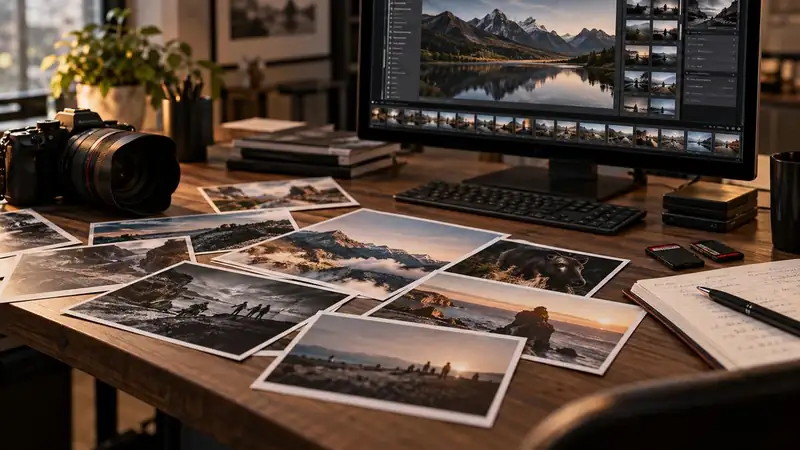
One reason I still care so much about original photography and video is that experience leaves evidence.
You notice different things when you were actually there.
You remember what happened before the photo. You know what was outside the frame. You understand why a moment mattered, what surprised you and what the place felt like when the camera was not recording.
That context changes how you tell the story later.
AI can help me research, organize and develop content. It can help me explore visual ideas. It can even create imagery when original photography is not the right tool.
But there is still a difference between describing an experience and having one.
The more AI-generated material fills the internet, the more valuable I think genuine observation becomes.
It does not have to be dramatic.
Sometimes the thing that makes content useful is simply that somebody paid attention.
Composition Exists Outside Photography
Photography taught me to think about where the eye goes first.
What is the focal point?
What is distracting?
Is there enough space?
Does the image have balance?
Those questions did not stay inside the camera.
I use the same instincts when I build a website, design an ad, arrange products on a page, choose a hero image or decide how much text belongs in one section.
Composition is just hierarchy made visible.
Something needs to matter first. Something else can support it. The rest should either help the experience or get out of the way.
That does not mean every design should be minimal.
It means every element should earn the attention it asks for.
Expensive Gear Cannot Rescue a Boring Idea
I love gear.
I enjoy cameras, lenses, lighting, computers, audio equipment and the technical side of production. I can happily spend too much time comparing equipment.
But years of using all of it have made one thing very clear.
The audience does not care what camera you used if the thing you pointed it at is not interesting.
Better gear can give you more flexibility. It can improve low-light performance, audio quality, focus, dynamic range or the speed of the workflow.
Those things matter.
They are still supporting decisions.
A technically perfect image of nothing interesting is still an image of nothing interesting.
A simple piece of content with a real point can outperform something much more polished because people understand why they should care.
That is a useful reminder in marketing too. Production value is not the same thing as an idea.

Editing Is Where the Story Usually Appears
When you are shooting, you collect possibilities.
Editing is where you decide what the experience actually becomes.
That is true in photography when I choose one frame from a sequence.
It is true in video when hours of material become a few minutes.
It is true in writing when the first draft contains everything I thought I needed to say and the better version keeps only what serves the idea.
Editing is not just cleanup.
It is authorship.
You are deciding what the audience sees, what order they see it in, what gets emphasized and what disappears.
That is why I do not think faster content creation automatically produces better content.
Speed can help you collect and explore.
The edit is still where judgment shows up.
Creating Better Content Usually Starts Before You Hit Record
The best shoots are usually easier because something was clear before the camera came out.
I knew what I was looking for.
I understood the subject.
I had some idea of the story or the question.
That does not mean everything needs to be scripted. Some of my favorite content comes from discovering something unexpected.
Preparation does not eliminate discovery.
It gives you enough awareness to recognize the discovery when it happens.
That is the lesson I carry into almost every kind of content now.
Know why you are making it.
Pay attention while you are there.
Choose what matters.
Edit honestly.
Use the tools to support the idea instead of hoping the tools will create one for you.
After years of photography and video, I still enjoy the technical side. I still like better cameras, better lenses and better editing tools.
But the content I care about most is rarely memorable because of a specification.
It is memorable because somebody noticed something worth sharing and made a clear decision about how to show it.