
Video
Why Pepper Feels Like a Dream About Growing, Breaking, and Becoming Something Else
Pepper starts with pollination and quickly becomes a surreal study of growth, dependence, and transformation.
Load the YouTube player to watch here. YouTube receives technical information when its player loads. This does not enable this site's analytics or marketing tracking.
Watch on YouTube ↗Pepper opens with an image that feels simple for a split second, and then the weirdness starts piling up. A tree-like figure, a pollination idea, and a body that seems halfway between human and plant set the tone immediately. From there, the short keeps stretching into something more symbolic than literal, where each new image feels less like plot and more like another layer of meaning.
What makes it stick is the way it refuses to settle into one reading. It can feel like a surreal biology lesson, a nightmare about being changed by nature, or a visual poem about what happens when life stops belonging neatly to a single form.
The opening frames plant life and human life as one system
The first striking idea in Pepper is the blending of human and plant imagery. That tree-side figure and the drone-like pollination moment suggest a world where bodies are not separate from nature but part of the same process. Instead of treating growth as something peaceful or decorative, the video makes it feel invasive, mechanical, and alive all at once.
That matters because it sets up the whole piece as a transformation story, even if no one ever explains what is transforming into what. The imagery suggests dependence, fertility, and circulation. Something is being carried, transferred, and altered.
The pepper itself becomes a symbol, not just an object
The pepper motif is the kind of image that can read as ordinary at first, but here it takes on a heavier role. Once it appears, it starts to feel like a trigger for the rest of the sequence. The red-and-white palette around it gives the video a strange intensity, like the color is doing narrative work on its own.
That’s part of why the short feels dreamlike. In dreams, a single object can suddenly carry the whole emotional load of a scene. Pepper seems to operate that way. It is there as a visual anchor, but it also feels like it represents heat, nourishment, pain, seed, flesh, or all of those at once.
The body imagery turns the short inward
As the imagery becomes more unsettling, the focus shifts from plants to internal life: organs, a heart, a brain, and body-like forms that seem to imply survival or dependence. That change gives the piece a different emotional texture. It stops being only about growth in the natural world and starts feeling like a meditation on what keeps a body going.
Those images can read in a few directions. They might suggest nourishment, as if the body is being fed by something external. They might suggest fragility, with life reduced to its essential parts. Or they might point to the idea that transformation is always physical first, even when it feels spiritual or symbolic.
The unsettling part is that none of those meanings cancel the others out. Pepper seems designed to hold them together.
The shifting colors make the experience feel unstable
The movement from red and white into blue gives the short another layer of unease. Color changes like that can signal mood shifts, bodily states, or even a transition between life and something beyond it. In Pepper, the palette change feels less like a stylistic flourish and more like a signal that the world itself is mutating.
That instability is what keeps the short from becoming too easy to decode. Instead of building toward a clean explanation, it keeps changing temperature. The red can suggest flesh, heat, and urgency. The white can suggest emptiness, exposure, or medical sterility. The blue adds distance, coolness, or even a kind of afterlife calm.
The ending leaves room for rebirth, death, or both
By the time the flower-like transformation arrives at the end, Pepper has already moved so far from normal logic that the final image feels almost inevitable. It reads like completion, but not closure. The short seems to be pointing at a cycle rather than a finish line.
That’s why the strongest interpretations tend to circle around rebirth, death, and inner change. The sequence could be read as a body breaking down into another form. It could be a vision or hallucination. It could even be a kind of return to nature, where the human and the plant were never separate in the first place.
What keeps the piece compelling is that it leaves all of those readings open. Pepper doesn’t hand over a neat answer. It asks you to sit with the sensation of becoming something else, even when that process looks strange, uncomfortable, or beautiful in a way you can’t quite name.
Watch the original video on YouTube ↗
Paranormal Unknown
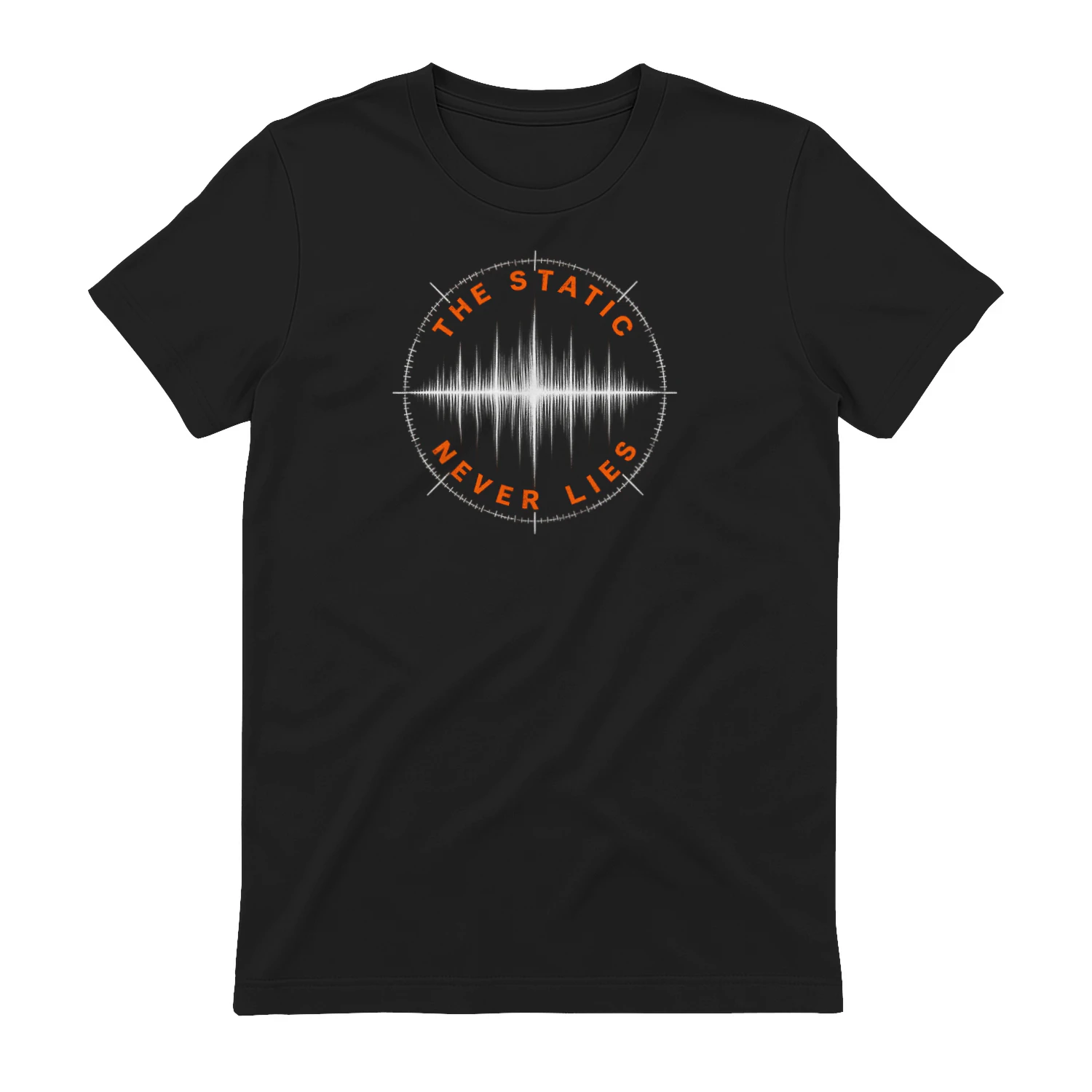
The Static Never Lies Circular Waveform
A large white waveform dominates a circular instrument-style emblem with the slogan wrapped around its edge. It feels equal parts field equipment, evidence marker, and paranormal insignia.