
Video
A Rough Opening, Then a Strong Finish: Melvin Maya on The Big Push’s ‘House of the Rising Sun’ Cover
Melvin Maya’s reaction to Gorran and Romain’s cover is built around one simple arc: a familiar song, a hesitant opening, and a performance that tightens up enough to win him over.
Why this performance sits inside the Reniverse
The direct answer is that Melvin Maya approaches this video as part of his “Reniverse” playlist, which means the cover is not just another reaction clip to him. He places Gorran and Romain inside the wider orbit of artists connected to Ren and The Big Push, and that framing gives the reaction a built-in context before the song even gets going. This is not a blind first listen. It is a continuation of a lane he already follows.
That matters because the video is shaped by familiarity in two ways. First, Melvin already knows the song itself, calling “House of the Rising Sun” one of his favorites. Second, he knows enough about the people performing it to expect a certain standard, especially from Gorran’s vocals. So the reaction starts with anticipation, not uncertainty.
He also identifies the performance source clearly: Brighton Beach busking. That detail matters in his setup because he treats the channel as a place where he may find more artists to explore, as long as the video does not trigger a copyright issue. In other words, he is not only reacting to one song; he is also evaluating a potential path for future reactions.
A familiar song, but not a predictable start
What stands out most in the first stretch is that Melvin does not pretend the performance begins perfectly. He hears a rough opening and says so plainly. His first impression is that Gorran sounds a little off or momentarily unsettled, even though he usually expects stronger vocals from him. That kind of honesty gives the reaction its shape: this is not automatic praise, and it is not dismissal either.
Because the song is so familiar, the opening carries extra weight. A well-known cover invites comparison immediately, and Melvin seems to be listening for confidence, tone, and control. At first, he hears hesitation. He describes it as if the singer needs a beat to get fully comfortable, and the reaction becomes a test of whether the performance can recover.
The song choice also gives the video a built-in tension. “House of the Rising Sun” is recognizable enough that any wobble is easy to notice, but familiar enough that a strong interpretation can still land even if the first phrases are imperfect. Melvin’s response suggests that he is measuring the performance against that standard while giving it room to settle.
When the vocals settle in
The turning point in the reaction is simple: the vocals come together. Melvin notices that Gorran starts sounding more settled and more confident as the performance continues. He even revises his first impression in real time, moving from “rough start” to a much more positive assessment once the voice steadies.
That shift is the heart of the video. Melvin is not judging the cover by its weakest moment. He is watching to see whether the musicians can recover from it. Once he hears that recovery, his tone changes. He says the vocals are now really working, and he repeats that point with emphasis. The performance, in his view, improves enough that the early stumble stops defining the whole clip.
Romain and Gorran’s cover appears to win him over because the song stops feeling tentative. The delivery becomes more convincing, and Melvin sounds relieved that the performance finds its footing. The reaction does not pretend the opening never happened; instead, it treats the improvement as the story. That makes the video feel less like a review of technical perfection and more like a reaction to a live moment where momentum matters.
He ends up summing it up in practical terms: the performance had a rough start, but the pair pulled it together. That is the most accurate way to describe his final judgment. It is not a dramatic verdict, just a grounded one.
Why the setting caught Melvin’s attention
Melvin also spends a little time on the visual side of the clip, especially the upside-down house in the background. He says he noticed it while browsing the channel and wondered what it was doing there. His question is not rhetorical. He wants to know whether it is an art installation, some kind of awareness piece, or simply a playful architectural choice.
That curiosity says something important about how he watches reaction content. He is not only listening for performance quality. He is also reading the setting for clues. The upside-down house stands out because it is unusual enough to become part of the memory of the video, even if it is not the main subject. Melvin acknowledges that directly: it is distinctive, it looks cool, and it makes the video easier to remember.
He does not claim to know its meaning. He simply notes that it adds character to the performance backdrop. That restraint is useful. Rather than inventing a story around the house, he leaves the question open and lets the location remain a point of curiosity.
What the reaction says about the Big Push connection
At the center of this reaction is a familiar pattern in Melvin’s coverage of The Big Push and related artists: he enjoys following the broader network, but he still expects each performance to prove itself on its own terms. This cover does that. Even with a shaky beginning, it earns a positive response because the voices settle and the song lands where it should.
The reaction also shows why he keeps this material in a dedicated playlist. He is not just collecting clips; he is tracing a musical circle around Ren, The Big Push, and the people connected to them. That gives the viewing experience a sense of continuity. A single cover becomes part of a larger map.
For viewers, the appeal is straightforward. If you want a sense of how Melvin Maya responds to a live cover that starts unevenly and then recovers, this is exactly that kind of watch. He is open about the rough patch, but he is equally open about the fact that the performance won him over by the end.
In the end, the reaction is less about declaring the cover flawless than about noticing how a performance can gather itself after a hesitant opening. That is the part Melvin remembers most: not perfection, but the moment the song finds its shape.
Watch the original video on YouTube ↗
All About The Life
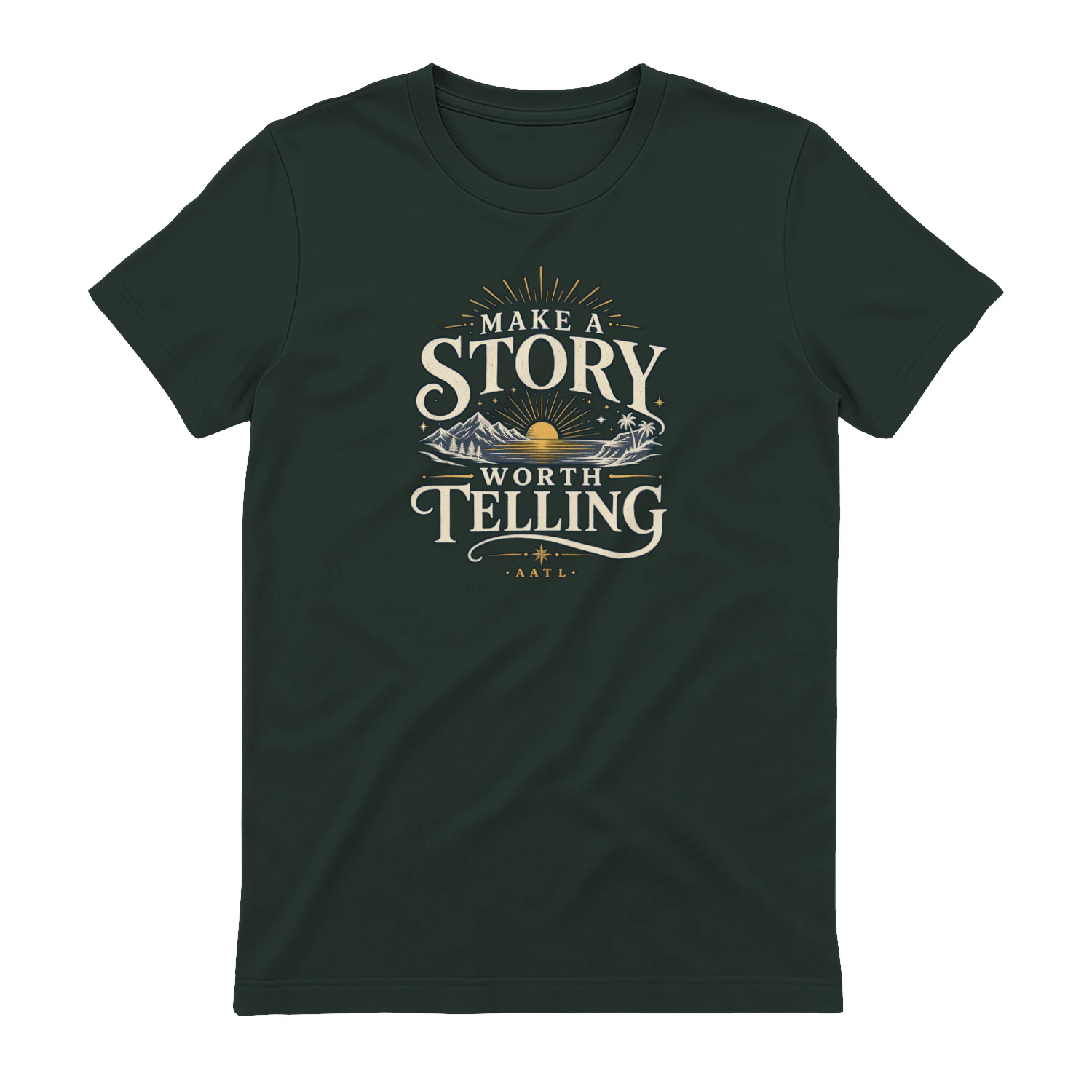
Make A Story Worth Telling
A scenic vintage-inspired design that encourages you to “Make A Story Worth Telling.” Mountains, water, sunset, and tropical details give it an adventurous feel that’s perfect for travelers, explorers, and anyone who wants a life filled with moments worth remembering.