
Video
Argentina in Five Minutes Packs Geography, Culture, and Icons Into a Fast Tour
Melvin Maya’s reaction to a five-minute Argentina overview lands on the same thing the video is built around: a country that feels huge even when it is compressed into a short, orderly primer.
A five-minute survey that still leaves room to notice things
The clearest answer to what this video does is simple: it turns Argentina into a compact primer without losing the sense that the country is layered. Melvin Maya’s reaction shows that the format works because the video keeps shifting between geography, history, landmarks, wildlife, and well-known figures. That balance gives the clip shape. It is not trying to be exhaustive. It is trying to be readable, and Melvin responds to that pace with the kind of curiosity that makes a short overview feel bigger than its runtime.
He also brings a personal angle into the reaction early, mentioning a childhood friend from Buenos Aires and linking the video to memories of Argentinian food and culture. That detail matters because it keeps the feature from becoming a detached lesson. Melvin is not just watching a country profile. He is watching a country he already connects to, at least through people and memory, and that gives the reaction a warmer center.
From Buenos Aires to Patagonia: the country’s map in broad strokes
The video starts where many country overviews start: with geography. Argentina is described as sitting in the southern part of South America, bordered by Chile, Bolivia, Paraguay, Brazil, Uruguay, and the Atlantic Ocean. The country is also framed as a place with a large population and a strong immigrant identity, which the narrator refers to as a kind of melting pot.
That opening matters because it sets up the rest of the video as a map-first tour. Before any landmark or cultural detail appears, the viewer gets a sense of scale and location. Argentina is then grouped into four large geographic regions: the Andes, the north, the Pampas, and Patagonia. It is a simple structure, but it helps the country feel legible.
Melvin’s reaction follows that same logic. He does not get stuck on one fact for too long. Instead, he keeps moving with the video as it moves, which is part of why the format feels efficient rather than rushed. By the time Buenos Aires comes up, the viewer already has a mental outline of the country.
Buenos Aires and Córdoba give the overview some landmarks to hold onto
The video’s cultural map becomes more concrete when it reaches Buenos Aires. The city is presented as a major tourist destination with preserved European architecture and a lively cultural atmosphere. The narration also points to Plaza de Mayo as a key square and foundational site, and to the pink presidential palace known as Casa Rosada.
Those details give Buenos Aires a dual identity in the video: it is both historic and symbolic, both architectural and political. That is useful in a short feature because it keeps the city from being reduced to a name alone.
Córdoba appears next as another important city, and the video mentions La Mezquita as a notable site. The phrasing in the clip is a little compressed, but the intended effect is clear: Argentina is not being represented by one capital alone. There is a broader urban and cultural network behind the country’s most recognizable city.
Melvin’s reaction does not over-explain these stops, and that restraint helps. He lets the video’s sequence do the work, which makes the whole thing feel like a guided pass through reference points rather than a list of random facts.
The cultural details that made Melvin pause
The most striking cultural point in the video is Tango. The narration describes it as an Argentine art form that originated in Buenos Aires and became one of the world’s best-known dances. It is also explained as an improvisational dance often performed in close embrace.
Melvin clearly notices this part. He reacts to the origin story with surprise, and that surprise is one of the most relatable moments in the clip. For many viewers, Tango may feel familiar as a global symbol, but not necessarily as something rooted so specifically in Buenos Aires. The video uses that gap well. It connects a widely recognized dance to a place and a social history shaped by European immigrants, Indigenous Argentinians, working-class communities, and former slaves.
That is also where the video becomes more than a sightseeing list. Tango is not presented as a decorative export. It is framed as a cultural force that reflects the country’s social mix. That gives the dance more weight, and it gives Melvin something to respond to beyond simple recognition.
Wildlife, glaciers, and the scale of Argentina’s landscapes
The clip also spends a good amount of time on nature, and this is where Melvin’s reactions become especially engaged. Argentina is described as one of the most biodiverse countries in the world, with multiple continental and marine zones plus the Antarctic region. The video then narrows in on specific natural features: more than 300 glaciers, the Perito Moreno Glacier, and Iguazu Falls.
Melvin reacts strongly to the glacier section because it changes the mental image of Argentina. For someone who does not expect ice fields and large glaciers in that part of the world, that information lands as a surprise. The video uses the Perito Moreno Glacier as a visual example, and Melvin comments on how unexpected it is to associate Argentina with dense ice and snow.
Iguazu Falls has a different effect. It comes across as one of the most visually dramatic moments in the clip, even through the grainy footage Melvin mentions. The falls are described as a huge system of cascades and drops along the border with Brazil. In a short video, that kind of natural landmark helps the country feel enormous and varied, not just geographically but visually.
The animal section follows the same pattern. Patagonia’s coast is linked to elephant seals, penguins, and sea lions, while the north is associated with cats such as cougars, jaguars, and ocelots. The video also mentions the Andean flamingo. Melvin’s attention to the ocelot stands out because he latches onto the animal’s reputation as a successful hunter, even as he admits he may be mixing up the exact details. That uncertainty is part of the reaction’s appeal: he is trying to keep up with a fast information stream without pretending to know more than he does.
Why the names at the end matter
The closing section of the video shifts from places and species to people. It names Evita, Diego Maradona, Pope Francis, and Jorge Luis Borges as major Argentine figures.
That ending works because it broadens the picture one last time. By the time those names appear, the video has already moved through land, cities, history, and culture. The final list acts like a reminder that Argentina’s global footprint is not limited to scenery or tourism. It extends into politics, sport, religion, and literature.
Melvin’s reaction to this section is measured, but the effect is clear: the video leaves him with a sense that Argentina’s identity cannot be reduced to one theme. It has icons in multiple directions, and they all sit inside the same national story.
A short video with a surprisingly wide net
What makes this reaction worth watching is not just that Melvin learns a few new facts. It is that the five-minute format forces the video to organize Argentina cleanly, and Melvin seems to appreciate that structure. He remarks on how much information is packed in, and that becomes the main takeaway. A short overview can still feel complete if it chooses the right categories and moves with enough discipline.
That is also what the reaction adds. Melvin is not only agreeing with the facts; he is noticing where the video matches or changes his own expectations. He is surprised by Tango’s origins, glaciers in Argentina, and the scale of Iguazu Falls. He also grounds the whole experience in personal memory through his Buenos Aires connection, which keeps the feature from feeling abstract.
Watch the original video on YouTube ↗
All About The Life
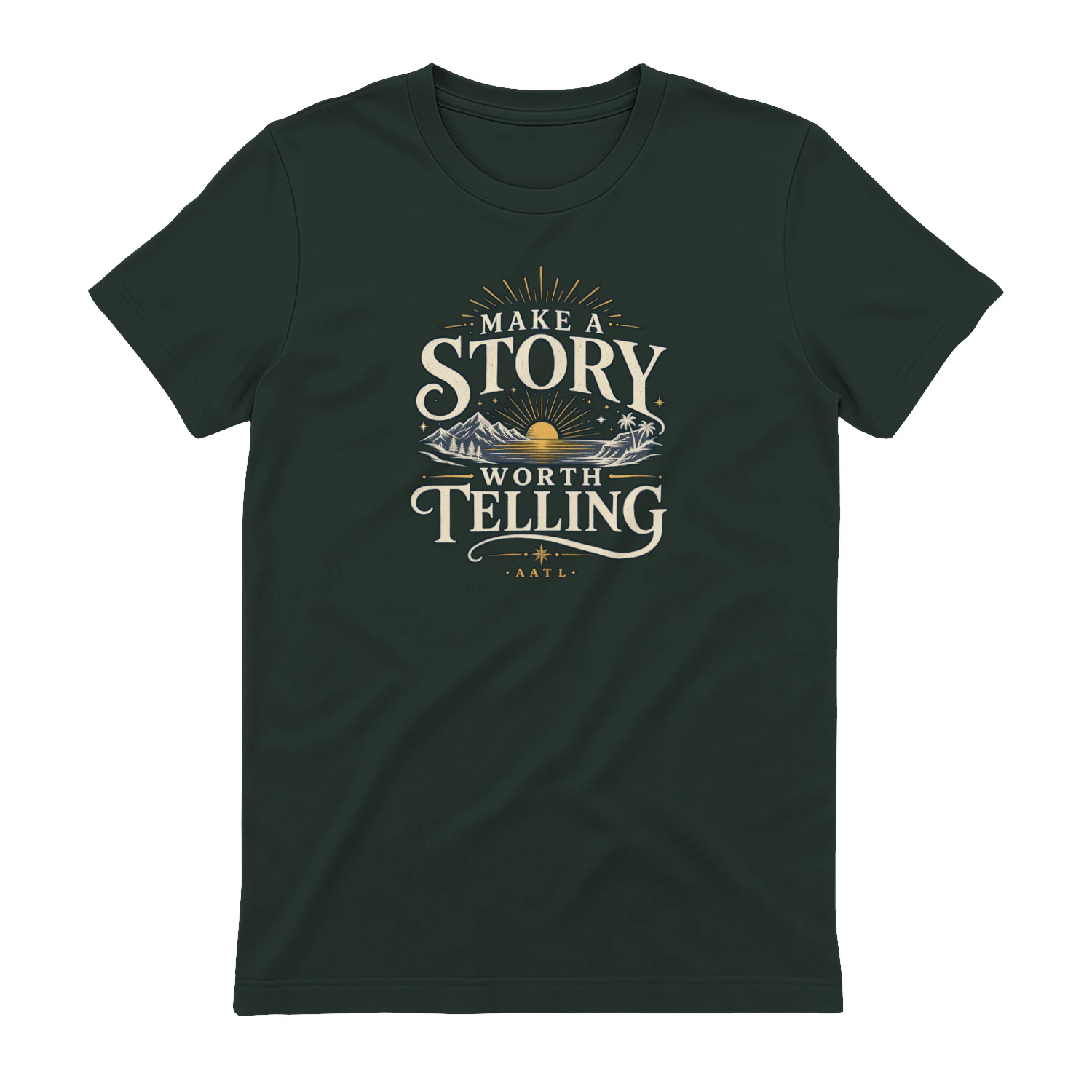
Make A Story Worth Telling
A scenic vintage-inspired design that encourages you to “Make A Story Worth Telling.” Mountains, water, sunset, and tropical details give it an adventurous feel that’s perfect for travelers, explorers, and anyone who wants a life filled with moments worth remembering.