
Video
Harry Mack Turns a Lookalike Prompt Into a Fast, Funny Freestyle
Melvin Maya’s reaction lands on the same thing the freestyle is built around: recognition. Harry Mack takes a doppelganger prompt, locks onto Adam Scott, and keeps finding new ways to spin the idea without losing the joke.
What Harry Mack is doing with the doppelganger prompt
The direct answer is simple: Harry Mack takes a celebrity lookalike idea and builds a freestyle around it in real time. In Melvin Maya’s reaction, that is the whole appeal. The prompt is funny before Mack even starts, because the setup already invites the audience to think about resemblance, image, and who a person might be mistaken for. Once Mack begins, he does what he is known for in these reaction clips: he keeps the rhyme scheme moving while squeezing as much material as he can out of a single concept.
Melvin does not treat the performance like a novelty that only works because of one punchline. He seems to appreciate the way Mack keeps returning to the same idea from different angles. That is what makes the freestyle feel active rather than repetitive. The joke is not just that someone looks like Adam Scott. The joke is how much mileage Mack gets out of the comparison.
Why Adam Scott becomes the center of the freestyle
Once Adam Scott enters the piece, the whole freestyle snaps into focus. Mack identifies him quickly, leans into the resemblance, and keeps building on the idea as if the comparison itself is the engine of the song. Melvin calls attention to that inventiveness, and that word fits the reaction well. The performance is not only about sounding good; it is about noticing a visual similarity and turning it into a sequence of bars that keeps paying off.
Melvin also points out that people in the chat were likely checking Adam Scott’s photo as the freestyle unfolded. That observation matters because it shows how these performances work on two levels at once. Mack is rapping, but he is also steering the audience into a shared moment of recognition. The viewers are not just hearing the rhyme; they are verifying the reference in real time.
That is part of why the clip feels so playful. The subject is light, but the execution is still sharp. Mack does not need a heavy topic to make the moment move. He just needs a prompt that lets him be quick, observant, and a little bit mischievous.
Melvin Maya’s reaction: the hook, the back-and-forth, and the personal connection
Melvin says plainly that he liked most of the freestyle, even though the hook did not land as strongly for him. That kind of comment gives the feature a useful balance: this is not blind praise, and it is not a teardown either. He hears the performance as stronger in its verses and in the way Mack stretches the concept toward the end.
What stands out most to Melvin is the conversational feel of the final stretch. He likes that Mack makes it sound like he is talking back and forth with the doppelganger instead of just naming the resemblance once and moving on. That shift gives the freestyle a little more shape. It stops being only a string of comparisons and becomes a scene, even if that scene is imaginary.
Melvin then turns the subject inward. He explains that over the years, people have told him he looks like different celebrities depending on his hair, facial hair, and other changes. That personal note does not hijack the reaction; it strengthens it. It gives the viewer a reason to understand why the doppelganger theme hit him at all. He is not just reacting to Mack’s joke. He is reacting from experience.
He also keeps the note grounded. He does not name the people he has been compared with, and he makes clear that a side-by-side comparison now would not necessarily land the same way because both he and those lookalikes have changed over time. That honesty keeps the commentary from sounding self-congratulatory. It reads as a lived observation about how identity and resemblance can shift.
Why lookalike jokes land so well in reaction content
There is a reason this kind of freestyle works so well in a reaction format. Lookalike jokes are immediate. They do not need a lot of explanation, but they do invite participation. As soon as Mack says “doppelganger,” the audience is already deciding whether the comparison fits.
That same quality gives Melvin’s reaction its shape. He is not only listening for lyric density or rhyme control. He is also watching how the crowd and the chat respond to a bit that is easy to grasp but hard to sustain without losing energy. Mack keeps it moving by staying committed to the premise. Melvin responds by naming what worked: the inventiveness, the playful tension, and the way the ending opens up into that imagined exchange.
It also helps that the subject is recognizable without needing a long setup. A celebrity resemblance is one of the simplest ways to create instant connection in online video. It gives the performer a shared reference point and gives the viewer a small question to answer for themselves: who does this person look like?
That is exactly where Melvin’s own experience fits in. He closes by inviting viewers to comment with any celebrity, musician, athlete, or other person they think he resembles. In other words, the video does not end by sealing the joke. It ends by extending it outward.
The reaction is really about recognition
What makes this feature worth watching is not just that Harry Mack is fast, though he is. It is that the freestyle is built on recognition in both senses of the word: recognizing Adam Scott and recognizing the social habit of comparing people to someone else. Melvin Maya picks up on both.
His reaction works because he stays close to the actual experience of the video. He notes the part he liked most, the part he liked less, and the way the ending clicked when Mack started making it feel conversational. He also brings in a personal parallel that makes the whole thing feel less abstract. That combination gives the piece its shape without turning it into a recap.
For viewers who like Harry Mack, the clip is another example of how a simple prompt can become a full freestyle moment. For viewers who follow Melvin Maya, it is also a reminder that reaction videos are strongest when the host has a real stake in what is happening on screen.
Watch the original video on YouTube ↗
All About The Life
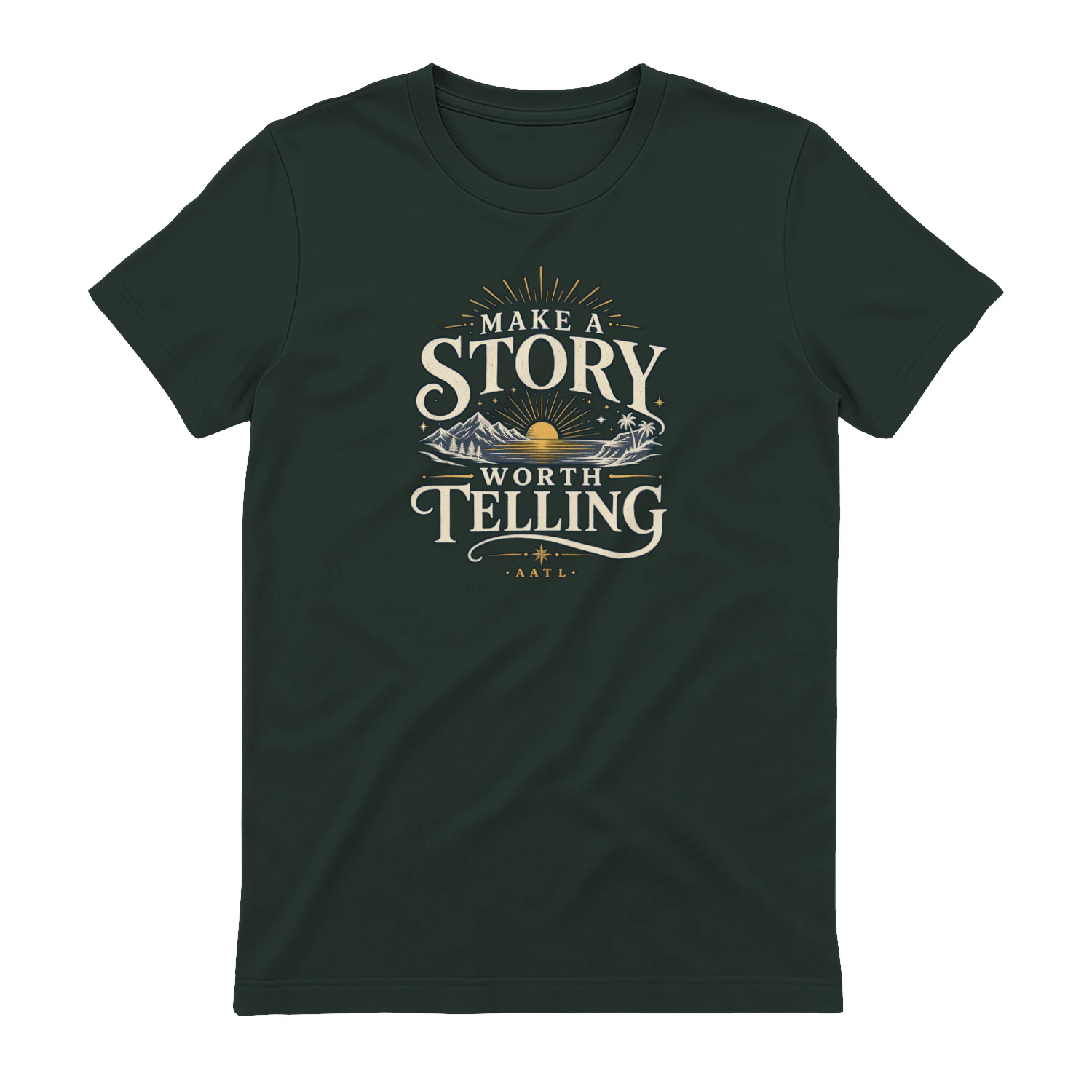
Make A Story Worth Telling
A scenic vintage-inspired design that encourages you to “Make A Story Worth Telling.” Mountains, water, sunset, and tropical details give it an adventurous feel that’s perfect for travelers, explorers, and anyone who wants a life filled with moments worth remembering.