
Video
Harry Mack Turns Three Random Words Into a Sharper Reaction Moment Than the Setup Suggests
Melvin Maya reacts to a Harry Mack Omegle freestyle built from Guantanamo Bay, table, and turtle, and the appeal is in how fast the room goes from casual to stunned.
Load the YouTube player to watch here. YouTube receives technical information when its player loads. This does not enable this site's analytics or marketing tracking.
Watch on YouTube ↗Why this reaction lands quickly
Melvin Maya’s latest Harry Mack reaction does not waste time setting up the point. The video opens with a familiar kind of creator energy: he knows he is back for another freestyle reaction, and he already expects Harry Mack to make the moment feel bigger than the random setup suggests. That expectation turns out to be right. The core appeal of the clip is simple enough to state early: Harry Mack takes three unrelated prompts and turns them into a fast-moving performance that catches the other person off guard and gives Melvin plenty to respond to.
What makes the reaction worth watching is not just that the freestyle is good. It is that the exchange starts in an almost comic way. The other person is surprised by the camera quality, asks what kind of setup it is, and then gets pulled into the usual Harry Mack format. That small stretch matters because it gives the video a real human texture before the rhymes begin. The reaction feels less like a distant commentary track and more like Melvin is watching the room change in real time.
How the random-word setup shapes the freestyle
Once the prompt arrives, the freestyle has a clear structure to lean on. The words are Guantanamo Bay, table, and turtle. Melvin spends part of the video reacting to how Harry Mack handles the first prompt, especially because the phrase itself becomes a challenge. Rather than treating it like a throwaway keyword, Harry Mack works with the shape and sound of it, folding it into the verse as if the phrase itself were already part of the rhythm.
That is where the clip starts to separate from a basic request-and-response exchange. Harry Mack is not just rhyming around the words. He is using them as anchors for movement, shifting from one image to the next while keeping the flow intact. Melvin notices how quickly the performance gains momentum once the first phrase lands. The freestyle does not feel stitched together from isolated ideas; it feels like the words are giving Harry Mack a path to build on.
The same thing happens with table. The word looks ordinary at first, but the freestyle gives it more room than that. Harry Mack uses it in a few different directions, turning it into part of a larger chain of references. Melvin’s reaction tracks that shift: the interest is not in the table by itself, but in the way it becomes a piece of the performance rather than a random object sitting outside it.
Guantanamo Bay, table, and turtle as a live test
The best way to understand the video is to see the three prompts as a live test of range. Guantanamo Bay asks Harry Mack to do something difficult with a phrase that is already heavy with association. Table gives him something ordinary. Turtle opens the door to another round of wordplay, including a ninja turtle angle that the reaction later calls out.
That combination is part of why Melvin keeps coming back to Harry Mack clips. The challenge is never only about rhyme. It is about control: Can the performer stay coherent while switching between a loaded location, a common household object, and an animal that easily slides into pop-culture reference? In this video, the answer is yes, and the speed of the switch is what makes the exchange fun to watch.
Melvin also reacts to the way Harry Mack keeps the tone confident without losing the playful edge. He does not frame the freestyle as stiff or overly polished. Instead, he treats it as a display of skill that still leaves room for spontaneity. That balance is a big part of the appeal. The viewer gets to see someone create in the moment without flattening the performance into a technical exercise.
The moment the viewer realizes what is happening
A major part of the reaction is the other person’s visible surprise. He does not come into the exchange expecting a full freestyle demonstration. Melvin points out that the setup works partly because the participant seems to realize, in real time, that the conversation has shifted into something much more impressive than a casual chat.
That surprise gives the video its best reaction material. There is a clear before-and-after: before the bars, the exchange is playful and curious; after the bars start landing, the tone changes to disbelief and admiration. Melvin’s commentary leans into that turn. He is not just reacting to Harry Mack’s delivery; he is also reacting to the moment the other person understands what is happening.
This is why the video feels satisfying even if you already know Harry Mack’s reputation. The fun is not only in hearing a skilled freestyle. It is in watching someone encounter that skill without being prepared for it. Melvin reads that reaction well, and the result is a companion piece that mirrors the surprise in the original clip instead of flattening it.
Why the Ninja Turtle reference sticks
Near the end of the reaction, Melvin brings up the Ninja Turtle angle, and it gives the video an extra layer of resonance. He notes that Harry Mack’s turtle-related improvisation lands in a way that reminds him of another recent moment involving the Ninja Turtles cast. That connection matters because it shows how one freestyle can echo another without repeating it.
The turtle reference is not the whole point of the clip, but it is the kind of detail that makes the performance stick in memory. It gives the viewer something concrete to hold onto after the faster rhymes blur together. Melvin’s reaction benefits from that as well: by naming the connection, he turns a fleeting line into a thread that links this freestyle to a broader pattern in Harry Mack’s work.
What Melvin Maya takes from the exchange
Melvin’s takeaway is straightforward. He thinks the freestyle was strong, he enjoyed the reaction on the other end of the screen, and he liked seeing how quickly Harry Mack turned a seemingly random prompt list into something that felt intentional. The performance works because it never loses motion. Every word becomes a doorway into the next one, and the whole clip keeps moving until the surprise has fully registered.
There is also a practical side to Melvin’s reaction. He frames the video as the kind of clip that reminds viewers why Harry Mack’s style keeps drawing attention: the setup can look casual, but the execution is anything but. That contrast is what gives the reaction its shape. Melvin is not trying to over-explain the freestyle. He is pointing to the part that matters most: the gap between what the room expected and what the performance delivered.
For viewers looking for a clean example of Harry Mack improvising under pressure, this reaction makes the case without overcomplicating it. The words are random, the responses are fast, and the resulting freestyle lands with enough precision to make the surprise feel earned.
Watch the original video on YouTube ↗
All About The Life
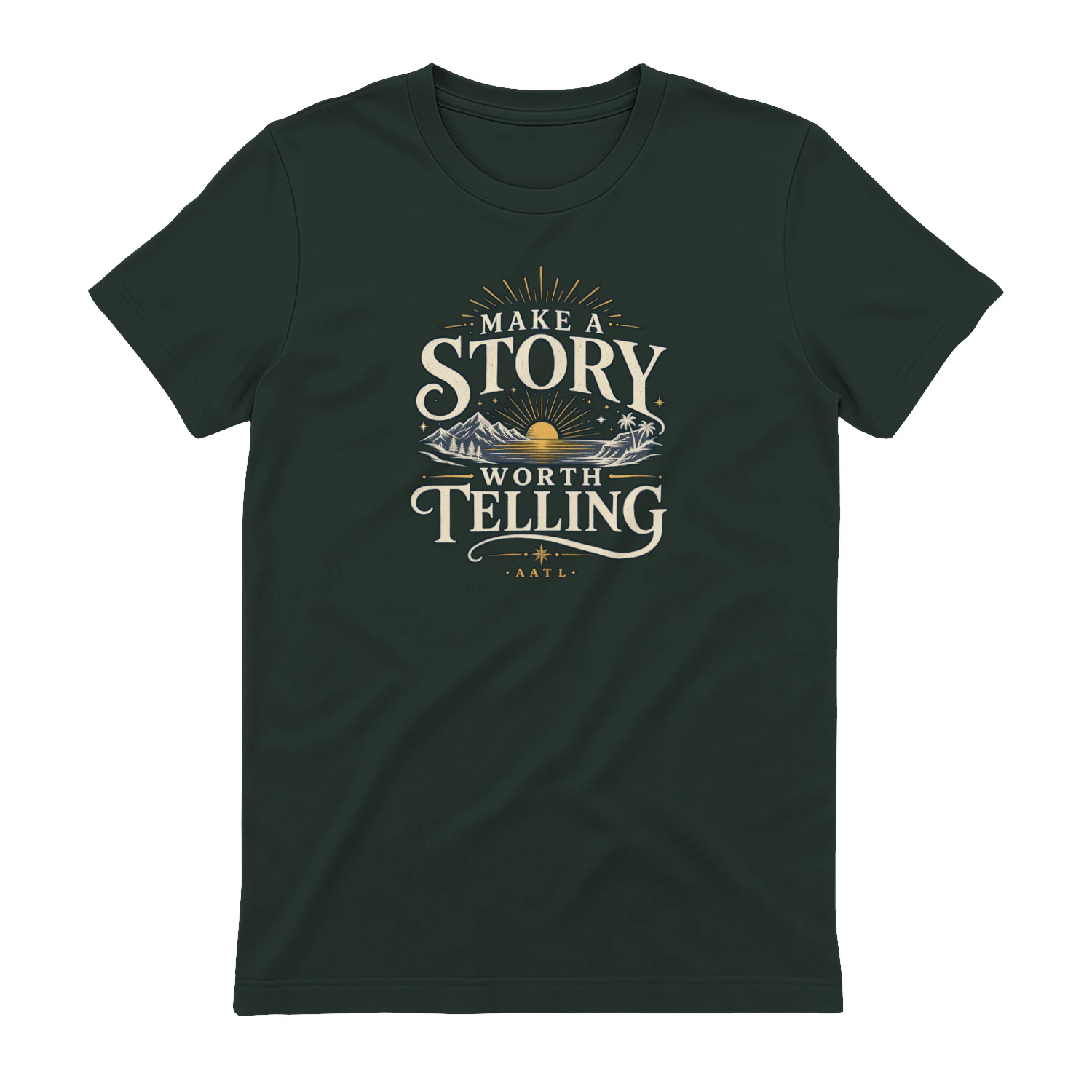
Make A Story Worth Telling
A scenic vintage-inspired design that encourages you to “Make A Story Worth Telling.” Mountains, water, sunset, and tropical details give it an adventurous feel that’s perfect for travelers, explorers, and anyone who wants a life filled with moments worth remembering.