
Video
He-Man and Skeletor Turn a Simple Puzzle Build Into a Watchable Timelapse
Melvin Maya’s puzzle timelapse keeps the focus on the image, the pace, and the satisfying logic of fitting a familiar franchise into place.
Load the YouTube player to watch here. YouTube receives technical information when its player loads. This does not enable this site's analytics or marketing tracking.
Watch on YouTube ↗What the video is actually showing
The direct answer is simple: this is a timelapse of a Mattel Masters of the Universe jigsaw puzzle build centered on He-Man and Skeletor. The video is not trying to turn the puzzle into a tutorial or a narrated story. Instead, it presents the build as a visual sequence and lets the motion do the work.
That choice matters. In a format like this, the point is not just to prove the puzzle was completed. The point is to make the completion process feel worth watching. A timelapse compresses the slower parts of the work, which leaves viewers with the part that usually gets missed: the accumulation of tiny decisions that eventually becomes a finished picture.
Why the timelapse format fits this puzzle
Puzzle videos often rely on one of two pleasures. Either you watch for the challenge, or you watch for the reveal. This video leans into the second one, but it keeps enough of the first to make the process feel active. The timelapse format turns what would normally be a long, quiet task into something with movement and momentum.
That matters especially here because the subject is recognizable. A Masters of the Universe puzzle already gives the viewer a clear visual destination. Even before the last pieces are in place, the image carries its own expectations. The timelapse works because it lets those expectations build naturally. You are not waiting for a twist. You are waiting for a familiar franchise image to resolve.
There is also a small satisfaction in the structure itself. Puzzle images depend on pattern, color, edges, and continuity. A timelapse, in turn, depends on turning many small actions into one readable sequence. The two formats fit together neatly. One is about assembling fragments; the other is about compressing them into a coherent watch.
He-Man and Skeletor as the visual hook
The puzzle’s biggest built-in advantage is its subject matter. He-Man and Skeletor are immediately readable figures, and that gives the video a strong center of gravity. Even if someone is not deeply invested in the franchise, the contrast between the hero and the villain creates a clear visual anchor.
That kind of image is especially useful in a timelapse because viewers do not need a lot of context to stay oriented. The puzzle does the job through design alone. Familiar characters reduce the amount of explanation needed and make the final image feel more complete once the pieces start locking together.
It also gives the video a faint nostalgia edge without needing to say so outright. The value here is not in listing the history of the property or explaining why it matters culturally. The value is in the recognition effect. A puzzle centered on these characters already carries memory for a lot of viewers, and the timelapse lets that memory sit quietly in the background while the image comes together.
How the music changes the mood
The transcript is mostly music, and that is important to how the video plays. Without spoken narration, the soundtrack becomes the main emotional guide. The track pushes the timelapse away from being purely mechanical and gives it a more energized, motivational tone.
That does two things at once. First, it keeps the video from feeling like a dry process clip. Second, it makes the build feel like it belongs to a larger sense of momentum. The repeated lines and chant-like energy in the audio create a steady pulse under the puzzle work. Even though the subject is a stationary object, the video still feels in motion.
This is a good example of how a creator can shape a simple visual project without overexplaining it. The music does not tell the viewer what to think about the puzzle, but it does affect how the puzzle is experienced. It gives the whole piece a more forceful attitude than a silent or purely ambient timelapse would have.
Why this kind of video works for Melvin Maya viewers
Melvin Maya’s audience has seen different kinds of creator content, but this video fits a reliable pattern: a plain-object activity becomes watchable when it is presented with a clear visual idea and a strong pace. There is no need to add a complicated premise. The appeal is in the craft of presentation.
That is why a puzzle timelapse can hold attention better than the description might suggest. It is not only about puzzles. It is about anticipation, recognition, and the satisfaction of order taking shape. The viewer gets to watch a finished image emerge from fragments, and that process is inherently readable even without commentary.
For viewers searching for jigsaw puzzle timelapse content, the video offers exactly what the format promises: a compressed build, a recognizable image, and a clean payoff. For viewers drawn to Masters of the Universe imagery, the franchise connection gives the puzzle an immediate identity. Those two interests overlap neatly here.
A small watch, but a complete one
The strength of this video is that it does not try to be bigger than it is. It is a compact record of a puzzle coming together, and the timelapse gives that process a shape. The result is simple to understand and easy to keep watching.
That simplicity is part of the appeal. A puzzle build does not need extra commentary to become interesting when the image is strong and the pacing is handled well. In this case, the combination of Mattel, He-Man, Skeletor, and the timelapse format gives the video enough identity to stand on its own.
For viewers who like seeing an image assembled piece by piece, this is the core pleasure: the slow move from scattered parts to a recognizable whole.
Watch the original video on YouTube ↗
All About The Life
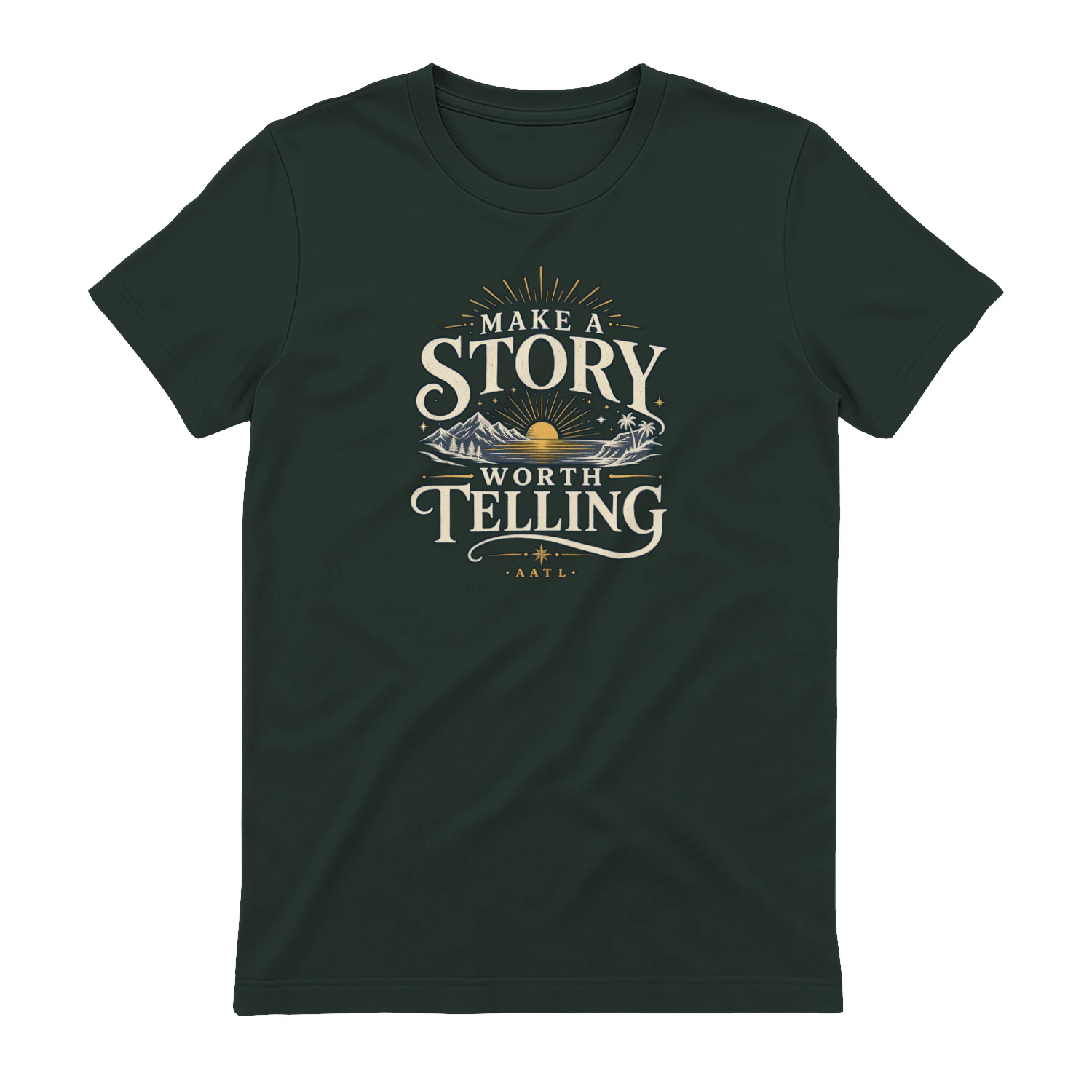
Make A Story Worth Telling
A scenic vintage-inspired design that encourages you to “Make A Story Worth Telling.” Mountains, water, sunset, and tropical details give it an adventurous feel that’s perfect for travelers, explorers, and anyone who wants a life filled with moments worth remembering.