
Video
Inside the Houston Rodeo’s Deep-Fried Dessert Test: What Held Up and What Didn’t
Melvin Maya’s reaction to Jolly’s Houston Rodeo dessert run turns into a practical guide to fried fair food: what deep frying improves, what it muddies, and why the best bite is often the one with the clearest contrast.
What the video is really testing
The direct answer is simple: this video is less about the Houston Rodeo as a rodeo and more about what happens when familiar desserts get pushed through a deep-fried filter. Melvin Maya’s reaction to Jolly’s fairground tasting is built around that idea from the start. The trip begins with the expected lineup of Texas fair food, then moves into the sweeter, heavier section of the menu: deep fried Oreos, fried ice cream, fried key lime pie, fried cheesecake, and fried s’mores.
That setup gives the video its shape. It is not just a string of bites. It becomes an argument about texture, contrast, and how much batter a dessert can tolerate before it stops feeling like itself. Melvin’s commentary keeps returning to that question, and the result is a feature about judgment as much as appetite.
Why the fried ice cream made the strongest case
If there is a standout in the video, it is the fried ice cream. Melvin treats it as the one dessert that most clearly justifies the whole idea. His reaction is immediate: the hot shell and the frozen center create a contrast that makes sense on first contact. That matters here, because so many of the other items are built around a familiar dessert being made heavier, softer, or sweeter. Fried ice cream does something cleaner. It keeps the cold interior intact while adding crispness outside.
Melvin’s response is practical rather than theatrical. He focuses on the bite, the temperature contrast, and the fact that the center stays frozen. That makes the dessert feel like it has a reason to exist beyond novelty. It is still indulgent, but it also has structure. In a video full of sugar and oil, structure becomes the rare thing that makes a dessert memorable.
Oreos and Twinkies: when familiarity helps
The deep fried Oreo gets a lot of attention because it is the most recognizable item on the table. Melvin’s reaction suggests that this kind of dessert works partly because the cookie already has a clear identity. Once it is battered and fried, the result becomes softer and richer, but not unrecognizable. The filling loosens, the coating adds warmth, and the whole thing turns into something that still reads as an Oreo even after the fry treatment.
The fried Twinkie lands in a similar zone. Melvin points out that it becomes the “ultimate” version of the snack, which is really his way of saying the dessert still feels coherent after being fried. It is not subtle, and it is not trying to be. But it holds together in a way that lets the viewer understand why it keeps showing up at fairs and rodeos.
What matters in both cases is that the base dessert is already compact. It can survive the extra batter without collapsing into something shapeless. That is part of why Melvin’s commentary keeps circling back to texture. A fried dessert does not only need sweetness; it needs a core that can endure the treatment.
When key lime pie starts fighting the batter
The key lime pie is where the video gets more complicated. Melvin’s response is mixed in a more interesting way than simple liking or disliking. He notices the acidity, the richness, and the way the fried shell changes the dessert’s balance. That is the problem: key lime pie is already defined by a specific push and pull, and adding batter changes that relationship.
In his reaction, the flavor combination becomes nearly too much. The sweetness, oiliness, and citrus sharpness start working against each other instead of in harmony. That is why this bite feels less like an upgrade and more like a transformation that may have gone too far. The pie still looks recognizably like pie, which gives it a visual joke, but the taste is where the idea becomes unstable.
Melvin’s strongest point here is that fried desserts are not automatically improved by being fried. A dessert with a strong, delicate identity can lose that identity if the coating overwhelms it. The key lime pie shows that clearly. It is one of the few items in the video where the reaction turns into analysis instead of simple pleasure.
Fried cheesecake and the problem of too much of a good thing
The fried cheesecake gets a better reception than the key lime pie, but it still belongs to the heavier side of the video. Melvin seems to appreciate it as a kind of intensified cheesecake rather than a whole new dessert. That distinction matters. He is not saying the frying creates a better dessert in any universal sense. He is saying it creates a more extreme version of what was already there.
That is also where the video’s running joke about excess starts to take hold. The food is no longer just rich; it is stacked with richness. Fried cheesecake, fried Twinkies, and fried ice cream all live in that territory. They are not designed for balance. They are designed to prove a point, and the point is usually that batter can make almost anything louder.
Why the s'mores ended the lineup on a weaker note
The fried s’mores comes at the end with the most skepticism attached. Melvin’s reaction leans into the idea that the dish loses the very textures that make s’mores appealing in the first place. A good s’more depends on contrast: graham cracker crunch, melted chocolate, and soft marshmallow. Once that combination is fried and compressed into a different form, the pieces blur together.
That is why the s’mores reads as the least convincing dessert in the lineup. It is not just that it tastes bad or good. It is that the original dessert already has a specific structure, and frying it makes that structure harder to read. Melvin’s commentary treats it as the point where the whole experiment starts to feel exhausted. By then, the fairground menu has shown its limit.
A fairground lesson in texture, not just indulgence
The most useful takeaway from the video is not “fried food is good” or “fried food is too much.” It is that fried desserts work best when they preserve a clear contrast. Fried ice cream succeeds because the hot shell and cold center still have a job to do. Oreos and Twinkies work because their compact shape helps them survive the process. Key lime pie and s’mores are harder sells because their original appeal depends on balance and texture that frying can flatten.
That is what makes Melvin’s reaction useful as a companion piece. He is not just laughing at fair food. He is identifying the point where novelty becomes flavor, and the point where flavor gives way to overload. For viewers who like reaction videos but also want a real takeaway, that is the value here: a simple fairground tasting becomes a clear guide to what deep frying changes, what it preserves, and what it erases.
Watch the original video on YouTube ↗
All About The Life
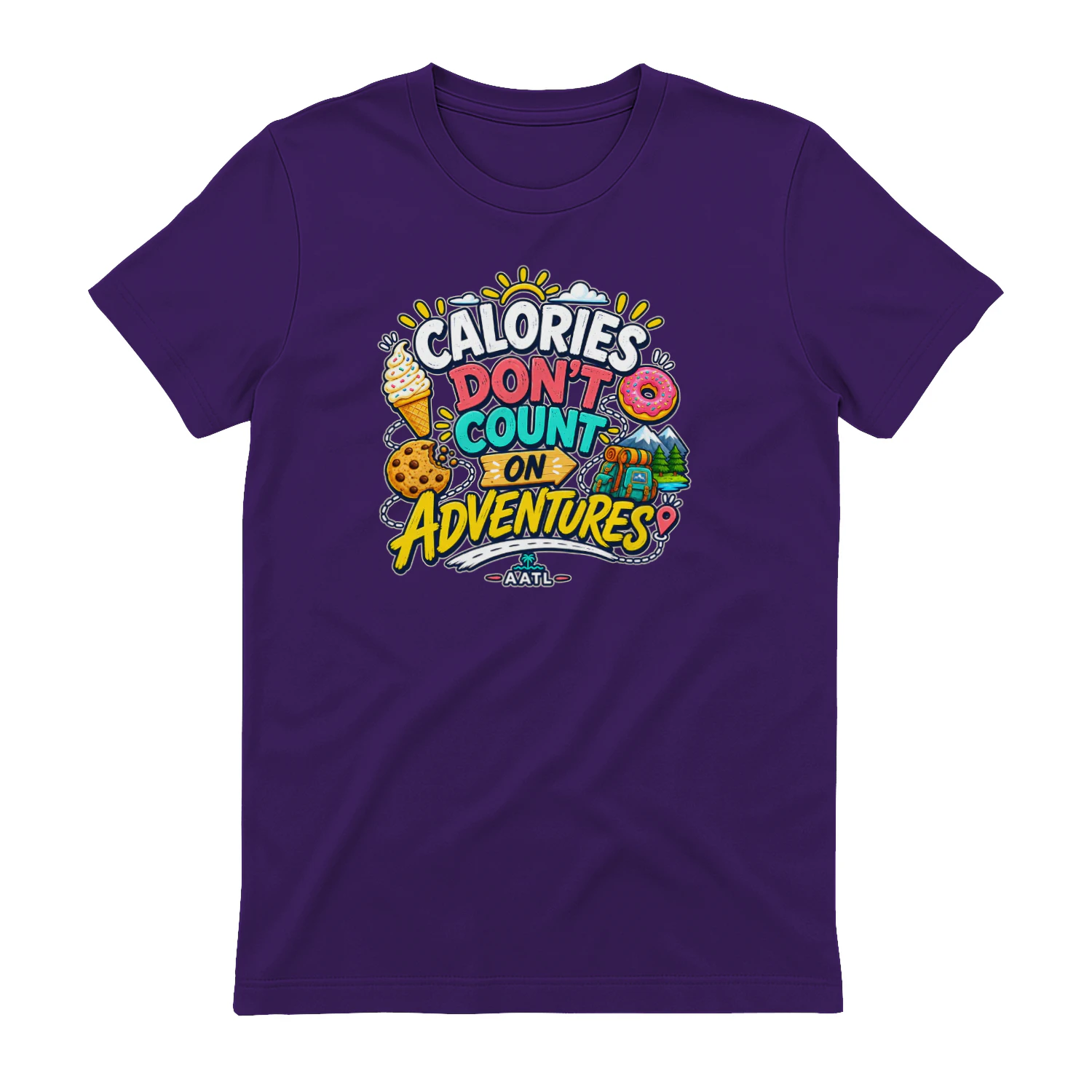
Calories Don’t Count On Adventures
A bright, playful travel design built around the unofficial rule that “Calories Don’t Count On Adventures.” With desserts, route graphics, outdoor gear, and mountain scenery, it’s perfect for road trips, vacations, food stops, and anyone who believes exploring is better with snacks.