
Video
Ireland Looks Simple on the Surface, but the Video Keeps Revealing Its Split Identity and Personality
Melvin Maya’s reaction to an Ireland culture video works best as a mix of geography lesson, cultural sampler, and personal reflection, with Dublin, Northern Ireland, and Irish traditions all pulling the conversation in different directions.
Ireland Comes Through as a Country of Contrasts
The direct answer is simple: this video is a compact introduction to Irish culture, but it lands best as a personal reaction because Melvin Maya keeps connecting the facts to lived curiosity. He is not treating Ireland like a checklist. He is listening for the details that make the country feel specific — the language, the political split, the cities, the writers, the pub culture, and the sports that sit alongside the familiar stereotypes.
That balance matters. A less interesting reaction would just repeat the facts back. Here, Melvin keeps pausing long enough to show what catches him off guard and what makes him want to know more. That gives the video a clearer center: Ireland is presented as recognizable in some ways and more complicated in others, and the reaction follows both sides at once.
The Video’s Fastest Lesson: Geography and Politics Are Bound Up Together
One of the first things the video makes clear is that Ireland is not just one simple political unit. The explanation of the island’s geography, the Republic of Ireland, Northern Ireland, and the relationship to Great Britain gives the reaction a serious backbone early on. Melvin responds as someone taking in a description that is easy to oversimplify if you only know Ireland through travel clips or holiday imagery.
That section of the video does a lot of work quickly. It explains that the island is divided, that Dublin sits in the Republic, that Belfast is the capital in the North, and that the situation between the Republic and Northern Ireland carries real tension. The reaction does not linger on policy or history beyond what the video says, but it does register the complexity. That keeps the piece from drifting into tourist gloss.
There is also a clear shift in tone when the video starts talking about population, the capital, and the island’s landscape. Ireland is described as relatively flat with mountainous coastal areas, and the visuals are tied to greenery and coastline. That combination — a politically divided island with a scenic image that is widely recognized — gives the video a strong contrast to work with.
Language, Pubs, Writers, and Sport Carry Most of the Cultural Weight
If the geography section gives the video structure, the culture section gives it texture. The “what’s the crack” and “grand” examples show how Irish speech can sound familiar and different at the same time. Melvin does not turn that into a language lesson, but he clearly notices the charm of expressions that carry local identity in a small amount of space. That is one of the video’s better points: culture is often easiest to recognize in everyday vocabulary.
From there, the reaction moves into some of the most recognizable cultural markers. The video touches on Guinness, whiskey, Bailey’s, and the strong pub tradition that has traveled far beyond Ireland itself. Melvin’s own memory of a Guinness commercial helps here because it turns a brand reference into a personal association. Instead of staying abstract, the reaction shows how Irish products and images have already entered ordinary American memory.
The same thing happens with St. Patrick’s Day. The video frames it as a religious observance that has become a wider celebration of Irish culture, complete with parades, green clothing, and drinking. Melvin does not overstate the holiday, but he does recognize it as one of the easiest ways many people first encounter Irish identity. That makes the point useful without forcing it.
The writers and playwrights section adds another layer. James Joyce, Oscar Wilde, W.B. Yeats, and Samuel Beckett are named as figures tied to Ireland’s literary reputation. The reaction does not become literary criticism, but it does show awareness that Irish culture is not limited to tourism and pub imagery. The video suggests a country with strong artistic memory, and that widens the frame in a welcome way.
Sport fills out the cultural picture in a different direction. Rugby, football, hurling, boxing, surfing, and horse racing are all mentioned, and that range helps the country feel active rather than static. Melvin’s response to hurling is especially telling because it shows how unfamiliar traditions can prompt real curiosity. He is trying to understand what he is seeing, not just nod along. That makes the moment more useful than a simple list of sports.
Why the Personal Notes Matter More Than the Trivia
What gives the video its staying power is the way Melvin folds in his own family background. He mentions Irish ancestry through his grandfather and explains where his middle name comes from. That detail changes the mood immediately. Suddenly the reaction is not only about Ireland as a place he is learning about; it is also about Ireland as part of his own family story.
The same is true when he starts thinking aloud about a possible trip. He asks what places beyond Dublin would be worth visiting and why. That question does two things at once. It shows genuine interest, and it turns the audience into contributors rather than spectators. The video becomes a conversation about destination choices, not just a summary of facts already known.
This is where the reaction feels least like a script and most like a person thinking in real time. Melvin is not presenting himself as an expert on Ireland. He is using the video to measure what he knows, what he does not know, and what he would want to experience firsthand. That makes the companion feature more interesting than a standard “top facts” breakdown because the video itself is not really about mastery. It is about curiosity.
Where the Reaction Leaves the Viewer
By the end, the strongest impression is that Ireland is being shown as a place with multiple identities at once: scenic and urban, literary and casual, politically complicated and culturally recognizable, familiar through exports yet still full of specific local habits. The video does not try to resolve those contradictions. It just holds them up side by side.
That is why the reaction works. Melvin Maya does not flatten the country into one label. He notices the split between Republic and North, the pull of Dublin, the pull of the coast, the force of Irish slang, and the cultural weight of writers, drink, and sport. He also keeps returning to the same practical question: where would he go, and what would actually be worth seeing?
For viewers looking for an accessible entry point into Irish culture, that is enough. The video offers a fast overview, but the reaction gives it a human frame — one rooted in family memory, first impressions, and the simple act of wanting to know a place better.
Watch the original video on YouTube ↗
All About The Life
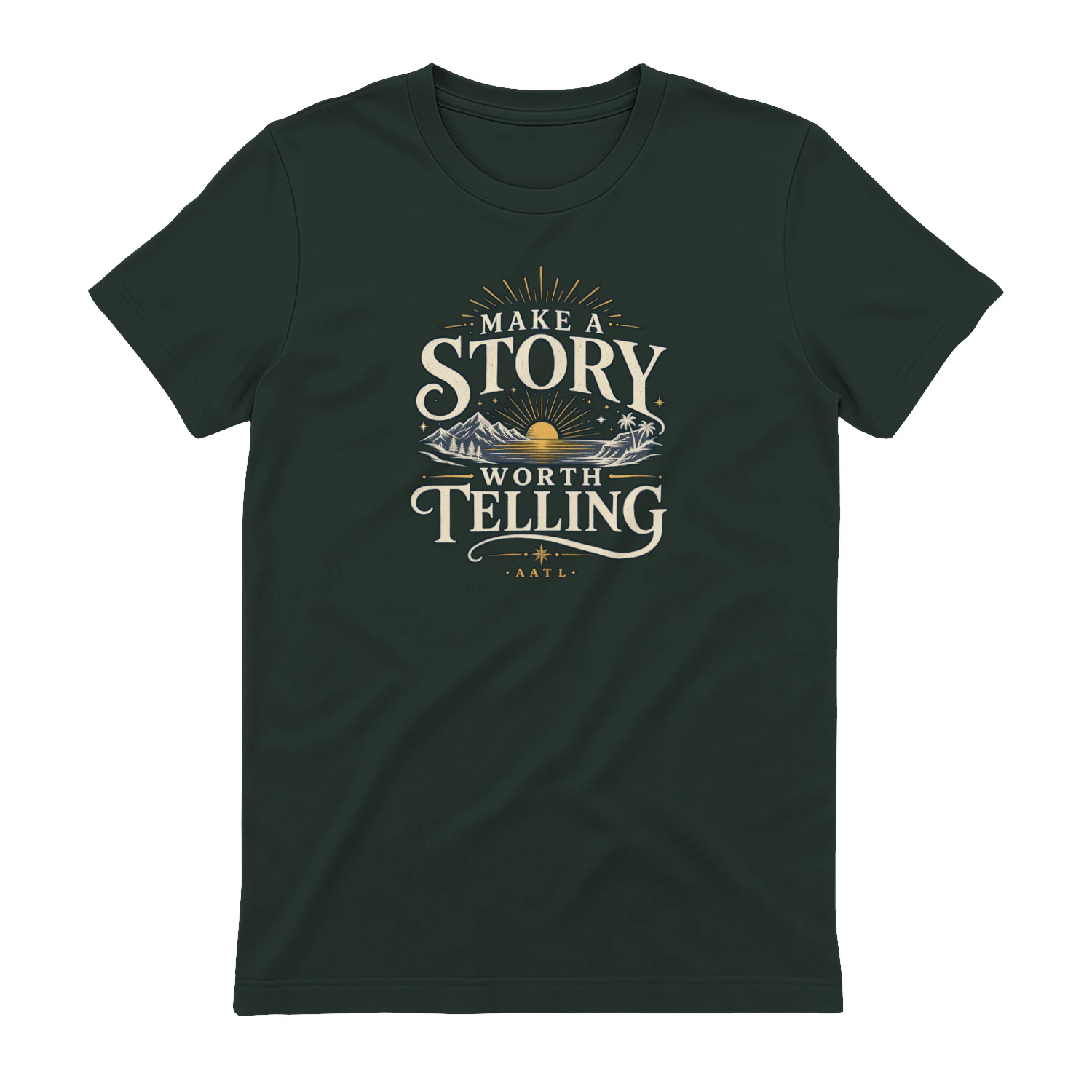
Make A Story Worth Telling
A scenic vintage-inspired design that encourages you to “Make A Story Worth Telling.” Mountains, water, sunset, and tropical details give it an adventurous feel that’s perfect for travelers, explorers, and anyone who wants a life filled with moments worth remembering.