
Video
Melvin Maya’s Reaction to The Big Push’s ‘Bongo Bong’ Is Really About Curiosity, Not Comparison
A grounded look at how Melvin Maya responds to The Big Push’s cover, from the unfamiliar song and shifting language to the instrument that caught his attention.
What this reaction is really about
The direct answer is simple: Melvin Maya likes The Big Push’s cover of “Bongo Bong” and spends much of the video trying to make sense of what he is hearing as it plays. He is not treating it like a technical breakdown or a hard comparison test. Instead, the reaction works because he admits early that the song is unfamiliar to him, then listens his way through the performance with curiosity rather than certainty.
That framing matters. A reaction video can be at its best when the viewer on camera is not pretending to know more than he does. Here, Melvin’s uncertainty becomes the point. He notices details, asks questions out loud, and lets the performance push him toward the original rather than substituting a quick opinion for a proper listen.
A cover that lands before the context does
Melvin starts from a simple place: people have been telling him to check this one out, and he finally gets around to it. That creates a very specific kind of first impression. He is aware the performance has been recommended, but he is not walking in with a ready-made interpretation. He even pauses to wonder whether he is watching the right version at all, which tells you how fresh the song feels to him.
Once the music starts, the cover’s appeal is immediate enough for him to stay engaged. He does not need to know the full history of the track to respond to it. Instead, he reacts to the feel of the arrangement and the energy of the performance as it unfolds. When he later says he enjoys it, that praise is not dressed up as expertise. It reads more like honest first-pass listening.
He also makes one thing clear: he plans to look up the original after the reaction. That is a useful signal for the viewer. The video is not claiming final authority over the song. It is documenting the moment before comparison, when the cover is still allowed to stand on its own.
The language and arrangement questions Melvin keeps circling
One of the most interesting parts of the reaction is not his praise but his attempts to sort out what the song is doing. Melvin notices what sounds to him like a Spanish flavor in the arrangement, especially in the guitar work. Then the performance shifts, and he catches French lyrics in the mix. That combination throws him off in a way that is revealing rather than confusing.
He starts wondering whether the original song is usually performed with that same language pattern or whether The Big Push and Romain are adding their own twist. He does not answer the question, and he does not need to. The reaction is stronger because it shows the exact moment a listener realizes that a song may have layers he does not yet understand.
That uncertainty gives the feature its shape. Melvin is not just hearing melody and rhythm. He is hearing a song that seems to carry more than one cultural or linguistic reference point, and he is trying to orient himself without pretending he already knows the answer. For a reaction video, that kind of honest processing is often more valuable than a polished explanation.
Why the instrument detail matters to the viewing experience
Melvin also gets pulled in by the instrument setup. He asks whether Romain is playing an electric ukulele or some different stringed instrument that simply resembles one. Again, the question itself matters as much as the answer. It shows that he is listening not only to the vocals and the song structure, but to the texture created by the instruments.
That detail also helps explain why the reaction feels specific. Plenty of listeners can say a cover sounds good. Fewer will pause mid-video to identify the exact type of instrument they think they are hearing, especially when they are not fully sure what it is. Melvin’s question makes the performance feel tactile. It is not just background music; it is a setup that invites closer attention.
His reaction here has a practical quality too. He is trying to name what he hears so he can understand what is making the cover feel distinctive. That is a useful habit in a reaction video, because naming a sound is often the first step toward understanding why a performance stands out.
Why the “Reniverse” framing fits this video
Near the end, Melvin places the performance into the larger set of reactions he has been building around REN-related artists and collaborations. He uses his own “Reniverse” label for that collection, and this video fits neatly into it because The Big Push sits within the wider orbit he has been exploring.
That matters for two reasons. First, it explains why this song was on his list in the first place: viewers have been steering him toward it for a while. Second, it shows how Melvin approaches an expanding catalog of connected artists. He is not treating each reaction as an isolated upload. He is building a listening map, one performance at a time.
Even when he says the list is long, the tone is not frustration so much as persistence. He sounds like someone trying to keep up with a growing archive of recommendations while still giving each song a fair first hearing. That makes the feature useful for viewers who follow the broader REN-related thread, because it shows how one cover performance can open the door to more listening.
What stands out most in the reaction
If you strip the video down to its core, three things stand out: Melvin enjoys the cover, he is curious about the song’s origins and language mix, and he wants to compare it with the original later. That sequence gives the reaction a clear arc without forcing it into a fake conclusion.
It is also why the video feels more like a lived listening session than a scripted review. Melvin does not rush to classify the track. He lets the performance raise its own questions, and he responds to those questions in real time. That approach gives viewers something useful: not a final verdict, but a transparent account of what it feels like to encounter a song for the first time and realize there is more to learn from it.
The result is a compact reaction that still leaves room for future listening. The performance is memorable enough to spark comparison, but not so overexplained that the comparison becomes the whole story.
Watch the original video on YouTube ↗
All About The Life
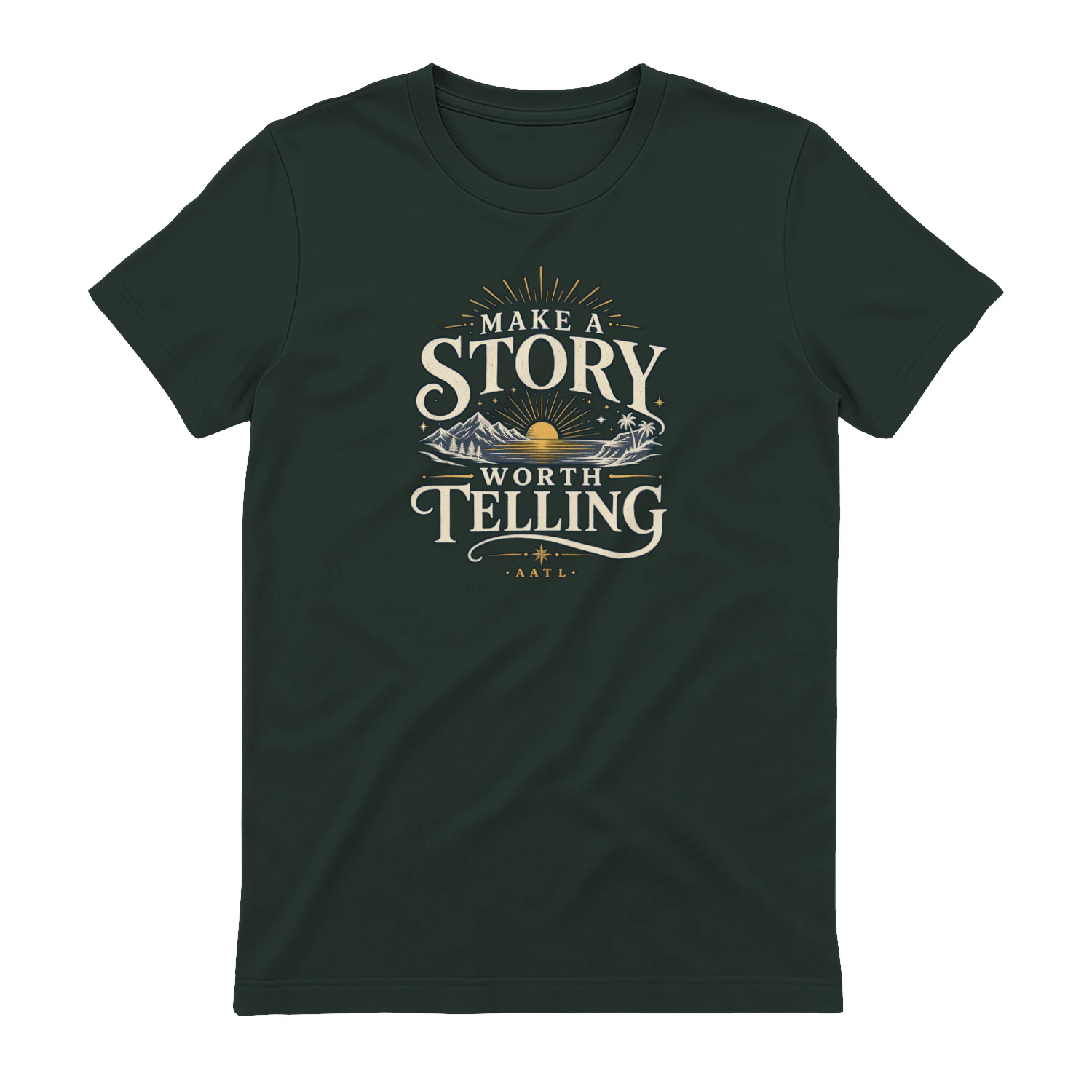
Make A Story Worth Telling
A scenic vintage-inspired design that encourages you to “Make A Story Worth Telling.” Mountains, water, sunset, and tropical details give it an adventurous feel that’s perfect for travelers, explorers, and anyone who wants a life filled with moments worth remembering.