
Video
Ren’s “Fire” Pulls Melvin Maya Toward an Older, Rougher Sound
Melvin Maya’s reaction to Ren’s “Fire” is less about a deep lyric breakdown and more about the texture of the track: rock-forward, a little nostalgic, and different enough from his newer work to raise questions about the album behind it.
Load the YouTube player to watch here. YouTube receives technical information when its player loads. This does not enable this site's analytics or marketing tracking.
Watch on YouTube ↗A reaction shaped by the sound, not the visuals
Melvin Maya’s listen to Ren’s “Fire” starts as a straightforward reaction video and quickly becomes something a little more specific: a response to a song that does not arrive with a visual story to guide the viewing. He notices early that this may be audio only, and that changes the way he engages with it. Instead of following a performance or a concept on screen, he settles into the track itself and lets the sound do the work.
That shift matters. Without a video to interpret, Melvin’s reaction becomes less about reading a scene and more about identifying texture, style, and the kind of musical memory the song triggers. In this case, the first thing that stands out is that the track feels different from the Ren material he has been hearing more recently.
Why 'Fire' feels different from newer Ren material
Melvin’s immediate read is that this version of Ren leans harder into rock than some of the songs that may be more familiar to viewers who know Ren from later work. He says outright that Ren does not sit neatly inside one genre, and this track reinforces that point. Rather than treating that as a surprise, Melvin hears it as another example of how flexible Ren’s catalog seems to be.
He also makes a point of comparing the song to what he already knows from Ren’s more recent output. The track he is hearing here feels older to him, and he believes it may be from several years back. That difference in era gives the reaction an extra layer: this is not just another pass through a familiar artist’s catalog, but a reminder that Ren’s range has changed over time.
Melvin does not pretend to have the full backstory. In fact, part of the appeal of the reaction is that he is openly working through his own questions as the song plays. Is this an earlier solo project? Was it recorded with other musicians? Is it connected to a band setup that differs from what viewers now associate with Ren? Those are the kinds of questions the track raises for him, and he leaves them open rather than forcing an answer.
A rock-leaning track that recalls early 2000s radio
The strongest comparison Melvin makes is to early 2000s rock, especially the kind of sound that might sit comfortably beside Papa Roach. That reference tells you a lot about what he is hearing: not just guitar-driven energy, but a particular mix of rock momentum and vocal attitude that feels familiar without sounding generic.
He is careful not to overstate the comparison. He does not call it a straight rip of anything, and he does not reduce the song to a single influence. Instead, he uses the comparison to locate the feeling of the track. To him, “Fire” has enough polish and enough force to make sense as something that could have reached radio in that period, even if he does not know exactly how far it went or where it came from.
That is a useful distinction. His reaction is not built on chart history or outside context. It is built on the immediate sense of hearing a song that feels intentionally shaped, with a cleaner, tighter finish than some listeners may expect if they know Ren mostly through other releases. He hears it as fine-tuned and more firmly band-oriented than some of the looser or more solo-feeling material that has defined other parts of the catalog.
Questions the reaction leaves open about Freckled Angels
A big part of the video’s interest comes from Melvin’s curiosity about the Freckled Angels album. He names it directly and wonders whether the rest of the record follows the same rock-heavy lane or moves around stylistically. That question matters because it changes how a viewer might approach Ren’s catalog: as a set of separate moods, or as a project with a more unified direction than expected.
He also wants to know whether the album was tied to a label, whether the song ever got radio play, and whether the recording involved other musicians. None of those questions are answered in the reaction itself, and Melvin does not invent answers. Instead, he uses the song as a doorway into the broader catalog. The listening experience becomes a prompt for further exploration rather than a closed verdict.
That curiosity is one of the more useful parts of the reaction. Plenty of reaction videos stop at “I like this” or “this sounds good.” Melvin goes a step further by identifying what the song makes him want to learn. In this case, the list is simple but telling: how much of the album sounds like this, how the project was made, and where this version of Ren fits in the bigger timeline.
What Melvin Maya takes away from the listen
Even without doing a full lyric breakdown, Melvin is clear that he enjoyed the song. He says as much near the end of the reaction, and the tone is easy to read: this is a track he respects for its sound and its craft, even if he is not unpacking every line in detail. That choice is part of the video’s character. He is listening as a fan first, not as a critic trying to over-analyze every phrase.
The practical takeaway is that “Fire” expands what a viewer might expect from Ren. It shows a harder-edged, rock-leaning side that feels distinct from some of the newer material Melvin has reacted to. It also gives him a new reason to keep digging, because the song opens up questions about band membership, album structure, and the evolution of Ren’s sound over time.
Melvin also uses the reaction to reinforce the way he handles his comment section. He acknowledges viewers who suggest songs, says he reads comments even when he cannot answer all of them, and points to the playlist where related Ren reactions collect. That context turns the video into part of a larger listening journey rather than a one-off post.
For viewers, that is probably the main value here: not a definitive history lesson, but a grounded response to a song that feels like a different chapter in Ren’s catalog. Melvin hears a track with rock muscle, a nostalgic edge, and enough polish to make him ask more questions than he answers. That is often the sign of a good reaction. It leaves room for the next listen.
Watch the original video on YouTube ↗
All About The Life
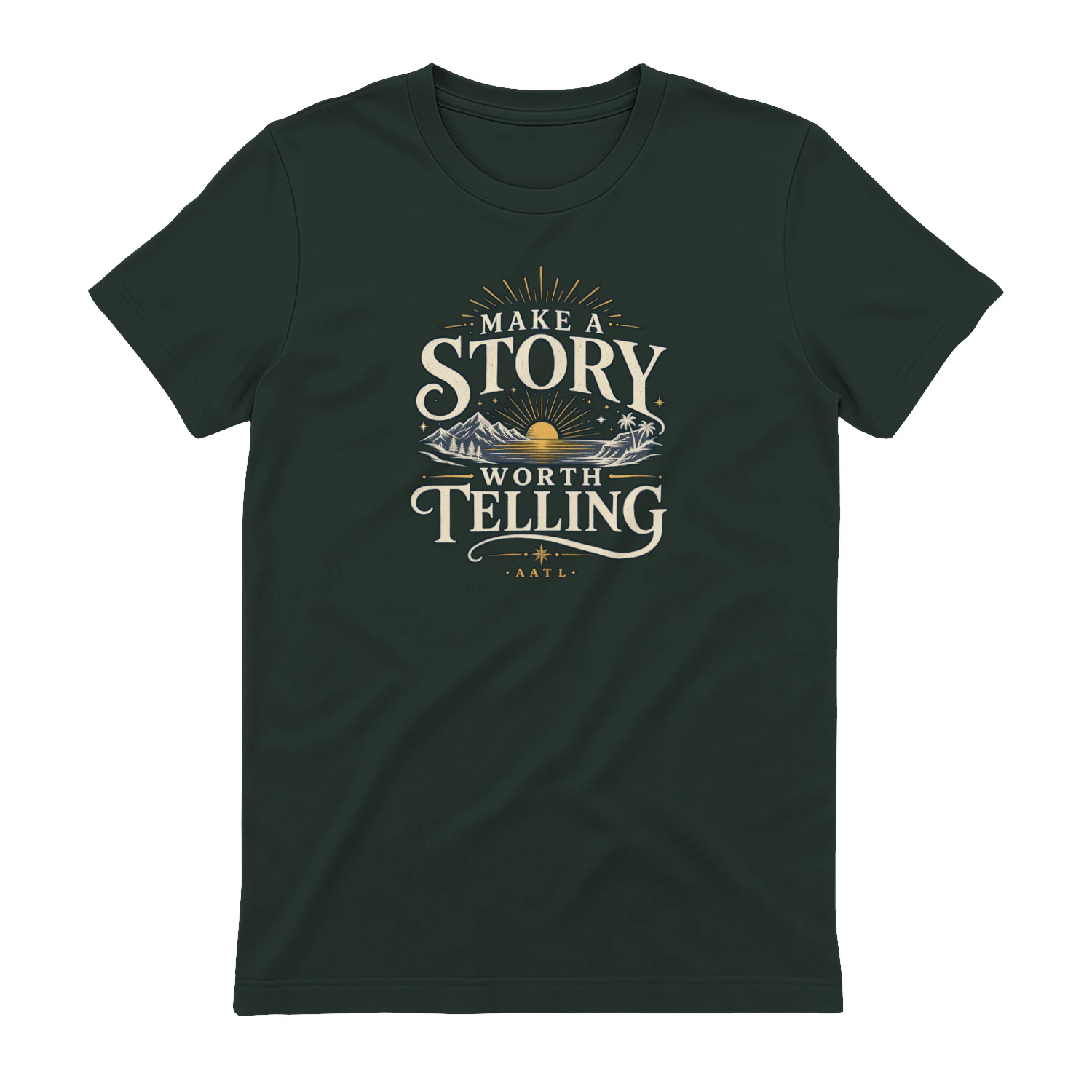
Make A Story Worth Telling
A scenic vintage-inspired design that encourages you to “Make A Story Worth Telling.” Mountains, water, sunset, and tropical details give it an adventurous feel that’s perfect for travelers, explorers, and anyone who wants a life filled with moments worth remembering.