
Video
Spain, Recounted in Broad Strokes and Reaction-Style Commentary
Melvin Maya’s reaction to an animated history of Spain turns a long national timeline into a compact story of conquest, consolidation, empire, decline, and modern recovery.
Load the YouTube player to watch here. YouTube receives technical information when its player loads. This does not enable this site's analytics or marketing tracking.
Watch on YouTube ↗The direct answer: a fast-moving sweep through Spanish history
Melvin Maya’s reaction video follows an animated history of Spain that moves from the earliest civilizations on the Iberian Peninsula to modern Spain in one broad pass. The video is not trying to be a classroom lecture or a full documentary. It works as a compressed timeline: Roman conquest, Visigothic rule, Islamic Iberia, the Reconquista, imperial expansion, decline, civil conflict, dictatorship, and the modern democratic era all appear as chapters in one national story.
That makes the video easy to understand at a glance, but it also gives Melvin room to react to the scale of the history itself. He is often responding to the size of the transitions: how many rulers passed through the peninsula, how often power changed hands, and how Spain’s history keeps swinging between fragmentation and consolidation.
From the Iberian Peninsula to Roman Hispania
The video begins before Spain was Spain. It starts with the Iberian Peninsula as a place already occupied by different civilizations, then moves through the influence of Celts, Greeks, Phoenicians, and Carthaginians before Rome enters the picture. In Melvin’s telling, this opening matters because it frames Spain as a crossroads rather than a fixed national identity.
Once Rome gains control through the Punic Wars and the defeat of Carthage, the peninsula becomes Roman Hispania. The video emphasizes how thoroughly Roman rule reshaped the region: law, religion, language, and culture all become embedded in local society. That is one of the clearest ideas in the reaction — Spain is not introduced as isolated, but as a place repeatedly transformed by outside powers.
Visigoths, Islamic rule, and the long struggle over Iberia
The next major turn comes after Rome’s collapse. The video describes Hispania as falling to Germanic and nomadic groups in the fifth century, then eventually consolidating under the Visigoths. Melvin’s reaction highlights the sense of instability here: several groups fight for control, alliances shift, and the peninsula remains contested rather than settled.
From there, the animated history jumps to the arrival and expansion of Muslim rule from North Africa. The Umayyad advance across the Straits of Gibraltar, the defeat of the Visigoths, and the creation of Al-Andalus become one of the central turning points in the story. The video then presents the Reconquista as a centuries-long Christian response to Muslim rule, with northern kingdoms gradually expanding south.
This is where the reaction video becomes especially useful as a companion piece. The historical timeline can feel dense if it is delivered too quickly, but Melvin keeps the broad stakes in view: competing kingdoms, shifting religious identities, and a long contest over land and political power. The key takeaway is not a single battle but a long pressure line running across centuries.
The Spanish Empire and the cost of power
A major pivot arrives with the unification of Castile and Aragon through Ferdinand and Isabella, followed by the conquest of Granada and the end of the last major Muslim foothold in Iberia. The video then connects that internal consolidation to Spain’s overseas expansion, especially Columbus’s voyage and the opening of the Americas.
Melvin reacts to this stretch as the moment Spain becomes a global force. The Spanish Empire is presented as a world-changing development, especially for the Americas, but the video does not leave the empire in triumphant terms alone. It also points to the pressures that came with it: religious exclusion, the Inquisition, dynastic politics, and the Habsburg era’s internal problems.
That balance gives the video some of its strongest shape. Spain is not shown only as a conquering power. It is also shown as a state whose ambitions created burdens it could not easily contain. Inflation, war, piracy, and succession conflicts all appear as part of the imperial cost.
From empire to civil war to modern Spain
As the video moves into the nineteenth and twentieth centuries, the tone changes again. The empire shrinks, the monarchy is shaken, and political instability becomes a recurring pattern. Napoleon’s invasion, the restoration of the monarchy, the first Spanish Republic, and the loss of overseas territories all mark a long period of decline and upheaval.
Melvin’s commentary around this section is less about details and more about the larger arc: a once-dominant empire is now a country wrestling with modern political fractures. That leads into the Spanish Civil War, which the video treats as too complex to reduce to a simple summary. It then moves to Francisco Franco’s dictatorship, Spain’s neutrality during the Second World War, and the restoration of the monarchy under constitutional rule after Franco’s death.
The final stretch brings Spain into the modern European order. The video mentions Spain’s entry into the European Union, tourism growth, economic expansion, the 2008 recession, and newer internal pressures such as Catalonia’s secessionist movement and the migration crisis. Melvin’s reaction here lands on the contrast between hardship and recovery: modern Spain is presented as a country still dealing with recent wounds, but also as one that remains politically and economically important in Western Europe.
Why this reaction works as a companion watch
What makes this video worth reading alongside the animated history is the way Melvin responds like a viewer processing scale in real time. He is not trying to correct the timeline or out-lecture the source. He is reacting to the speed of the story, the weight of the transitions, and the sense that Spain’s history is full of repeated reinvention.
The video also has a conversational quality that keeps it from feeling rigid. Melvin pauses for personal asides, notices when a section hits a big historical turn, and acknowledges the challenge of covering a country with such a long, contested past in a single animated overview. That makes the feature useful for viewers who want the gist of the video without losing the human presence of the reaction itself.
If you came looking for an animated history of Spain explained in plain language, this is the essence of what the video delivers: a layered but accessible account of how the peninsula moved from ancient civilizations to Rome, from Visigoths to Islamic rule, from Reconquista to empire, and from civil conflict to modern Spain.
Watch the original video on YouTube ↗
All About The Life
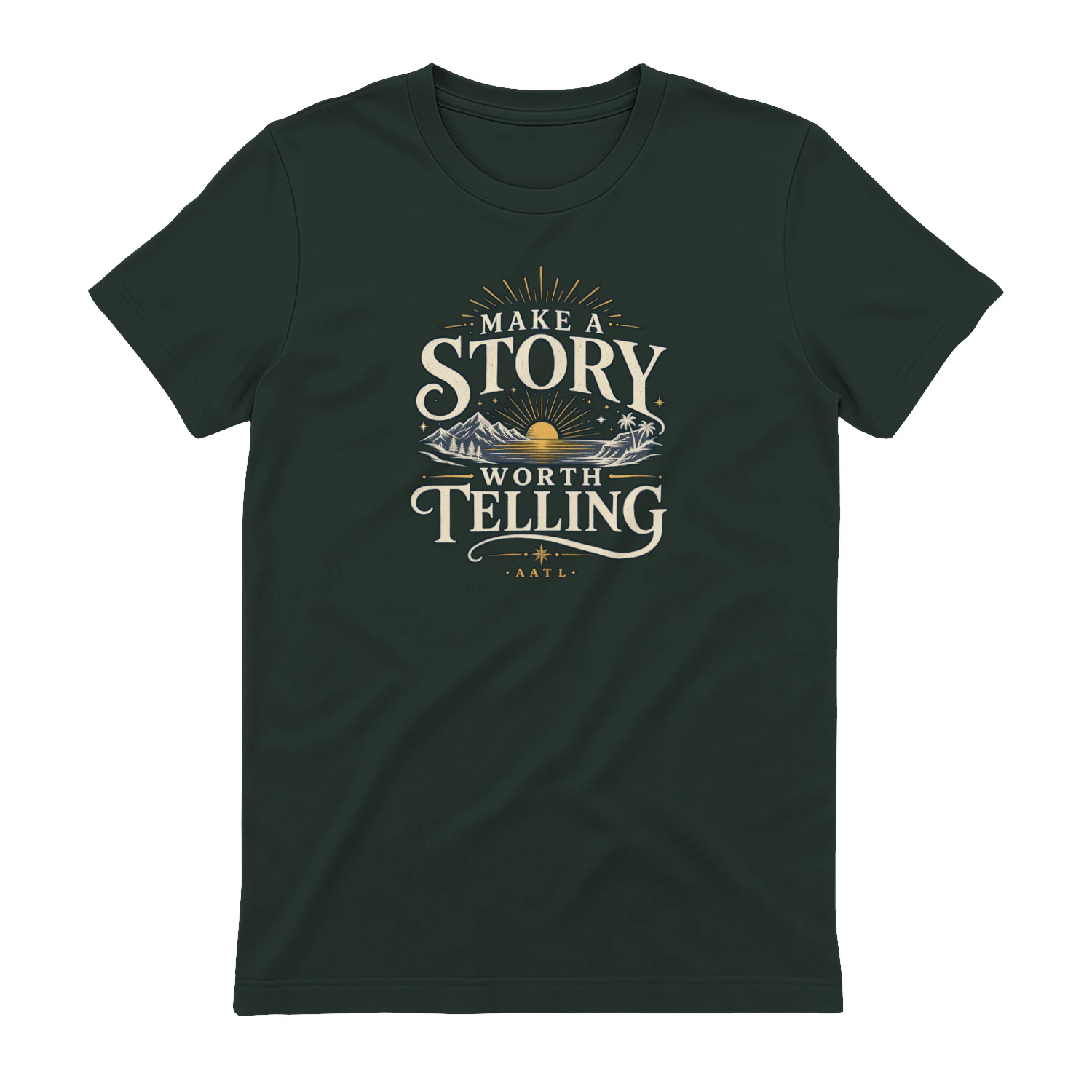
Make A Story Worth Telling
A scenic vintage-inspired design that encourages you to “Make A Story Worth Telling.” Mountains, water, sunset, and tropical details give it an adventurous feel that’s perfect for travelers, explorers, and anyone who wants a life filled with moments worth remembering.