
Video
Spain’s History, Compressed Into One Map and One Reaction
Melvin Maya’s reaction to an animated Spain timeline becomes a useful guide to how often the peninsula changed hands, expanded outward, and then rebuilt itself again.
Load the YouTube player to watch here. YouTube receives technical information when its player loads. This does not enable this site's analytics or marketing tracking.
Watch on YouTube ↗A fast-moving map with a long memory
Melvin Maya’s reaction to “Full History of Spain Summarized On Animated Map” works because the video keeps narrowing a huge subject into one visual line. The direct answer is simple: Spain’s history, as presented here, is a story of repeated change — conquest, rule, expansion, loss, civil conflict, and eventual democratic restoration. Melvin does not pretend to know all of it already, and that honesty gives the video its value. He watches, reacts, and keeps circling back to how much of the timeline was new to him.
That openness matters. This is not a performance of expertise. It is a first encounter with a history that moves quickly and does not leave much time to settle. The animated map does the heavy lifting, but Melvin’s reaction gives the material a human entry point: the viewer gets to watch someone process the same compression of centuries in real time.
From Roman Hispania to Al-Andalus
The early stretch of the video sets up one of the clearest themes in the whole timeline: Spain is presented less as a static country and more as a place that keeps being reorganized by different powers. The map begins with Iberian peoples and the Romans, then moves into the period after the Western Roman Empire collapsed, when Germanic kingdoms replaced Roman rule.
Melvin responds most strongly when the video reaches the Islamic conquest of the peninsula. He says he did not know about the earlier Muslim presence and is struck by how many times the territory changed hands. That reaction is one of the most useful parts of the whole watch, because it reflects exactly what the map is trying to show: the peninsula did not simply pass from one national identity to another. It went through long stretches of layered rule, conflict, and redefinition.
The video’s treatment of Al-Andalus and the emergence of Christian kingdoms in northern Iberia turns that point into a long arc rather than a single event. The reconquest narrative is not presented as a neat finish, but as a gradual shift that culminates in the fall of Granada in 1492. That year becomes a hinge in the story, not just because it ends Islamic rule in Iberia, but because it overlaps with Columbus’s arrival in the Americas.
Empire, collapse, and the Bourbon reset
Once the map reaches the age of empire, the tone changes. Spain is no longer just a peninsula with changing borders; it becomes a global power. The animated summary links the union of Castile and Aragon, the fall of Granada, and Columbus’s voyage into the beginning of the Spanish Empire. Melvin’s reaction here is telling: he notices how far Spain’s reach extended and how scattered its presence became.
That is the right instinct. The strength of this segment is not only that Spain is shown expanding across the Americas, Africa, Asia, and Oceania, but that the map emphasizes just how broad that reach was under Habsburg Spain and later under the Bourbons. The video moves through the reign of Charles V, Philip II, the victory over the Ottomans at Lepanto, and the incorporation of the Portuguese Empire into the Iberian Union. It is a run of material that can feel almost unreal when compressed into a few map transitions.
Melvin’s comments reveal a second layer of reaction too: he is not only absorbing the history, he is thinking about how often Spain’s holdings were gained, lost, and renegotiated. That becomes even clearer in the later imperial decline. The Dutch revolt, territorial losses to France and England, the War of the Spanish Succession, and the transition from the Habsburg line to the House of Bourbon all point to a country that had to keep resetting itself politically.
Civil war, Franco, and the return to democracy
The nineteenth and twentieth centuries in the video feel more compressed, but they carry the strongest modern contrasts. After the Napoleonic invasion, the War of Independence, and the constitutional struggle that followed, the map moves through monarchy, republic, and renewed instability. Spain’s loss of most of its American territories is presented as another major break, not an isolated setback.
That pattern continues into the twentieth century with the Second Republic, the Spanish Civil War, and Franco’s dictatorship. The map makes these transitions feel abrupt, but that abruptness is part of the historical reality the video is trying to communicate. Melvin’s reaction here is less about surprise and more about recognition that Spain’s modern identity was shaped by conflict, not inherited intact.
The closing stretch is the clearest sign that the video is not simply about old borders. It ends with Franco’s death, Juan Carlos I, the transition to democracy, the Constitution of 1978, and Spain’s later place in European institutions. In other words, the map does not stop at empire or war. It ends by framing modern Spain as a country that rebuilt its system of government and then settled into a democratic order.
Why the video lands as a history lesson for a U.S. viewer
One of Melvin Maya’s most honest remarks comes near the end, when he says that much of this was new to him and that what Americans learn in school rarely goes far beyond the United States. That is not just a personal aside. It explains why this kind of video works so well for his channel.
The direct answer is that the map format gives viewers a structure they can follow without needing prior knowledge, and Melvin’s reaction makes the learning feel relatable instead of academic. He connects the video to his own school experience in Texas, to what he did and did not learn, and to why he wants to know more about places he might travel to in the future. That gives the feature a practical edge: this is history as orientation, not just history as trivia.
The video also hints at a broader truth about Spain that comes through clearly even without outside research: the country’s story is full of overlaps between local rule and global power, between deep continuity and sudden interruption. Melvin picks up on that repeatedly, especially when he reacts to the many times Spain changed hands and to the little enclaves in Africa that remain under Spanish sovereignty.
For viewers, that combination is what makes the watch useful. The map gives the outline. Melvin’s reaction supplies the questions a casual viewer might be thinking anyway: How did one peninsula become an empire? How did that empire shrink so far? And how did Spain finally arrive at the modern country shown at the end of the video?
Watch the original video on YouTube ↗
All About The Life
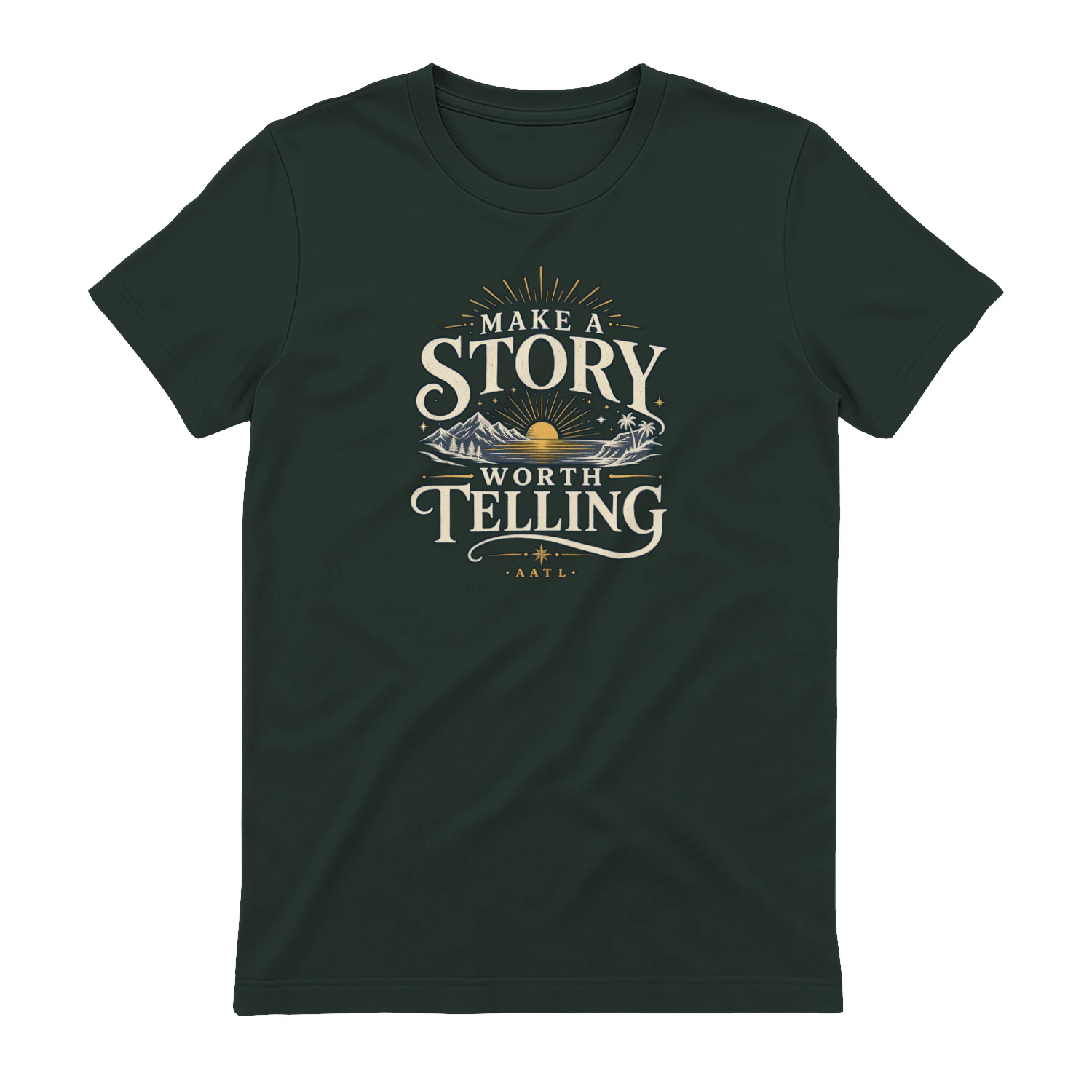
Make A Story Worth Telling
A scenic vintage-inspired design that encourages you to “Make A Story Worth Telling.” Mountains, water, sunset, and tropical details give it an adventurous feel that’s perfect for travelers, explorers, and anyone who wants a life filled with moments worth remembering.