
Video
Tasmania’s Seafood Looks Extreme, But the Video Is Really About Place
Melvin Maya’s reaction video frames a day of hand-harvested seafood as something bigger than a tasting tour: it becomes a look at Tasmania’s isolation, its working coastline, and the people who turn that into a food culture.
Tasmania’s seafood is the real story
The sharpest takeaway from Melvin Maya’s reaction video is not just that Tasmania has big seafood. It is that the island’s food culture feels tied to place in a very direct way. The video moves from the coast to a processing floor and keeps returning to the same idea: in Tasmania, seafood is not an abstract restaurant ingredient. It is caught, handled, cooked, and discussed as part of everyday life.
That matters because the creatures on screen are presented less like luxury novelties and more like local staples. Abalone, rock lobster, oysters, shark, and blue eye trevalla all appear as part of one connected system. The result is a feature about food, yes, but also about geography, labor, and the people who know how to work with the water around them.
What the day on the water reveals about the island
The early part of the video sets the tone fast. Melvin is joined by Stephanie, who wants to try more countries and cultures through reaction videos, and the two of them watch a seafood-focused trip through Tasmania. The video they are reacting to describes Tasmania as a small island state with only about half a million people, yet one with a strong reputation for seafood and marine life.
That contrast becomes a central idea. Tasmania is presented as isolated, cool, and rugged, with waters that support a wide range of edible marine life. The creator they are watching travels offshore with Tim and Chris, two divers with their own channels and their own reasons for being out on the water. Their catches are not collected with rods or spears. They use compressors and work by hand, which gives the whole process a slower, more physical feel.
Melvin and Stephanie keep reacting to that intimacy. They notice the scale of the animals, but they also keep asking practical questions: what is it, how is it prepared, and how does it compare to seafood they know? That curiosity gives the feature its shape.
Why abalone and lobster keep stealing the scene
The first showpiece is black lip abalone, and the video makes a point of explaining why it is so prized. It blends into the rocks, takes work to pry free, and has a dense texture that the hosts compare to something much richer and meatier than viewers might expect from a shellfish.
Melvin’s reaction helps underline the surprise. He is fascinated by what the abalone even is, whether it resembles an oyster, and how the meat will behave once it is cooked. Once the preparation starts, the process becomes clearer: the abalone is shucked, cleaned, tenderized, seasoned, coated, fried, and then served with citrus and a sauce built from soy sauce, wasabi, and garlic.
The result is one of the most memorable parts of the whole video because the preparation changes the way the ingredient reads on screen. What first looked strange and uncertain becomes something the guests describe as tender and balanced. Stephanie admits the visual was questionable at first, but both of them respond to the finished dish as something worth trying. The creator’s own explanation is plain and useful: tenderizing matters because abalone can turn rubbery if handled the wrong way.
The rock lobster is the other early standout. Melvin repeatedly reacts to its size, especially the sheer length of the tail. The video lingers on how massive these Tasmanian rock lobsters are, and that size shapes the conversation around value, effort, and cooking. Rather than treating them like a spectacle only, the video shows how they are prepared into a lobster roll-style dish and later into half lobsters served with lemon, aioli, lettuce, and sauce.
The reaction is simple and telling: the lobster looks great, tastes sweet, and has a dense texture that stands apart from other seafood the guests know. Stephanie and Melvin both end up focusing on how the meat holds together and how the smoke, butter, and sauces complement it. This is the part of the video where the giant seafood becomes understandable as food, not just as size.
Inside the factory: shark, oysters, and processing at scale
The move from the shoreline to the seafood factory widens the picture. The video shifts from hand-harvested catches to a working floor where seafood is processed in large volume. Jock Muir, a third-generation guide, explains how the operation works and how much of it is built around local supply chains.
That section gives Melvin and Stephanie more to talk about than flavor alone. They watch oysters being shucked in high volume, hear how the shells are opened and the muscle detached, and see how the seafood is sorted and prepared for restaurants. The oysters are described as naturally sweet and salty, with a texture that depends on freshness and handling.
Then comes shark. The factory tour turns up a mako shark, and the conversation shifts toward how shark meat is used, where it goes, and how it fits into the larger seafood economy. The video is careful to distinguish between targeted fishing and bycatch. The shark shown is not the result of a shark-specific hunt; it is a usable catch that ends up in the processing system.
Melvin brings his own memory into the discussion, saying he ate shark when he was younger and was curious about trying it again. Stephanie and Melvin both spend time sorting out the ethics and the food angle. They are clear that the version on screen is about using the whole fish, not just part of it.
The people behind the catch
One of the most useful parts of the video is that it does not stop at the food itself. Tim and Chris talk about why they dive, how they work, and what Tasmania means to them. One emphasizes teaching people how to fish while also reminding them about conservation. The other connects his outdoor work to mental health and says being in nature helps him be his best self.
That gives the feature a human center. Tasmania’s seafood economy is not just a matter of abundance. It is also about restraint. The video mentions limits on what can be caught in one outing, and later Jock explains that conservation efforts have helped populations recover. Melvin and Stephanie hear all of this while also seeing the consequences of those efforts in real dishes.
The island itself comes through as a place where weather, cold water, and distance shape what people eat and how they work. Melvin notes that Tasmania feels different from mainland Australia, and that difference is part of the appeal. The food is local, but so is the identity around it.
A reaction video that becomes a portrait of place
By the end, the video has moved well past simple first impressions. Melvin and Stephanie begin with surprise at giant lobsters and unusual seafood, but the deeper story is about how Tasmania turns geography into cuisine. The island’s waters support a wide spread of seafood, and the people who work there have developed techniques that are practical, local, and very much their own.
What makes the video work is that it gives viewers both the spectacle and the explanation. You see enormous lobster tails, shucked oysters, fried abalone, shark fillets in batter, and blue eye trevalla with butter and herbs. But you also hear why those foods matter, how they are caught, and who is responsible for getting them from water to plate.
For viewers coming to the video through Melvin’s reaction, that is probably the best way to take it in: not as a list of dishes, but as a portrait of a place where seafood is part of the landscape, the labor, and the conversation.
Watch the original video on YouTube ↗
All About The Life
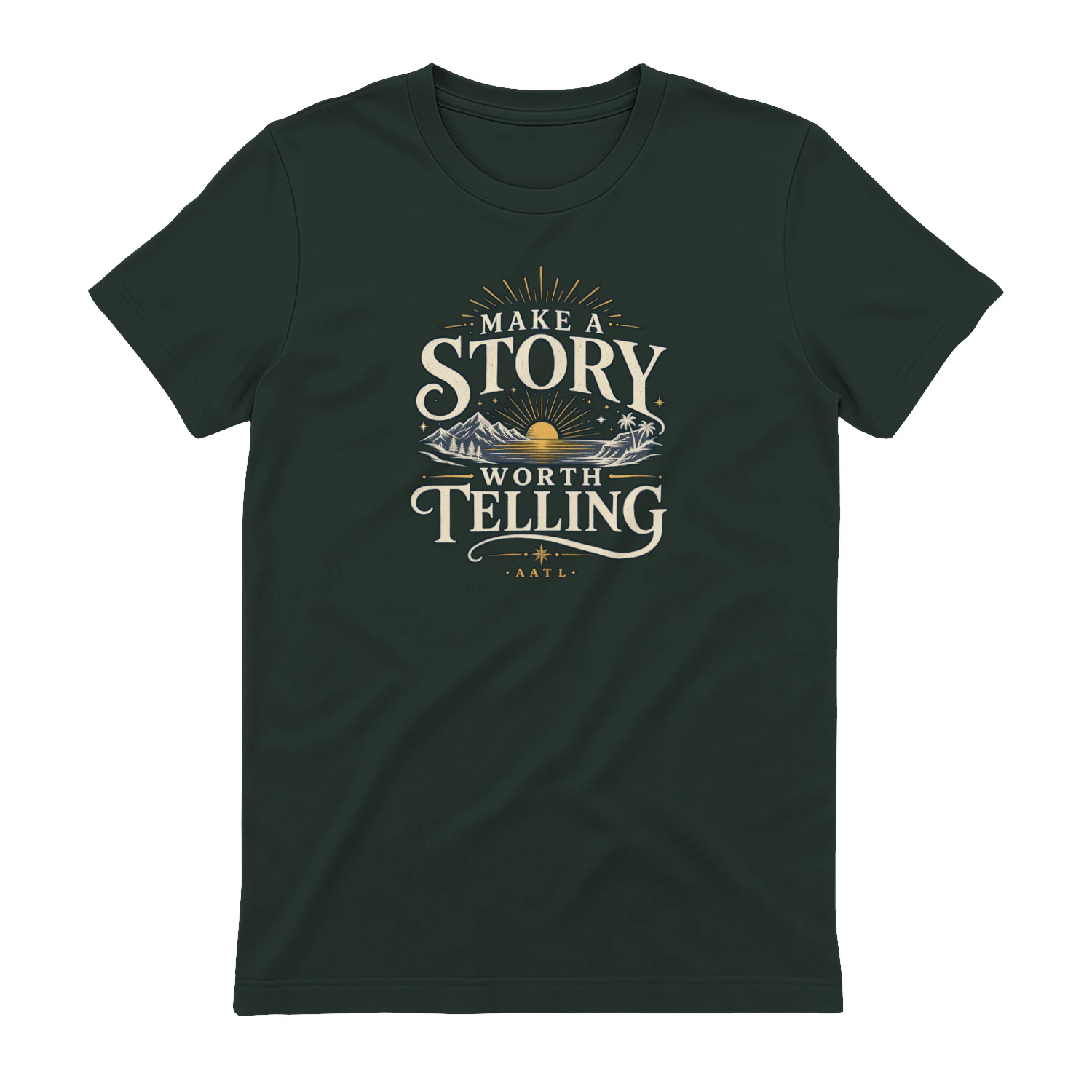
Make A Story Worth Telling
A scenic vintage-inspired design that encourages you to “Make A Story Worth Telling.” Mountains, water, sunset, and tropical details give it an adventurous feel that’s perfect for travelers, explorers, and anyone who wants a life filled with moments worth remembering.