
Video
The Big Push’s ‘Praise You’ Becomes a Lesson in Control, Arrangement, and Band Chemistry
Melvin Maya’s reaction to Morgan Brannon and The Big Push focuses on the details that make the performance land: vocal control, instrumental flexibility, and the sense that every player has a clear role.
The Big Push turns a familiar cover into a full-band showcase
The clearest takeaway from Melvin Maya’s reaction is simple: this is not being treated like a routine cover. In the video, he and Morgan Brannon respond to The Big Push’s version of Fatboy Slim’s “Praise You” as a performance that feels carefully built, even while it keeps the loose energy of a street set. The conversation keeps circling back to the same idea: the song works because the band knows exactly how to shape it, and because the lead vocal has the kind of control that makes the arrangement feel intentional rather than improvised.
That matters because the reaction is not just about liking the song. It is about noticing what the performance is doing. Melvin frames the clip as a change of pace after earlier material, and that shift in mood gives the video its structure: the performance is meant to be a reset, but it becomes something bigger once the details start landing.
Why the reaction keeps coming back to control and range
A major thread in the video is Morgan Brannon’s voice. Melvin’s response is immediate and specific: the range gets attention, but so does the steadiness behind it. He does not describe the singing as flashy for its own sake. Instead, he points out that it sounds managed, clean, and confident across different octaves. That distinction is important, because it moves the reaction away from a generic “he can sing” comment and toward an actual listening habit.
The video also makes room for the idea that this kind of ability is not something that can be reduced to formal training alone. Melvin brings up the music-school conversation only to push past it. His point is that the performance feels earned and internalized, not like a checklist of lessons. In other words, the voice impresses because it sounds lived in.
That’s a useful way to hear this cover. “Praise You” is a song most viewers probably already know, but The Big Push’s version is not trying to simply reproduce it. The vocal phrasing and the backing arrangement work together so the performance feels like a version, not an imitation.
A street set that feels assembled by specialists
Another reason the reaction is engaging is that Melvin keeps returning to the band’s versatility. He talks through the different instruments the members handle and treats that flexibility as part of the group’s identity. The impression is not just that The Big Push has talented players. It is that each one brings a distinct lane, and those lanes overlap without blurring together.
That is one of the best ways to understand why the performance lands as strongly as it does. The band is introduced as a busking act, and the street setting matters because there is no studio smoothing over the edges. What the viewer gets is a live display of coordination: a performance where the arrangement depends on each player being able to do more than one thing well.
Melvin’s reaction makes that point without overexplaining it. He mentions multiple instruments across the members and notes that their individual styles differ when you watch their separate material. That observation helps the video function as a companion feature rather than a simple commentary track. It gives the audience a reason to think about how the band operates beyond this one performance.
The Beatles comparison, explained by the band’s balance
One of the sharper comments in the reaction is Melvin’s comparison of The Big Push to a modern-day Beatles-like unit. He is not saying the band sounds like the Beatles in a strict musical sense. The comparison works because he is talking about balance: each member has a recognizable talent, and the group still functions as a coherent whole.
That balance is what the reaction keeps emphasizing. The Big Push does not come across as a band built around one person carrying the rest. Instead, the performance suggests a set of players whose strengths are distributed across the group. Even when the drummer is absent in this particular clip, the reaction treats the broader band identity as intact, because the rest of the musicians still make the arrangement feel full.
Melvin also touches on the band members’ other instruments and side material, which reinforces the same point. The takeaway is not just that they can all play. It is that they seem comfortable moving between roles, sounds, and styles. That versatility is part of why the cover feels substantial instead of thin.
Why this reaction works as a guide to The Big Push catalog
The end of the video hints at something useful for viewers who are following along with Melvin’s The Big Push reactions: this performance is a doorway into the rest of their work. He suggests that there is more coming from the band in the next video, and his tone makes it clear that he sees a pattern worth continuing.
That is part of what gives the feature its value. It is not only documenting one reaction to one cover. It is showing how a listener can identify the features that make a band memorable: strong vocal command, multi-instrumental flexibility, and a sense that every member is contributing something distinct. Those are the qualities Melvin keeps noticing, and they are why this video feels more like a guided listening session than a casual watch-along.
For anyone coming to the clip through search, the direct answer is straightforward: Melvin Maya reacts to The Big Push’s “Praise You” by focusing on Morgan Brannon’s control, the band’s arrangement choices, and the chemistry that makes the group feel unusually complete for a live street performance.
Watch the original video on YouTube ↗
All About The Life
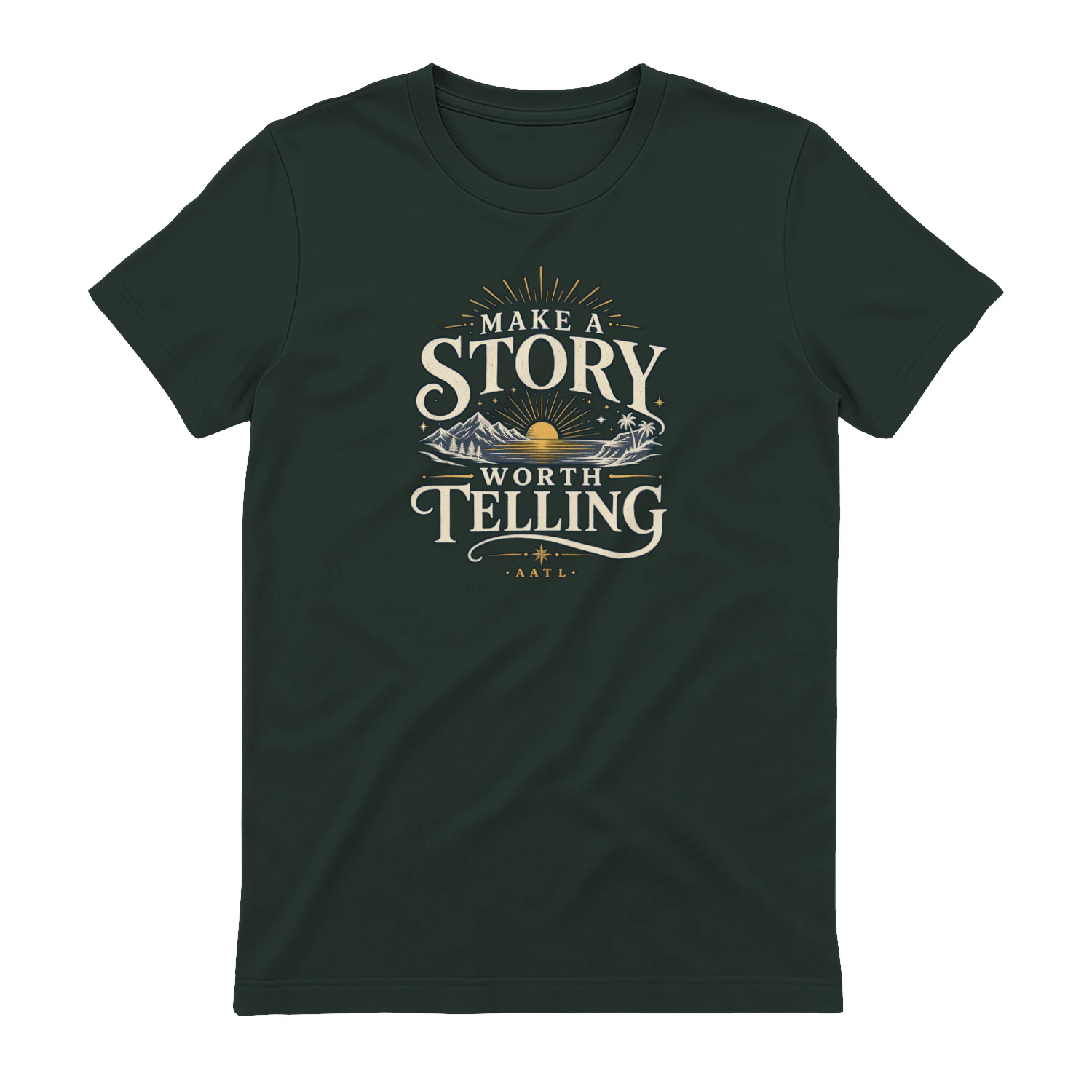
Make A Story Worth Telling
A scenic vintage-inspired design that encourages you to “Make A Story Worth Telling.” Mountains, water, sunset, and tropical details give it an adventurous feel that’s perfect for travelers, explorers, and anyone who wants a life filled with moments worth remembering.