
Video
The Mirage Didn’t Just Open on the Strip — It Rewrote What Las Vegas Was Supposed to Be
Melvin Maya’s reaction frames The Mirage as a turning point: a property that tried to make the entire stay feel like the destination.
A resort built to change what Las Vegas could be
Melvin Maya’s reaction video centers on one clear idea: The Mirage was not just another casino on the Strip. It was a deliberate attempt to rescue Las Vegas from a slump by giving visitors a reason to come for the property itself, not only for the tables inside it. That is the direct answer to why the hotel matters in the video. The Mirage is presented as a turning point in which Las Vegas began shifting from a gambling town with rooms attached to a destination resort built around atmosphere, spectacle, and a promise of escape.
The video frames the late 1980s as a rough period for the city. Older icons were aging, tourism had cooled, and the Strip needed a new identity. Against that backdrop, The Mirage arrives in the story as a high-stakes bet with a different kind of ambition: make the desert feel like a tropical world and make guests feel that the property itself was worth the trip. Melvin’s reaction leans into that historical shift. He keeps returning to the fact that the vision was already thinking in themed, marketing-driven terms long before that approach became standard across Las Vegas.
Why The Mirage mattered beyond the gaming floor
What stands out in the video is how often the resort is described as a “promise” rather than just a building. Steve Wynn’s direction, as the creator explains it, was to keep the experience consistent from the first thing a visitor saw to the moment they left. That meant every part of the hotel had to support the illusion: the volcano, the rainforest entrance, the pool, the animal habitats, and even the sense that the property was a destination large enough to occupy an entire stay.
Melvin reacts to this idea with a kind of recognition. He notes how familiar that style now feels in Las Vegas, but also how unusual it would have been at the time. That observation gives the feature its value. The Mirage is not treated as a nostalgia piece alone; it is shown as the template for the modern Strip. Once the resort model changed, the casino stopped being the only main event. The hotel, the scenery, and the amenities became part of the draw.
The indoor rainforest, tanks, and habitats that made the promise feel real
The video spends a lot of time on the details that made The Mirage feel different. The rainforest entrance, with its palm trees, plants, and water features, is presented as an immediate environment shift. Instead of stepping into a standard lobby, guests entered a carefully staged tropical setting. Melvin points out how effectively that kind of design could make someone forget they were in the Mojave Desert at all.
That same logic carried through the rest of the property. The pool area is described as lush and immersive, not just functional. The white tiger habitat and the Dolphin Habitat pushed the theme even further, turning wildlife into part of the attraction and adding to the resort’s sense of spectacle. The video also highlights the large aquarium at check-in, which became another signature element. Melvin reacts to the reported scale and cost with surprise, but the larger point is less about the numbers than about what they signaled: The Mirage wanted even the first minutes of arrival to feel engineered and memorable.
These details matter because they show how the hotel was designed as an experience from the ground up. The point was not simply to decorate a casino. The point was to build a place where the scenery, water, animals, and architecture all worked together to support one story: this is not ordinary Vegas.
Entertainment, pop culture, and the property’s wider reach
The feature also makes room for The Mirage’s place in entertainment culture. Melvin mentions Siegfried and Roy, a major show tied to the property’s identity in the 1990s, and later The Beatles Love, which extended the hotel’s reputation as a home for big-ticket spectacle. Those examples help explain why The Mirage lasted so long in the public imagination. It was not only a place people stayed or gambled. It was tied to performances and media moments that reinforced the idea of Las Vegas as a place of constant production.
The video also nods to film, especially Vegas Vacation, which gives the property another layer of recognition outside tourism. Melvin’s commentary is especially pointed here because he connects the movie’s style to an older era of comedy and Vegas culture. That reaction does something useful for the feature: it reminds the viewer that The Mirage lived at the intersection of travel, entertainment, and pop-culture memory. Even if someone never stayed there, they may still have seen it through a movie, a stage show, or a television image of the Strip.
What closing the hotel says about how Vegas keeps remaking itself
One of the strongest parts of the video comes near the end, when Melvin talks about staying at The Mirage during its final weeks. That choice gives the reaction personal weight without forcing the article into a diary entry. He is not just describing history from a distance; he is documenting the last stretch of a property that helped shape the city’s direction.
The closing also points toward the next chapter under Hard Rock, including the plan to serve locals more directly and the expectation that the property will look and function differently in the future. Melvin’s tone is not nostalgic in a shallow way. He is more interested in what disappears when a landmark changes hands: the habitats, the old layout, the lived-in details that made the place feel specific. His questions about what gets salvaged before demolition underline that point. A hotel like this is more than a building because it holds together a set of experiences, and once it is gone, that combination is harder to replace than a façade.
That is why the video lands as a feature about transition as much as about architecture. The Mirage mattered because it changed the formula. Its closure matters because it shows how quickly even a defining Las Vegas property can become part of the city’s next reinvention.
A legacy measured in imitation
The strongest evidence that The Mirage changed Las Vegas is that so many of its ideas became normal. The creator’s reaction keeps circling back to that: the themed resort, the pool as a destination, the immersive entrance, the entertainment-first identity. None of that reads as accidental in the video. It is presented as a deliberate vision that worked so well other properties followed it.
Melvin also helps the feature avoid becoming a dry history lesson by reacting like a visitor who is still processing the scale of the place. He remembers walking through the resort, staying there in its final weeks, and noticing the details that made the experience feel special. That human perspective matters because it keeps the story grounded in use, not just reputation.
The result is a portrait of The Mirage as both a symbol and a model: a property that responded to a difficult moment in Las Vegas history by giving the city a new idea of itself. And for anyone trying to understand why this casino became such a reference point, the answer is sitting in the video’s own logic. It changed what people expected from the Strip.
Watch the original video on YouTube ↗
All About The Life
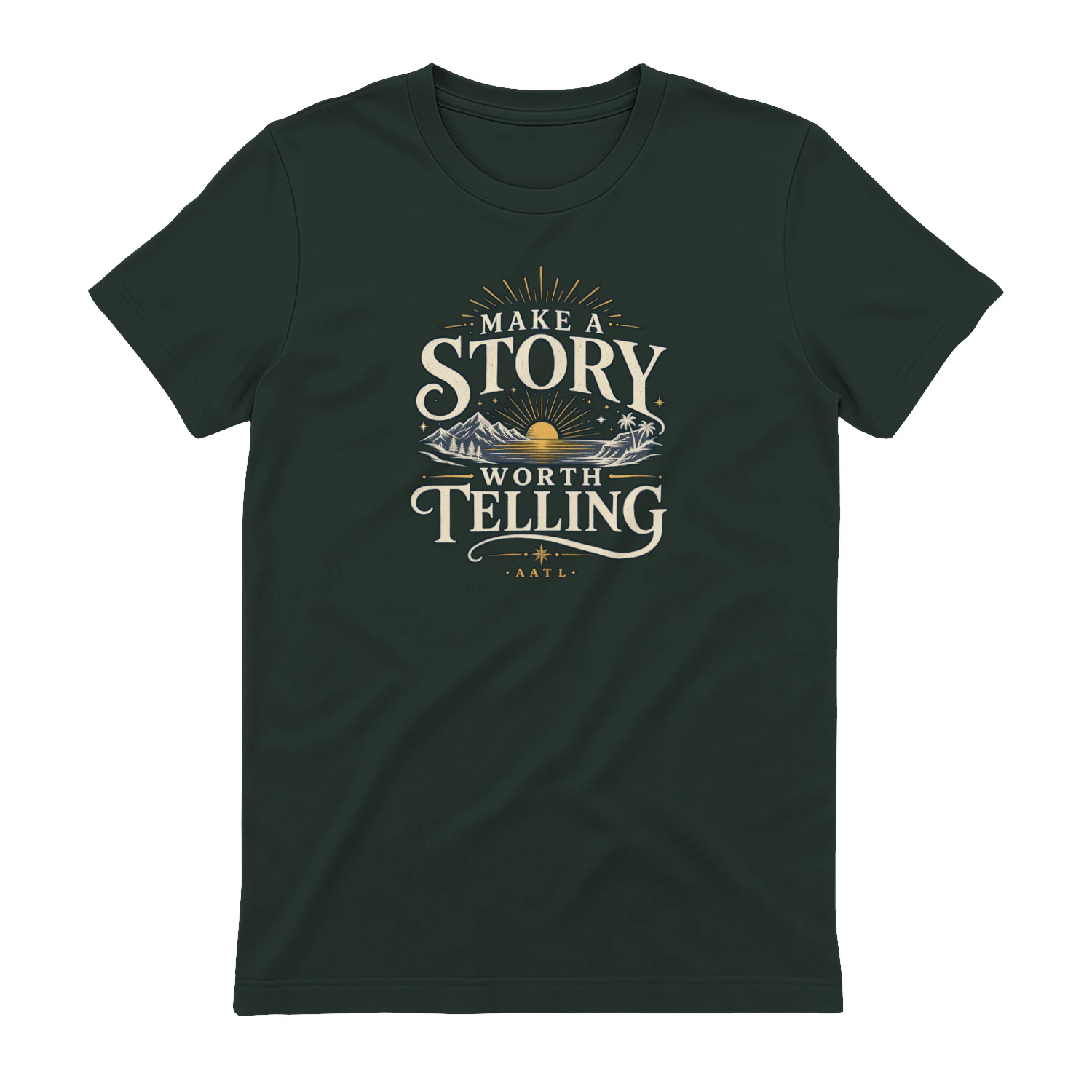
Make A Story Worth Telling
A scenic vintage-inspired design that encourages you to “Make A Story Worth Telling.” Mountains, water, sunset, and tropical details give it an adventurous feel that’s perfect for travelers, explorers, and anyone who wants a life filled with moments worth remembering.