
Video
What a Moroccan Local Perspective Changes About the Food Map
Melvin Maya’s reaction to a Marrakech cooking conversation turns into a practical look at couscous, tagine, mint tea, and the meal habits that shape Moroccan food.
Load the YouTube player to watch here. YouTube receives technical information when its player loads. This does not enable this site's analytics or marketing tracking.
Watch on YouTube ↗A local food map, not a tourist checklist
The clearest answer in this video is simple: if you are trying to understand Moroccan food, start with couscous, tagine, mint tea, bread, and fruit. Melvin Maya’s reaction works because it does not stay at the level of “that looks good.” It keeps circling back to how a local cook explains the food system around Marrakech, which makes the video feel less like a casual tasting and more like a small lesson in how meals are actually built.
Melvin is reacting to Walter’s World visiting Marrakech and speaking with Ilham after a cooking class at Fun de epis. That setup matters because Ilham is not just naming dishes; she is describing the rhythm of eating, the way meals are timed, and the ingredients people keep returning to. Melvin responds like a viewer trying to piece the whole thing together, asking the same practical questions many travelers would ask: what is couscous, when do people eat it, what is tagine, and what shows up for dessert?
Couscous is treated like a full meal, not a side
One of the biggest points in the conversation is couscous. Ilham describes it as a major Moroccan dish and pushes back on the idea that it is the same quick version people may know elsewhere. In her explanation, couscous is not a fast convenience food. It is a substantial meal built with vegetables and meat, and it takes time to cook.
That detail changes how the word lands. Melvin even pauses to admit that, based on the plate shown, he does not fully know what couscous is. That reaction is part of what makes the clip useful. He is saying out loud what many viewers may be thinking: the name is familiar, but the dish itself can still feel undefined until someone local explains it.
The food described here sounds like something shaped for a shared table rather than a quick personal lunch. Ilham’s explanation suggests a dish that belongs to time, patience, and a family-style meal structure. That is a different frame from the instant-couscous image many viewers may bring in from elsewhere.
Tagine is the meal people point travelers toward
If couscous is the broad answer, tagine is the dish that gives the video its visual hook. Melvin clearly lights up when tagine comes up, especially after he has already helped make one during the cooking class. The discussion makes it clear that tagine is both a pot and a cooking style, not just a single recipe.
Ilham describes tagine as a terracotta pot used for different combinations, including lamb with prunes and chicken with preserved lemon and red olives. Melvin also mentions the version they made with beef and pears. That matters because the video does not reduce tagine to one fixed flavor profile. Instead, it presents tagine as a flexible Moroccan form that can shift with ingredients while keeping the same basic identity.
The way Melvin talks about it after cooking suggests that the dish made an impression precisely because it was new to him physically, not just conceptually. He notices the shape, describes it almost like a little volcano, and asks whether similar cookware exists elsewhere. That observation is useful because it captures the way unfamiliar cookware can become part of the memory of a meal.
Moroccan mealtimes and why dinner is lighter
The video also gives a useful picture of when people eat. Ilham explains that breakfast can begin early, especially in the countryside, while city schedules may start a little later. Lunch appears to be the main meal, and dinner is lighter than many viewers might expect.
That part of the conversation matters because it frames the dishes differently. If lunch is the big meal, then tagine belongs there. If dinner is lighter, then soup, pasta with tomato sauce, bread with jam, olive oil, and similar simple foods make more sense. Melvin seems interested in this rhythm because it helps him place the dishes in a real day rather than treating them like standalone menu items.
He also notices that people do not necessarily spend hours at the dinner table the way some viewers might imagine. The explanation points to quick meals and a different pace from the heavy late dinners many outsiders might expect. That is one of the strongest cultural takeaways in the clip: Moroccan food is not just about what is served, but when and why it is served.
Dessert leans simple, fruity, and fragrant
When the conversation reaches dessert, it does not move toward elaborate cakes. Instead, the local explanation stays simple. Fruit is central, oranges are dressed with sugar, cinnamon, and orange blossom, and sweets remain modest rather than oversized.
Melvin reacts to that with a lot of curiosity, especially when orange blossom comes up. He keeps returning to that scent as something that feels tied to Morocco. That gives the video a stronger sensory identity. Food is not only a matter of taste here; it is also about aroma and the ingredients people associate with the place.
The creator’s reaction helps underscore how Moroccan desserts appear to be built around the end of a meal rather than a separate sugar-heavy event. Even the crepes described in the conversation are presented simply, with jam on top. That simplicity is part of the point.
Mint tea as the social center of the table
Mint tea is the clearest example of food in the video becoming social ritual. Ilham describes it as an important part of Moroccan hospitality and something people drink throughout the day. Melvin immediately connects with that idea, comparing it to a shared glass of wine in other places: something you drink while talking.
That comparison is one of the more useful moments in the reaction because it translates the role of tea without flattening it. The tea is not just a beverage on the side. It is a signal of welcome and a reason to linger. Melvin’s response makes clear that this is the kind of detail travelers remember because it changes how a meal feels, not just how it tastes.
He also picks up on the orange blossom and mint tea combination as part of the smell of Morocco. That kind of observation gives the feature its strongest human texture. The video is not only answering what to eat in Morocco. It is also telling viewers what Morocco may smell and feel like at the table.
What stands out most in the reaction
What makes the clip work is that Melvin does not force the conversation into a hard review format. He reacts like someone trying to understand a food culture from the inside out. He is curious about couscous because it is not what he expected. He is drawn to tagine because the dish is both practical and distinctive. He is amused by the pace of meals, and he clearly likes the idea of tea as a social habit.
That is why the title’s promise — what to eat in Morocco from a local’s perspective — actually pays off. The local perspective changes the food list from a set of tourist targets into a pattern of eating: couscous for substance, tagine for the main meal, mint tea for hospitality, bread for daily use, and fruit and simple sweets for dessert.
For travelers, that is more useful than a generic “best dishes” list because it shows the shape of a day, not just the contents of a menu. And for viewers of the reaction itself, it makes the video feel like a conversation worth having.
Watch the original video on YouTube ↗
All About The Life
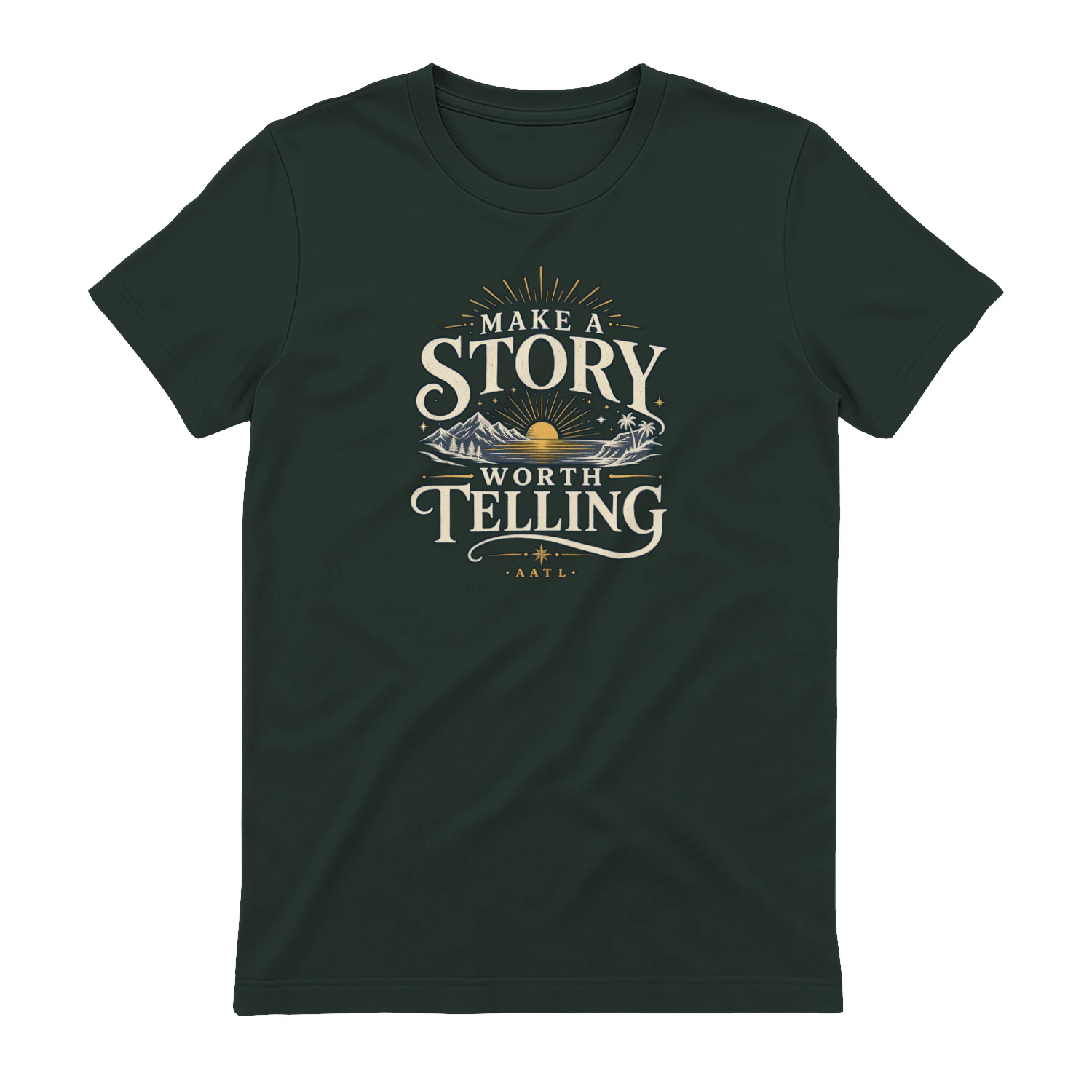
Make A Story Worth Telling
A scenic vintage-inspired design that encourages you to “Make A Story Worth Telling.” Mountains, water, sunset, and tropical details give it an adventurous feel that’s perfect for travelers, explorers, and anyone who wants a life filled with moments worth remembering.