
Video
When “American” Turns Out to Be British: Melvin Maya Reacts to a List of Shared Roots
Melvin Maya’s reaction to WatchMojo UK’s list works because the video keeps pulling familiar American symbols back across the Atlantic. The surprises are in the details, but the larger point is about how culture gets repackaged over time.
What the list is really doing
The simplest way to read this video is as a correction exercise. WatchMojo UK is not arguing that America has no culture of its own. It is pointing out that some of the things most people casually treat as quintessentially American have earlier roots in Britain. That’s the hook, and it gives Melvin Maya a steady stream of small reversals to react to.
The direct answer is straightforward: the list says that apple pie, the YMCA, chocolate bars, sandwiches, The Office, plastic surgery, the light bulb, donuts, baseball, and the national anthem all have British connections that are easy to miss if you only know the American version of the story. Melvin’s reaction works because he keeps stopping to compare what he thought he knew with what the video is claiming.
That comparison is what gives the feature its shape. This is not just a trivia list. It’s a reminder that national identity often gets built by repetition, not by pure invention. A thing becomes “American” because America keeps using it, celebrating it, and renaming it in its own image.
Why the food examples land first
The opening stretch is strong because food is one of the quickest ways to test a cultural claim. Apple pie feels like a classic American symbol, so when the video says the British were serving a version of it centuries earlier, the familiar phrase “as American as apple pie” suddenly becomes a little less absolute. Melvin doesn’t treat that as a major controversy; he treats it as the kind of fact that is easy to hear, file away, and then half-forget until someone brings it up again.
The same thing happens with chocolate bars and donuts. Those examples are effective because they sit in everyday life rather than in textbooks. They are not rare historical artifacts. They are snacks, habits, and defaults. That makes the British origin claim feel more immediate. If something you can buy on a random afternoon has a lineage stretching back across the Atlantic, the idea of “American invention” starts to look more layered.
Melvin’s own commentary around donuts fits that perfectly. He doesn’t just accept the claim and move on. He uses it as a springboard into his own preferences, talking about what kind of donuts he likes and where he thinks the best ones are for him personally. That kind of response keeps the video grounded. The historical point matters, but so does the fact that people experience these foods through memory, routine, and local loyalty.
When the video shifts from everyday habits to culture
Once the list moves away from food, it starts to broaden into habits and institutions. Sandwiches are a good example because they feel so ordinary that people rarely stop to ask where the name or format came from. The video traces that back to England, and Melvin reacts the way a lot of viewers probably do: with a kind of delayed recognition. Of course something that common would have a longer story than the version most people casually repeat.
The YMCA and The Office move the conversation into a different register. Now the subject is not just what Americans eat or hold in their hands, but what they watch, sing, and associate with modern life. The YMCA is framed as a British-born charity before it became a disco-era cultural reference. The Office is even more interesting because it shows how an idea can travel, transform, and then come to feel native in a new place.
Melvin’s reaction to The Office is one of the more revealing parts of the video. He brings his own viewing habits into the moment, saying he has seen the American version and is aware of Ricky Gervais and the British original. That turns the segment from trivia into personal memory. He is not just hearing that a show started elsewhere. He is measuring his own viewing history against the claim.
The sections that sparked Melvin Maya’s strongest reactions
The plastic surgery segment gets a more reflective response. Melvin notices the irony in the fact that a medical practice associated in the public imagination with vanity and cosmetic change is presented here as something that grew out of reconstructive care for injured soldiers. He does not linger on it as a moral argument. Instead, he uses it to point out how far a practice can move from its original purpose once it enters mainstream use.
The light bulb segment works differently. It is less personal and more skeptical. Melvin responds to the familiar debate around Edison by treating the video’s claim as part of a larger pattern: a famous American figure being placed alongside earlier British contributors. That’s one of the recurring pleasures of the list. It doesn’t just replace one national story with another. It shows how invention often involves multiple people in multiple places, even when one name becomes the public face of the result.
Donuts bring the tone back to something lighter, but they also reinforce the list’s broader argument. A treat can become a national comfort food without starting in that nation. Melvin’s discussion of local donut preferences adds useful texture here because it reminds the viewer that origin stories and lived food culture are not the same thing.
Why the anthem and baseball feel like the biggest reversals
The baseball entry and the national anthem feel like the list’s biggest flips because both are symbols people instinctively tie to American identity. Baseball is treated as a national sport, while the anthem is one of the clearest ceremonial markers of the country itself. Hearing both linked to British antecedents changes the emotional weight of the list.
Melvin’s reaction to baseball is curious rather than defensive. He asks the practical question the video invites: if the game traces back to the UK, what is the sport’s footprint there now? That is a useful response because it shows the difference between origin and ownership. A sport can begin in one place and become culturally dominant somewhere else without erasing either history.
The anthem may be the sharpest surprise of all. The idea that “The Star-Spangled Banner” is set to the tune of an older English drinking song is the kind of fact that makes the whole video click. Melvin’s response captures that sense of discovery. It is not about disputing the claim. It is about realizing how much ceremonial national identity can depend on inherited material.
A British-origin list that becomes a conversation about identity
What makes this reaction feature work is that Melvin never treats the list like a gotcha. He reacts like someone processing a bunch of familiar things that suddenly have longer backstories than expected. That gives the video a smarter center than simple surprise.
The bigger takeaway is that national culture is usually assembled from borrowed parts, adapted forms, and local habits that become familiar enough to feel original. WatchMojo UK builds the list around that idea, and Melvin Maya keeps it watchable by responding with a mix of recognition, curiosity, and personal examples.
So the video is not really saying America has copied Britain in a cheap or shallow sense. It is showing how traditions travel, change shape, and pick up new meanings once they land somewhere else. That is why the list stays interesting after the first reveal. Each item asks the same question in a slightly different way: when did this become “ours,” and how much of the older story still remains?
Watch the original video on YouTube ↗
All About The Life
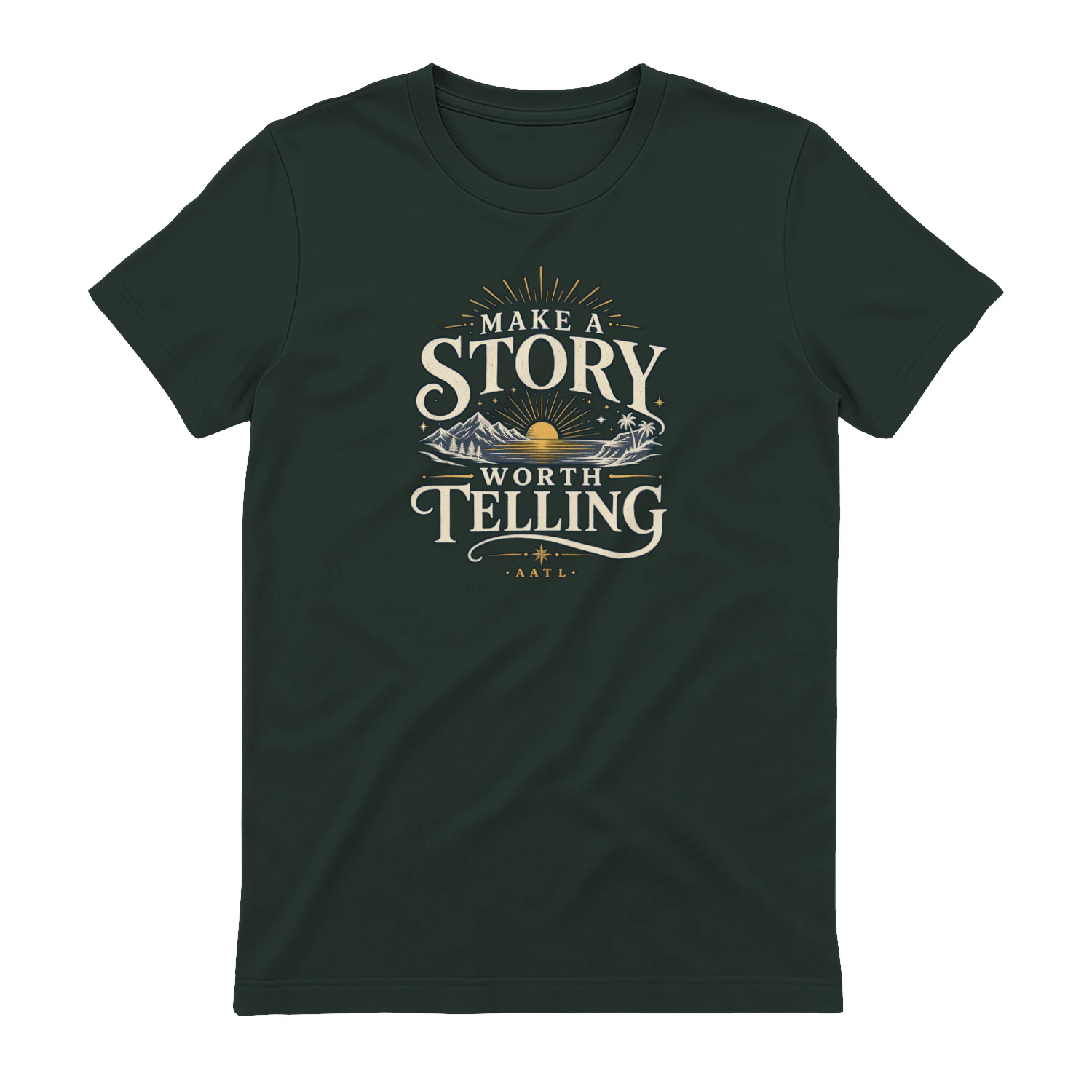
Make A Story Worth Telling
A scenic vintage-inspired design that encourages you to “Make A Story Worth Telling.” Mountains, water, sunset, and tropical details give it an adventurous feel that’s perfect for travelers, explorers, and anyone who wants a life filled with moments worth remembering.