
Video
Why Melvin Maya Lets Ren’s “Hi Ren” Play Straight Through
A first-time reaction becomes a wider conversation about inner conflict, creative doubt, and why one performance feels too complete to keep stopping.
Load the YouTube player to watch here. YouTube receives technical information when its player loads. This does not enable this site's analytics or marketing tracking.
Watch on YouTube ↗What this reaction is set up to do
The direct answer is simple: Melvin Maya treats Ren’s “Hi Ren” as a performance that needs room to breathe. Instead of chopping it up with constant pauses, he lets most of it play straight through and then talks through why it hit so hard. That choice shapes the whole video. It is less a line-by-line breakdown than a reaction built around attention, patience, and the sense that the song needs to be heard as a complete arc.
That framing matters because the video is not just about one track. It is also the start of a wider look at Ren’s work. Melvin says he is taking Kevin Tarney down the “Ren rabbit hole,” which turns this upload into an entry point rather than a one-off reaction. The result is a companion feature that does two things at once: it captures the impact of this first listen and it signals that there is more to come.
Why Kevin Tarney’s presence matters
Kevin Tarney is not introduced as a stranger. Melvin explains that Kevin has been on the channel before and has also appeared on his podcast, so there is already a shared comfort level between them. That matters because the conversation around Hi Ren feels more like two people thinking aloud than one host narrating to a guest. Kevin also comes with his own music background through Gather the Corners, a two-piece band based in Houston, Texas.
Melvin uses that context to widen the conversation. Kevin is not just a reaction partner; he is someone who can hear the song through the ears of a musician. That helps the video move beyond “Did you like it?” into a more layered response about arrangement, performance, and the way the song tells its story. Melvin even positions Kevin as the one who can lead this particular reaction, which gives the video a slightly different rhythm from a solo watch-along.
A song that sounds like an argument with yourself
What stands out most in the discussion is how quickly both of them recognize the song as an inner conflict rather than a simple character sketch. Melvin describes the multiple-camera presentation as giving the feeling of an angel-and-demon setup, even if what is really happening is more like one self speaking against another. Kevin reaches for the same kind of idea in his own way, seeing the piece as something that taps into the mental back-and-forth many people experience.
That is the central reading the video keeps returning to: Hi Ren works because it sounds like a person split in two. Melvin connects that split to creative doubt, imposter syndrome, and the pressure people feel when they are trying to figure out whether they are good enough. He makes the point plainly that if you think you are better than you are, you can lie to yourself, but if you are not confident enough, you may never step into the opportunities that are available to you. That tension is what gives the song its force.
The video also treats the track as something that reaches beyond musicians. Melvin says the theme can apply to anyone doing anything with their life, because self-questioning is not limited to artists. That keeps the conversation grounded. The song may be dramatic, but the reaction does not turn it into a distant masterpiece. It stays tied to a familiar human struggle: the voice in your head that doubts, argues, protects, and undermines all at once.
Why the performance lands without constant pauses
One of the most interesting things about the reaction is that Kevin does not stop the song once. Melvin notes this directly and seems a little surprised by it, but he also respects the choice. Kevin says stopping it would have felt rude, because the piece is built like a full experience. That response says a lot about how the performance works: it asks for attention in a continuous stretch, and it rewards that attention by unfolding like a story rather than a collection of isolated lines.
Melvin compares the feeling to a long-form classic like Bohemian Rhapsody, not as a stylistic copy but as a song that arrives with a sense of scale. The comparison is useful because it explains why the pair react the way they do. They are not hearing a single hook they want to interrupt and analyze. They are hearing a sequence of shifts, characters, and emotional turns that only really makes sense when heard whole.
That is also why the video feels more immersive than some reaction clips. Melvin does not rush to explain every lyric as it appears. Instead, he lets the performance establish its own momentum, then he comes back afterward to talk through what it meant. In that sense, the reaction mirrors the song’s own structure: tension first, reflection later.
Where the conversation turns after the song ends
Once the performance is over, Melvin and Kevin move into a broader conversation about Ren’s background and what this particular song represents in his catalog. Melvin says Ren has been making music for roughly 12 to 15 years across different projects and that Hi Ren has become the track that pushed him into a much bigger spotlight. He also says the song has already drawn a huge amount of attention and spawned many reaction videos, which is part of why this upload feels like an entry into a larger moment, not just a standalone watch.
Melvin also talks through what he has gathered about Ren’s health history and the way that history connects to the music. He says Ren was ill at a young age, went through misdiagnosis, and later learned more about what was going on with his body and mind. He does not turn that into speculation; he presents it as background that helps explain why the song carries so much emotional weight. The same is true of the material around treatment and the release pattern of recent songs, which Melvin mentions carefully as part of the broader context he has learned.
The other thing the conversation highlights is Ren’s versatility. Melvin says this is not the only kind of song Ren makes and that future reactions will move into different material, including songs with the Big Push. That matters because it prevents Hi Ren from becoming the only lens through which Ren is viewed. The video is really saying: start here, but do not stop here.
Why this video is also an invitation to keep exploring Ren
By the end, the upload has become a setup for a series as much as a single reaction. Melvin closes by telling viewers that the “Ren rabbit hole” is just beginning and that more videos will follow. That gives the feature a practical shape: this is the point where a viewer can decide whether to keep going with the catalog.
For audiences looking for a Ren Hi Ren reaction that does not overtalk the performance, this one offers a good balance. It gives the song room, lets the guest respond naturally, and then adds enough context to make the reaction useful without pretending to explain everything. The strength of the video is that it stays close to the experience of hearing the song for the first time. It does not flatten the track into a takeaway. It leaves it sounding like what it is: a complicated conversation with yourself, performed as a piece of music.
Watch the original video on YouTube ↗
All About The Life
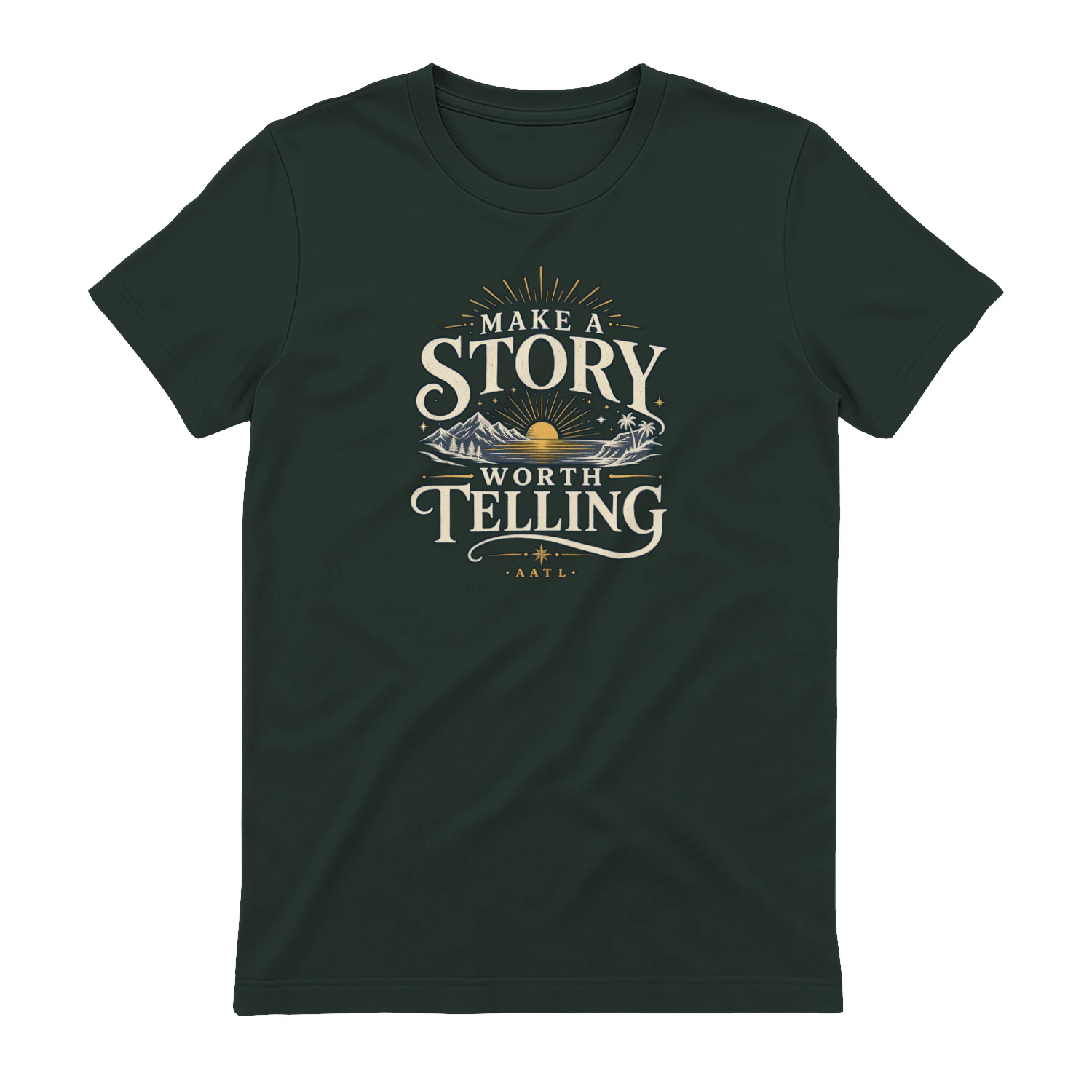
Make A Story Worth Telling
A scenic vintage-inspired design that encourages you to “Make A Story Worth Telling.” Mountains, water, sunset, and tropical details give it an adventurous feel that’s perfect for travelers, explorers, and anyone who wants a life filled with moments worth remembering.