
Video
Why Melvin Maya Reads Ren’s “Money Game Part 2” as a Portrait of Greed and Everyday Dependence
Melvin Maya’s reaction to Ren’s “Money Game Part 2” is less about surprise than recognition. He keeps circling back to greed, power, scarcity, and the uncomfortable idea that ordinary life still feeds the system.
Load the YouTube player to watch here. YouTube receives technical information when its player loads. This does not enable this site's analytics or marketing tracking.
Watch on YouTube ↗What Melvin hears in Ren’s money critique
The direct answer is simple: Melvin Maya hears Ren’s “Money Game Part 2” as a song about greed, power, and how hard it is to stand completely outside the system money creates. He does not treat it like a puzzle or a flex track. He treats it like a statement about how everyday life actually works. That is why his reaction keeps circling back to the same core idea: nearly everything flows back to money in one way or another.
He says the song lands because it feels accurate. For him, the complaint is not abstract. It is about politics, war, consumer habits, and even the small decisions people make without thinking about them too much. Ren is not just naming a problem in the air. He is pressing on the feeling that money touches almost every part of modern life.
Why the song feels bigger than one performance
Melvin opens by explaining that this is not his first time with the track in the Ren sequence. He had already reacted to part three, then went back to find part two after getting comments suggesting he should hear the earlier pieces as well. That matters because his response is shaped by discovery as much as by the song itself. He is not pretending to be arriving with complete context; instead, he is following the catalog and catching up.
That makes the video feel more grounded. Rather than trying to sound like an expert on Ren, Melvin reacts like a viewer who is piecing together the larger picture in real time. When the lyrics move toward greed and control, he does not stretch for grand theory. He stays with what the song seems to be saying: money drives choices, and people often participate in that system even when they wish they did not.
His reaction becomes most interesting when he admits that the song is hard to escape because life itself is hard to escape from. That is the shape of the feature here. Not a dramatic overstatement, but a quiet recognition that the song is tapping into something ordinary and frustrating at the same time.
The Downing Street line and the political edge
One of the moments Melvin pauses on is the reference to Number 10 Downing Street. He stops to ask whether that is the equivalent of the White House, showing that the lyric is pushing him toward a political reading even if he is not fully certain of every reference. He does not force the point. He simply notices that the song is speaking in the language of power.
That pause matters because it shows how Ren writes. The song does not stay in the abstract zone of “money is bad.” It points toward institutions and leadership, the places where money and decision-making meet. Melvin responds to that by reading the line as part of a broader argument about greed and control.
He also notices the tone shift around the line. The lyric sounds playful for a moment, then quickly slides back into a darker idea. That contrast is part of why the song sticks with him. It is not delivered like a lecture. It moves between humor, threat, and critique, which keeps the listener from settling into one easy emotional response.
From shells to scarcity: how the lyric turns economic
Melvin is especially engaged when the song starts working through the “she sells seashells” image. He recognizes that Ren is using something familiar as a way to talk about supply, demand, and manufactured scarcity. The example gives the song a practical edge. It is not just saying “money changes things.” It is showing how value can be created, inflated, or manipulated.
He calls attention to the way the song links shells, land, and stockpiling. That matters because it gives the reaction a local dimension. Melvin starts thinking about housing and land around Houston, where larger plots have become harder to find near the city and suburbs. He does not present that as a researched case study; he presents it as lived observation. The lyric pushes him toward something he already sees around him: land gets bought up, space gets tighter, and access becomes more limited.
That is a strong example of why the video works as a companion feature. The song gives the structure, but Melvin’s response supplies the human scale. He is hearing the lyric through the lens of everyday pressure, especially the sense that what used to feel available now feels increasingly out of reach.
Why the song lands in everyday life
The part of Melvin’s reaction that feels most honest is the moment he says it is almost impossible not to be part of the money system. He does not frame this as surrender so much as recognition. Even people who are skeptical of the system still have to buy, sell, work, consume, and survive inside it. That tension is what gives the song weight for him.
He expands on that idea by pointing out that daily life itself feeds the machine. Supporting a company, making a purchase, consuming a show, using a service — all of it loops back into the larger economy. His point is not that every action is equally meaningful, but that no one lives outside the structure entirely. That is where Ren’s song lands for him: it makes the listener feel how ordinary participation still connects to larger systems of money and power.
Melvin also takes the song’s argument into the present by linking it to inflation and rising costs of living. Again, he is not making a formal economic claim. He is describing the pressure people feel when money stretches less than it used to. That pressure makes the song feel less like commentary from a distance and more like a reflection of what people have to think about every day.
The reaction is also a map of how Melvin listens
This video is not just about Ren’s lyric writing. It also shows how Melvin approaches reactions when a song carries an argument. He listens for meaning, then slows down when a line seems to point at something larger than the music itself. He asks questions when a reference goes beyond his immediate knowledge, and he lets the song remain bigger than his own first pass through it.
That approach gives the piece its value. Melvin is not trying to dominate the meaning of “Money Game Part 2.” He is showing how it hits him: greed, politics, scarcity, and the practical necessity of money all sit close together. The reaction is strongest when he allows those ideas to remain unsettled rather than forcing them into a neat summary.
It also explains why he says he wants to go back and watch part one next. The song has become part of a sequence for him, not just a one-off listen. He is following the thread because the thread feels worth following.
Watch the original video
Original video: https://www.youtube.com/watch?v=IsknFon4IwY
Watch the original video on YouTube ↗
All About The Life
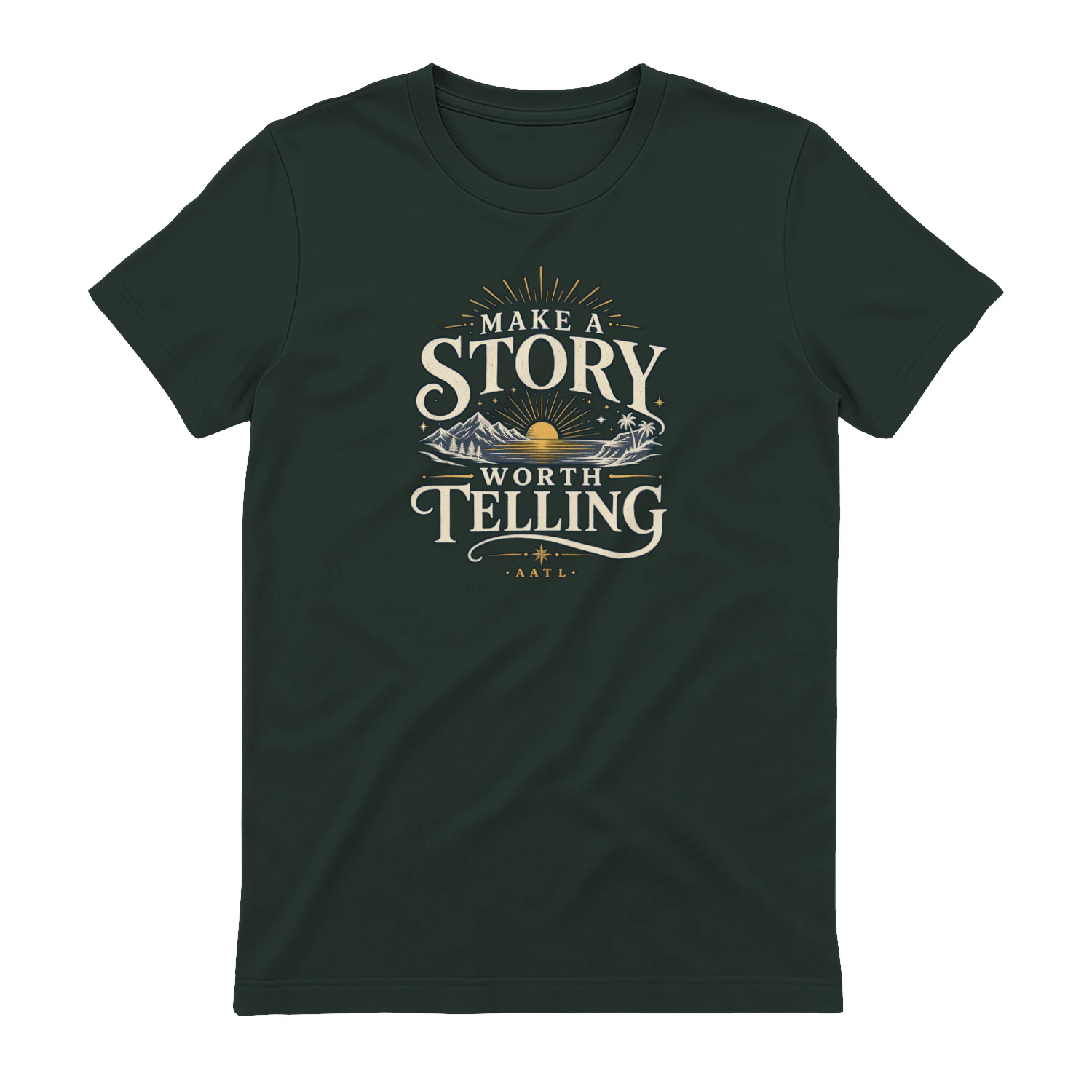
Make A Story Worth Telling
A scenic vintage-inspired design that encourages you to “Make A Story Worth Telling.” Mountains, water, sunset, and tropical details give it an adventurous feel that’s perfect for travelers, explorers, and anyone who wants a life filled with moments worth remembering.