
Video
Why Melvin Maya’s Canada Reaction Feels Like a Travel Wish List, Not Just a Top 10 List
Melvin Maya reacts to a Canada travel roundup with a mix of curiosity, personal travel dreams, and real interest in how the country balances iconic nature with major cities.
The appeal of Canada is variety, not just a checklist
Melvin Maya’s reaction to best places to visit in Canada is anchored in one simple idea: the country keeps switching registers. One moment the video is selling glaciers, waterfalls, and mountain parks; the next it is pointing toward fortified cities, boardwalks, towers, museums, and harbor streets. That balance is what gives the reaction its shape. The video is not treated like a neat countdown to memorize. It becomes a running inventory of places Melvin can imagine wanting to visit himself.
If you want the direct answer, the clip is a reaction to a Canada travel roundup, and the strongest impression is how easily the list moves between natural landmarks and urban destinations. Banff, Niagara Falls, Jasper, and Cape Breton sit beside Quebec City, Toronto, Ottawa, Vancouver, and St. John’s. That mix gives the video momentum, because every new location offers a different version of Canada instead of another copy of the last stop.
The places that immediately stand out
Melvin’s response to Banff National Park is the most personal stretch in the reaction. He does not talk about it like a place he has already visited and can describe from experience. He talks like someone who has carried it around in his head for a while. Banff has clearly been on his list, and he connects that interest to the feeling that the park would be the kind of place you experience emotionally as much as visually. He does not overstate it; he just suggests that seeing it in person might land differently than seeing clips online.
That same sense of anticipation carries into Niagara Falls. Here, Melvin shifts from admiration to curiosity. He has already seen a separate video that showed the Canada side of the falls from a hotel window, and that detail leads him to ask practical questions: whether the stay is worth it, whether the price is unusual, and which hotel it actually was. The reaction works because he is not just saying the waterfalls look good. He is thinking through how someone would actually experience them.
Quebec City sparks a different kind of response. The fortified-city detail catches his attention right away, and it sounds like one of those facts that changes how a place is understood. He seems especially interested in the contrast between old-world streets, military history, and the city’s cliffside views over the Saint Lawrence River. That interest is not dramatic; it is the quieter excitement of realizing a place has a layer he did not know about.
Why the cities matter alongside the landscapes
The reaction gives Toronto a similar treatment. Melvin notices that the city stands out in a country often associated with wilderness and mountain scenery. His comments on Hill House, which he reads as more like a castle than a house, show how architecture can change the tone of a place. He also flags the CN Tower as a familiar kind of landmark: the type of viewpoint that lets a visitor take in an entire city from above. That preference shows up again later in the reaction when he talks about his own habit of visiting tall observation points in other cities.
Ottawa gets less of a purely emotional reaction and more of a visual one. Melvin notices the built environment first: the architecture, Parliament Hill, government buildings, museums, and the canal area. His attention seems to settle on how the city layers formal civic spaces with outdoor paths and water views. It is one of the clearer examples in the video of a capital city being presented as both administrative and scenic.
Vancouver continues that pattern, but with a stronger outdoor emphasis. Melvin reacts to the city as a place where nature and urban life are hard to separate. Stanley Park, Queen Elizabeth Park, VanDusen Botanical Garden, the Capilano Suspension Bridge, Granville Island, and Lonsdale Quay all make the city feel active rather than static. He picks up on the variety more than any single landmark, which is probably why Vancouver reads in the reaction as a place for wandering rather than just checking off one attraction.
The reaction is really about future travel possibility
What makes this companion feature different from a standard list of Canadian destinations is that Melvin keeps placing the places against his own future travel plans. He does that with Banff, with Niagara Falls, and with the idea of seeing the Northern Lights in Jasper National Park. He also does it when he talks about high viewpoints and memorable city overlooks. The pattern is consistent: he is not judging the list from the outside. He is mentally adding destinations to a personal map.
Golden, British Columbia, is a good example of how the video keeps expanding that map. The creator of the travel roundup frames Golden as an outdoor base with hiking, climbing, biking, paragliding, and rafting. Melvin’s reaction is less about the activities themselves and more about the broader idea that Canada could fill a long trip without repeating itself. That is one of the more useful takeaways from the video: the country is presented as a place where road trips and region-by-region travel actually make sense.
Cape Breton Island and St. John’s round out that impression with coastal energy. The Cabot Trail and the Skyline Trail suggest open-road views and dramatic terrain, while St. John’s brings colorful buildings, harbor views, Signal Hill, George Street, and Cape Spear lighthouse into the picture. Melvin responds to that mix by recognizing the kind of atmosphere a city like St. John’s can have: distinctive, coastal, and visually memorable.
What the list says without saying it directly
The larger point of Melvin’s reaction is that Canada does not come across as one kind of trip. It comes across as a set of very different trips that happen to share one country. That is why the video keeps working as Melvin reacts to it. Every destination feels tied to a different travel mood: mountain park, waterfall stop, heritage city, skyline view, outdoor base, coastal road trip.
That structure also explains why the reaction feels useful rather than repetitive. Melvin is not just saying each place looks nice. He is sorting the destinations by the kind of experience they imply. Banff and Jasper feel like immersion in nature. Niagara Falls feels iconic and visit-worthy. Quebec City, Toronto, and Ottawa feel layered with history, architecture, and public spaces. Vancouver, Golden, Cape Breton, and St. John’s add weather, scenery, and movement.
That is probably the strongest reason this video works as a companion feature: it shows how a travel list can become a planning tool. Not because it gives hard rankings or definitive answers, but because it helps a viewer imagine the trip in pieces. Which places are about views? Which ones are about walking? Which ones feel like stops on a road trip? Which ones would justify a longer stay?
For Melvin, the answer seems to be that several of them already do. The video leaves him with the kind of reaction travel content is supposed to produce: curiosity, a few specific questions, and a growing list of places he wants to see for himself.
Watch the original video on YouTube ↗
All About The Life
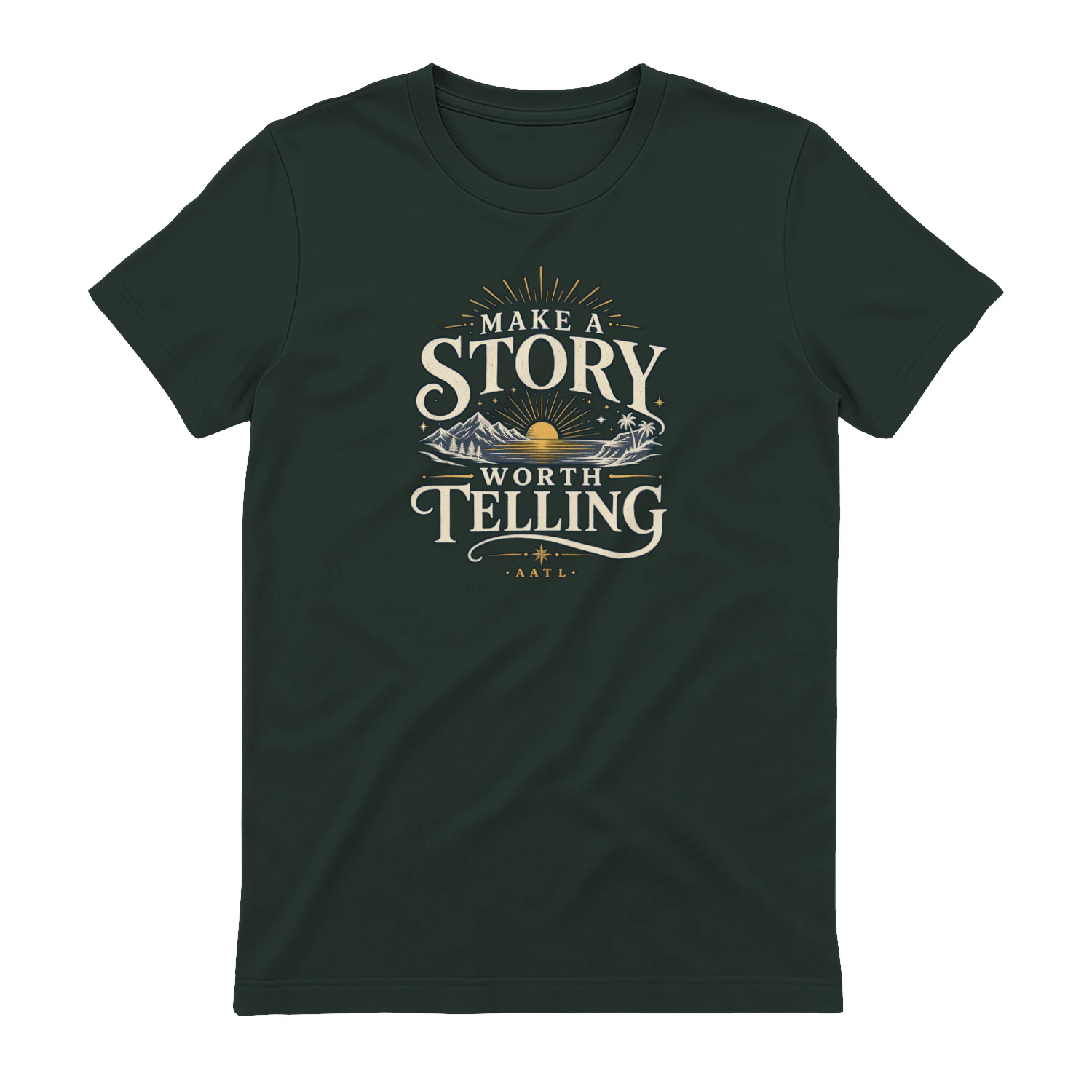
Make A Story Worth Telling
A scenic vintage-inspired design that encourages you to “Make A Story Worth Telling.” Mountains, water, sunset, and tropical details give it an adventurous feel that’s perfect for travelers, explorers, and anyone who wants a life filled with moments worth remembering.