
Video
Why Melvin Maya’s Denmark Reaction Feels Like a Mini Lesson Wrapped in a Real Response
Melvin Maya reacts to a Denmark explainer that moves from geography and language to Viking history, modern culture, and the details that make the country easy to remember.
A quick read on the video
The direct answer to what this video is doing is simple: it pairs a country explainer about Denmark with a reaction that is as much about the presentation as the facts themselves. Melvin Maya comes in expecting to learn something new, and the video gives him a neat package of geography, history, language, and culture. That structure matters. It turns a general country overview into something easier to follow and easier to remember.
What makes the reaction work is that Melvin does not treat the explainer like background noise. He reacts to the production, the pacing, and the amount of effort behind the graphics. He also keeps checking the facts against the images and examples on screen, which gives the whole piece a viewer-first feel. Rather than pretending to be an expert on Denmark, he watches like someone who is assembling a mental file on a country he has wanted to learn more about.
The overview that sets the tone
The video begins by framing Denmark as the first stop in a new country series, and that choice shapes the rest of the experience. Instead of jumping straight to trivia, the explainer starts with a broad map of where Denmark sits, how it connects to Europe, and how its wider kingdom reaches beyond the mainland. That gives the audience a useful baseline before the history segment begins.
Melvin’s reaction shows that this kind of framing matters. He notices the scale of the country, the relationship to nearby nations, and the way the video separates the mainland from the broader kingdom. The geography is not presented as a dry list; it becomes the foundation for understanding why Denmark matters as a place, not just a name on a map.
The language section has a similar effect. The explainer notes Danish as the official language and points out that many Danes also speak English and other languages. Melvin reacts to those details as part of the larger picture of a country that is small in area but broad in cultural reach. He seems to appreciate that the video is careful with its wording and does not rush past the basics.
Why the historical section sticks
The history section is where the video shifts from overview to memory. It starts with early settlement patterns, then moves into the Viking age, a period that is easy for viewers to recognize even if they do not know the finer points. The explainer ties Danish Vikings to raids, kings, and territorial influence, and that gives the video immediate shape.
Melvin responds strongly when the narrative reaches recognizable figures and turning points. Names like Harald Bluetooth and the Kalmar Union stand out not just because they are important, but because the explainer presents them in a way that makes them feel connected. The video keeps moving from one era to another without losing the thread. That helps the viewer understand Denmark as a country formed through continuity, conflict, and political change.
He also reacts to the shift from medieval power struggles to the later modern period, including the country’s neutrality in World War I, occupation in World War II, and postwar recovery. Those moments give the explainer more weight than a typical “fun facts” list. They show that Denmark’s identity is not only built on symbols and exports, but on the way it moved through difficult periods and kept its state structure intact.
The cultural details Melvin keeps returning to
A lot of the reaction energy comes from the cultural facts that feel easy to hold onto. The explainer highlights the Danish flag, noting both its look and its long history. Melvin notices that immediately, and he uses that point to reflect on how visual national symbols can carry a lot of meaning without needing a complicated explanation.
The language section offers one of the most memorable details in the video: the idea that Danish has no direct equivalent for “please,” paired with the word hygge, which the explainer describes as a kind of cozy togetherness. Melvin latches onto that because it gives the country a feeling rather than just a fact sheet. He seems especially interested in the way language can express habits and values that do not translate neatly.
The same is true of the trivia around pastry, amusement parks, and design. The explainer brings up the Danish pastry’s Austrian origin, the age of Bakken and Tivoli Gardens, and the invention of Lego. Those details are not random fillers. They help the country feel specific. Melvin’s response suggests that he appreciates when a country profile mixes history with familiar cultural touchpoints.
He also reacts to the well-known names near the end: Hans Christian Andersen, Mads Mikkelsen, and Niels Bohr. That section works because it connects Denmark to literature, film, and science without trying to overstate any one area. The result is a country portrait that feels balanced rather than promotional.
What the reaction reveals about the format
This is one of those reaction videos where the guest material does a lot of the heavy lifting, but the host still adds value by showing what stands out in real time. Melvin’s comments about the production quality are part of that value. He keeps returning to the graphics, the structure, and the effort it clearly took to put the explainer together. That reaction matters because it explains why the video lands as more than a simple information dump.
There is also a personal layer to the response. Melvin mentions Denmark as a country he has long wanted to learn more about, and that gives the video a natural curiosity. He is not forcing a strong opinion onto the subject. He is letting the country presentation guide his attention. That makes the companion feature easier to trust, because the reaction stays close to what is actually on screen.
For viewers looking for a Denmark introduction, the appeal is straightforward. The explainer covers the kind of material people usually want first: where the country is, what language is spoken, what parts of its history matter, and which cultural details make it memorable. For viewers looking for the reaction itself, the appeal is in Melvin’s visible appreciation for a well-built explainer.
Watch the original video on YouTube ↗
All About The Life
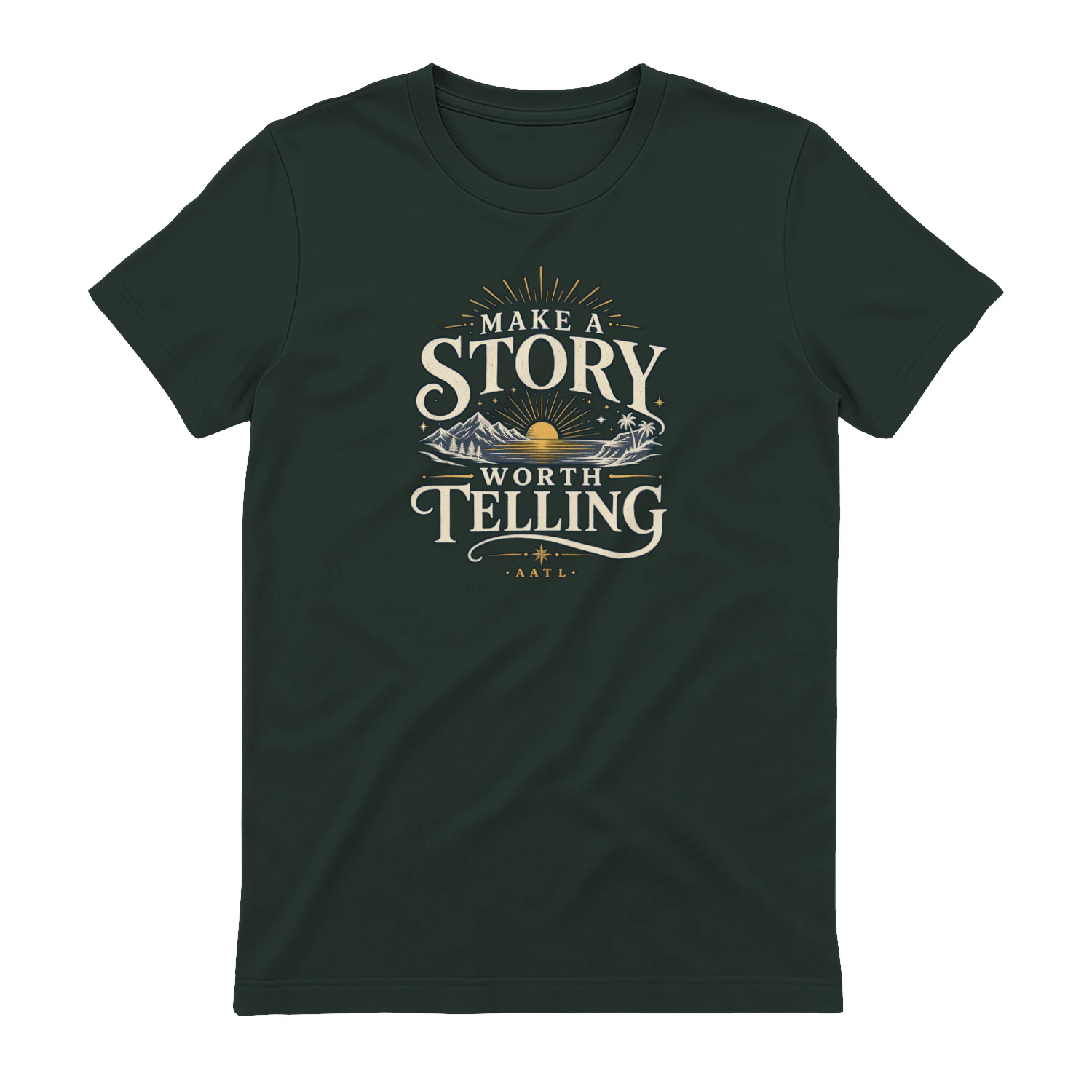
Make A Story Worth Telling
A scenic vintage-inspired design that encourages you to “Make A Story Worth Telling.” Mountains, water, sunset, and tropical details give it an adventurous feel that’s perfect for travelers, explorers, and anyone who wants a life filled with moments worth remembering.