
Video
Why Melvin Maya’s Morocco Reaction Works Even Without Much Narration
Melvin Maya’s response to a Morocco travel guide is mostly about visual curiosity: vivid blues, coastal scenes, and the questions that come up when a video lets the images do the talking.
Load the YouTube player to watch here. YouTube receives technical information when its player loads. This does not enable this site's analytics or marketing tracking.
Watch on YouTube ↗The direct answer: why this reaction holds attention
Melvin Maya’s reaction to Top Tourist Attractions in Morocco works because the video gives him something unusual to process: a travel piece that is driven far more by imagery than by explanation. The result is not a recap of landmarks with neat context. It is a viewer trying to make sense of vivid blue spaces, whitewashed surfaces, coastal views, and a few unfamiliar place names while the video keeps moving.
That changes the shape of the reaction. Instead of building around a story beat or a big payoff, Melvin’s commentary becomes a running record of curiosity. He notices color, asks where the locations are, wonders what certain structures are, and keeps returning to the same basic question: what am I looking at, and why does it look this way?
A Morocco travel guide that leans on atmosphere
From the start, Melvin is struck by the visuals. He comments on how vivid the blue looks and spends time taking in the imagery rather than rushing past it. That matters because the travel video he is watching does not behave like a conventional guide with constant narration. It presents place after place as a sequence of scenes, leaving the viewer to absorb the setting on its own terms.
Melvin clearly notices that choice. He even says the lack of narration gives him more space to really look at the photos and let them sink in. That is one of the most useful observations in the whole reaction. A travel video can become more immersive when it gives the audience room to pause mentally, instead of competing with a voiceover that explains every frame.
At the same time, he is honest about the tradeoff. Without added context, he has to guess at locations, identify structures from the visuals alone, and ask viewers to fill in gaps. The reaction is shaped by both sides of that experience: appreciation for the imagery, frustration with the missing labels.
Blue walls, white streets, and the questions they raise
One of the recurring threads in Melvin’s commentary is color. He keeps coming back to the blue palette he sees across multiple scenes and wonders whether it has some kind of meaning in Morocco or whether it is simply a visual choice. He does not claim to know the answer, and that restraint is part of what makes the reaction feel grounded.
He also notices that not every area in the montage follows the same palette. At one point, he points out a place that appears to be all white, which makes him wonder whether different regions have different looks or themes. That observation matters because it turns the video from a simple showcase into a pattern search. Melvin is not just watching pretty scenery; he is trying to figure out whether the scenery is telling him something.
The coastline adds another layer. He compares the blue and sea-facing scenes to the idea of the ocean carrying its color into the streets and walls. Whether or not the video intends that exact impression, it captures what the imagery is doing to the viewer: blending landscape and architecture into one visual identity.
Why the lack of narration changes the pace
Melvin’s reaction gives a pretty clear answer to a common travel-video question: does narration always help? In this case, his answer is basically no, not necessarily.
He says the absence of talking lets the photos and clips stand on their own. That means the viewer is not forced to split attention between listening and looking. Instead, the focus stays on the images, which can make the experience feel calmer and more deliberate.
But that same format also leaves him with fewer anchors. He wants place names, location context, and a better sense of what each structure is. When he sees what looks like a walkway with cannons, for example, he asks where it is and what it is called. When he sees a rooftop-like detail that could be candles or paint, he asks for clarification instead of pretending certainty.
That honesty shapes the reaction into something more useful than a simple thumbs-up. It shows what a viewer actually needs from a travel guide if they are trying to learn, not just admire.
What Melvin seems to want from travel content
There is a pattern in the way Melvin responds to the video: he likes being shown beautiful places, but he also wants the video to help him name and understand them. He is open to repetition if it adds to his knowledge, and he says he has already watched several Morocco videos, so he is looking for something that adds a little more each time.
That creates a clear tension in the reaction. On one hand, he enjoys the look of the montage enough to keep watching. On the other, he is left wanting explanations that would turn a visual tour into a more complete guide.
He also acknowledges, near the end, that the video may not be especially exciting from a creator’s standpoint. That comment is telling because it shows he is not reacting only as a viewer. He is also thinking about the choices behind the upload: what happens when a travel edit is mostly scenic, without much narration or structure beyond the places themselves.
The reaction ends with curiosity, not closure
The final takeaway from Melvin Maya’s Morocco reaction is not that the video fails. It is that it succeeds in one way and leaves room in another. The visuals clearly work for him. The blue architecture, the bright coastal shots, and the shift toward sandier, more open landscapes all leave an impression. But the video also triggers a set of questions that the edit itself never answers.
That is why the reaction feels more like a conversation with the footage than a verdict on it. Melvin notices what stands out, asks what he does not know, and leaves room for viewers to contribute what they can. The result is a companion watch that values both the beauty of the images and the missing context around them.
Watch the original video on YouTube ↗
All About The Life
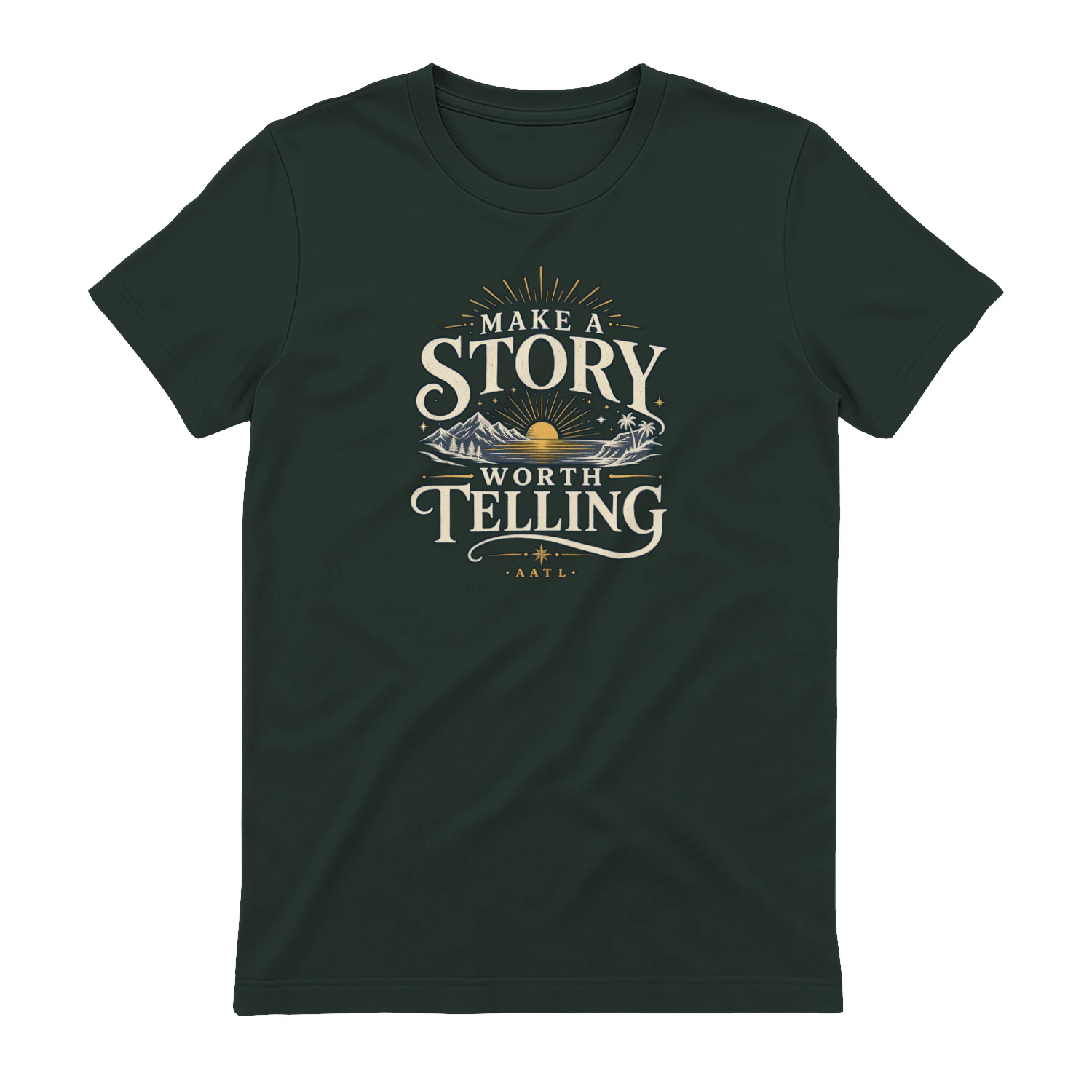
Make A Story Worth Telling
A scenic vintage-inspired design that encourages you to “Make A Story Worth Telling.” Mountains, water, sunset, and tropical details give it an adventurous feel that’s perfect for travelers, explorers, and anyone who wants a life filled with moments worth remembering.