
Video
Why Melvin Maya’s Reaction to Eden Nash’s “Save Tonight” Comes Down to Voice, Familiarity, and a Clean Cover
Melvin Maya spends this reaction sorting out who is singing, what role each performer has, and why a familiar song still lands when the cover is done well.
Load the YouTube player to watch here. YouTube receives technical information when its player loads. This does not enable this site's analytics or marketing tracking.
Watch on YouTube ↗What the reaction is really measuring
Melvin Maya’s reaction to Eden Nash covering Eagle Eye Cherry’s “Save Tonight” is built around a simple but useful question: does the performance hold up when you strip away the novelty and just listen? His answer, by the end of the video, is yes. What catches his attention first is not a technical breakdown or a long comparison to the original. It is the way the cover makes a familiar song feel present again.
That matters because Melvin does not treat this as a novelty reaction. He listens for whether the vocals land, whether the song keeps its shape, and whether the performance earns attention on its own terms. He gets to that conclusion quickly, but he does not rush past the listening. The video shows him following the performance closely enough to sort out who is doing what and why the arrangement works.
A song that still carries its hook
One reason the cover works as well as it does is that “Save Tonight” already has a strong identity. Melvin points out that the song is one of those tracks people may not have heard in a while, yet they still recognize almost immediately once it starts moving. That familiarity becomes part of the cover’s strength. The song does not need to be rebuilt from scratch. It needs to be performed well enough that the listener can hear it fresh again.
Melvin’s reaction shows that balance clearly. He remembers the original enough to know the structure and the lyrics, but he is not using that memory to score points against the cover. Instead, he is asking whether Eden Nash and the performance around her give the song enough life to stand on its own. His response suggests they do.
The strongest part of his commentary is how practical it is. He is not reaching for grand claims. He is noticing that the voice is strong, the song is recognizable, and the overall presentation makes sense. That is often the difference between a cover that feels like a repeat and one that feels worth hearing again.
Why Melvin keeps asking who is singing what
A recurring thread in the reaction is Melvin trying to figure out the exact setup of the performance. At first, he is not fully sure whether the other performer is singing alongside Eden Nash or simply supporting her on guitar and backing vocals. That uncertainty becomes part of the viewing experience. Rather than guessing too hard, he lets the performance keep unfolding until it reveals its own structure.
That detail matters because it changes how the cover is read. If the song is a duet, the interaction between the voices becomes part of the arrangement. If one person is leading and the other is supporting, the focus shifts to how the lead vocal carries the song while the accompaniment fills in the sound. Melvin’s reaction does not invent a role for the second performer. It shows him trying to understand the performance as it happens.
By the time he settles on his take, he is clear that the voices are part of what makes the cover work. He compliments Eden’s voice directly and also notes that the other singer has a good voice too. That is not a throwaway compliment. It is the point at which the performance stops being just a cover of a known song and becomes a listening experience with its own character.
The Reniverse connection and why it matters here
Melvin also places the performance in a wider circle of creators connected to Wren, which he refers to as the Reniverse. That connection is not the main subject of the video, but it gives context to why he is interested in following Eden Nash further. He explains that he discovered Eden through that broader network and that he has more reactions queued up.
This is where the feature becomes more than a one-song response. Melvin is not only reacting to a performance; he is identifying an artist he wants to keep checking in on. The cover works as an entry point because it gives him enough evidence to trust the voice and the delivery. From there, the connection to the Reniverse gives viewers a sense of where Eden Nash fits in his viewing habits without turning the piece into a fan-club pitch.
He also makes a point of saying that Eden’s channel is still relatively small, which shapes the tone of the reaction. He is encouraging attention because he thinks the talent is there, not because the video is chasing a trend. The praise feels more persuasive because it is tied to what he actually heard.
A cover that earns praise without needing extra framing
Melvin’s final judgment is straightforward: the cover is excellent. He says he may not have heard the original in a while, but he still knows a good version when he hears one. That is the cleanest way to understand the reaction. The cover does not need elaborate explanation, and Melvin does not give it any. He listens, identifies what is working, and says so plainly.
That plainness is part of what makes the video effective. The reaction does not depend on surprise or conflict. It depends on a singer delivering a familiar song with enough control and feeling to make it worth stopping for. Melvin notices the quality of the voice, the steadiness of the performance, and the way the arrangement leaves room for the song itself.
If you are coming to the video to understand why the cover got his approval, the answer is simple: it sounds good, it respects the original without sounding stuck inside it, and it gives Melvin a reason to want more from Eden Nash.
Why this reaction sticks
What keeps the reaction from feeling disposable is the way Melvin moves from uncertainty to clarity. He starts by trying to understand the setup, then lands on the thing that matters most: the performance is strong. That progression gives the video shape without turning it into a formal review.
It also leaves viewers with a clear sense of what to expect if they watch the original. They are not being sold a dramatic twist. They are being pointed toward a cover that Melvin thinks is worth hearing because it is sung well, arranged clearly, and performed by someone he believes deserves a larger audience.
Watch the original video on YouTube ↗
All About The Life
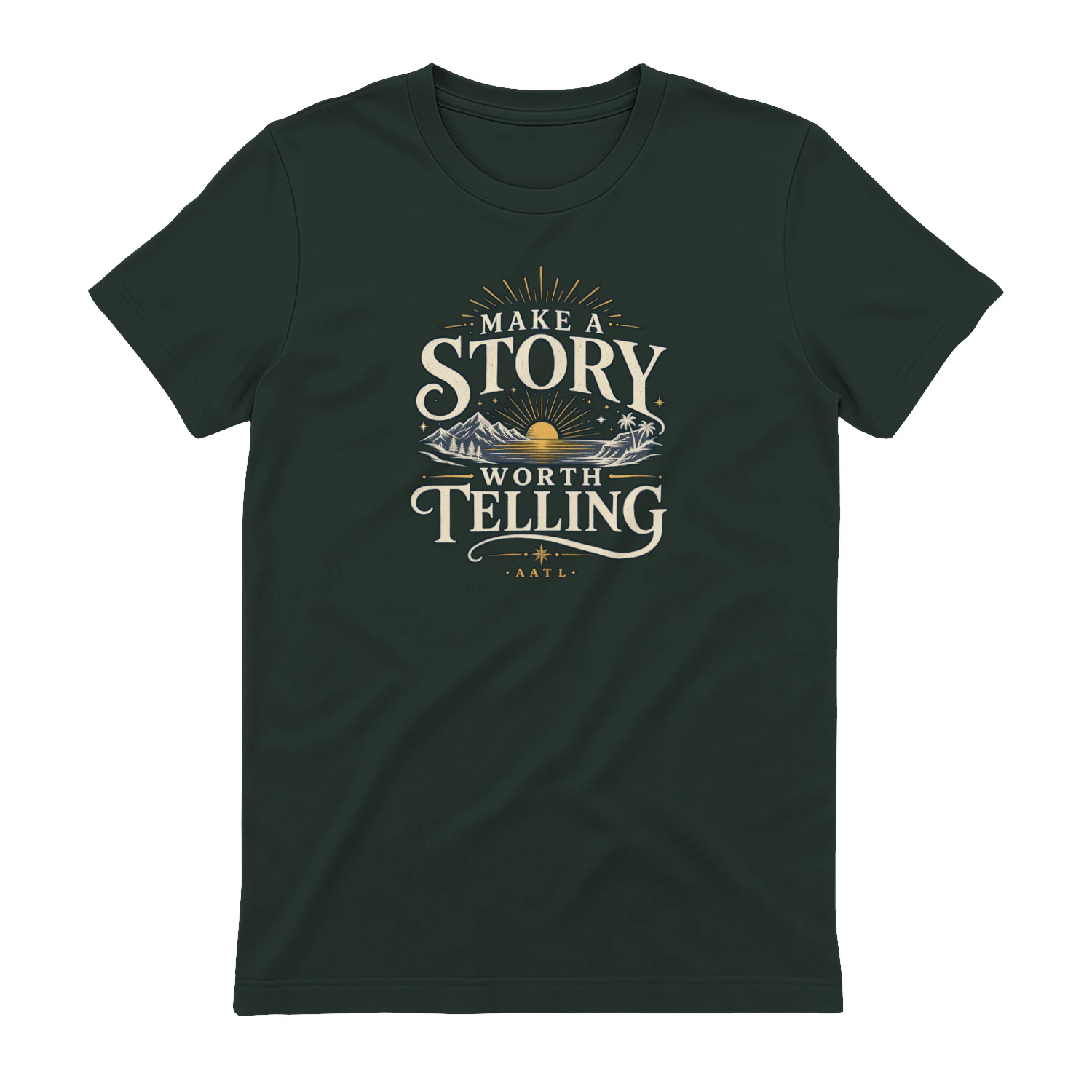
Make A Story Worth Telling
A scenic vintage-inspired design that encourages you to “Make A Story Worth Telling.” Mountains, water, sunset, and tropical details give it an adventurous feel that’s perfect for travelers, explorers, and anyone who wants a life filled with moments worth remembering.