
Video
Why Melvin Maya’s Reaction to Ren and Chinchilla’s ‘Chalk Outlines’ Feels Bigger Than a First Listen
Melvin Maya and Rachael Jai use the live version of “Chalk Outlines” to talk about performance, vulnerability, and the way Ren’s creative circle gives the song its shape.
Load the YouTube player to watch here. YouTube receives technical information when its player loads. This does not enable this site's analytics or marketing tracking.
Watch on YouTube ↗Why the live version changes the song
The simplest read on this video is also the most useful one: Melvin Maya and Rachael Jai are not just reacting to Ren and Chinchilla’s “Chalk Outlines” live performance, they are using it to show how a live version can change a song’s emotional weight. That idea comes up early and keeps guiding the rest of the conversation. Rachael already knows the studio recording, but once the live version starts, the performance feels different enough to justify revisiting it on its own terms.
Melvin frames that difference clearly without overexplaining it. The live take, in their view, is where the song’s feeling lands hardest. It is not just about cleaner vocals or sharper playing. It is about seeing the emotion happen in real time. That is the crucial shift. The reaction is less a repeat viewing than a recognition that some songs reveal their shape only when they are performed in front of people.
Chinchilla’s voice gives the track another center of gravity
One of the strongest things Rachael notices is the way Chinchilla sits inside the song. Melvin points out that this is a chance to introduce her as a solo artist with her own work, not just as someone appearing alongside Ren. In the performance, her voice does not fade into the background. It cuts through.
That matters because the song depends on contrast. Ren’s delivery is full and forceful, while Chinchilla brings a different kind of presence, one that Rachael describes as piercing through the arrangement. The result is not a competition for attention. It feels like two distinct voices carrying the same emotional load from different angles. Melvin leans into that reading, treating the collaboration as part of the song’s meaning rather than a simple feature.
The conversation also keeps returning to the idea that Rachael is only hearing one slice of Chinchilla’s range here. That observation gives the reaction a useful limitation: the performance is strong enough to make them curious, but not so complete that it replaces the larger picture of who she is as an artist.
The reaction becomes a conversation about mental health and medication
The song’s lyrics open the door to a more personal discussion, and this is where the reaction stops feeling like a standard music watch. When the performance moves through ideas about being scared of feeling okay, changing moods, and taking something to regulate yourself, Rachael connects it to a very specific emotional experience: knowing the outside world can look perfectly fine while the inside feels off.
That response gives the video its center. The song is not treated as abstract mood-setting. It is heard as a recognizable struggle. Rachael talks about the tension of not wanting to take medication when the day seems good, even when the need for balance is still there. That is not a lecture or a broad social claim; it is a personal reading grounded in what the lyrics made her feel.
Melvin does not push that interpretation away. Instead, he lets it sit as part of the reason the live version matters. The song feels less like a polished object and more like a space where people can recognize themselves. That is one reason the reaction stays memorable. It does not flatten the track into “relatable content.” It preserves the discomfort in the line about being scared of being okay.
Ren’s wider circle matters as much as the song
Another thread running through the video is Melvin’s interest in Ren’s collaborative world. He keeps pointing out that Ren is not operating in isolation. The song, in his telling, is part of a larger sequence of performances and relationships, and the order of those performances matters. He even explains that the structure of the videos was chosen to create a kind of journey through different people and different sides of Ren’s work.
That idea gives the reaction a bigger frame. Instead of treating “Chalk Outlines” as a standalone performance, Melvin presents it as one stop in a larger route through Ren’s creative universe. He uses language about districts, parishes, and a broader “verse,” but the practical point is simple: the people around Ren help shape the experience as much as the songs themselves do.
Melvin also draws a line between this musical collaboration and other creative communities, including examples from film and entertainment where one person’s momentum helps others get seen. The point is not celebrity mythology. It is that collaboration can create a real path for artists who might otherwise stay hidden.
What the room notices in the final stretch
By the end of the performance, the reaction has moved from listening into interpretation. Rachael’s comments about the song feeling like two people finding each other in a difficult emotional space give the video a clear reading, even if she is careful not to claim that was the exact intention behind it. That honesty is part of why the feature works. She is not pretending certainty where there is none.
Melvin, meanwhile, uses the moment to talk about his own hopes for a creative community in Houston. That brief turn outward does not distract from the song. It reinforces the theme underneath the whole video: artists work better when they build with other people instead of treating everyone else as competition.
What stays with the viewer is not a dramatic reveal but a set of connected observations. The live arrangement changes the song. Chinchilla’s voice matters. The lyrics invite a real conversation about mental health. And Ren’s network of collaborators is part of the experience, not a side detail.
For anyone coming to the performance through this reaction, that is the useful takeaway. The live version of “Chalk Outlines” is powerful because it gives the emotions more room to breathe, and because Melvin Maya and Rachael Jai are attentive enough to notice that breathing happening.
Watch the original video on YouTube ↗
All About The Life
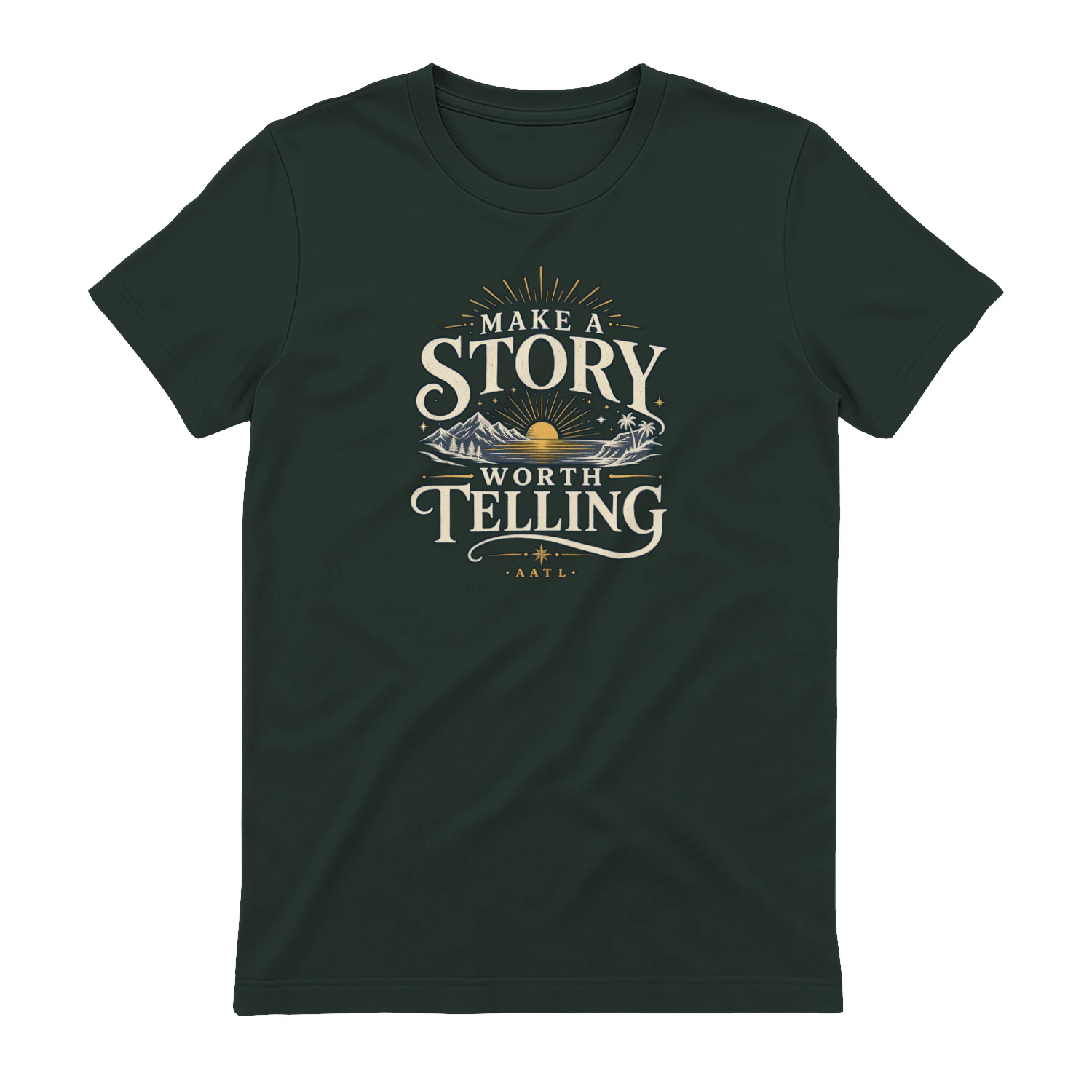
Make A Story Worth Telling
A scenic vintage-inspired design that encourages you to “Make A Story Worth Telling.” Mountains, water, sunset, and tropical details give it an adventurous feel that’s perfect for travelers, explorers, and anyone who wants a life filled with moments worth remembering.