
Video
Why Melvin Maya’s Reaction to Tessa Violet’s ‘Wishful Drinking’ Turns Into a Listening Exercise
Melvin Maya responds to Tessa Violet’s ‘Wishful Drinking’ by focusing on the video’s visual pull, her vocal tone, and the uneasy idea behind the lyrics.
What Melvin notices first
Melvin Maya does not come into Tessa Violet’s Wishful Drinking reaction as someone meeting her work for the first time, and that matters. He says he has already reacted to one of her songs before and remembers that earlier video as catchy and playful. That context shapes the way he approaches this one. He is not trying to over-explain the moment or turn it into a grand analysis. He is listening, watching, and reacting to what stands out immediately.
The first thing that gets his attention is the video itself. He says the visuals are doing a lot of the work, and he means that in a good way. The clip is simple, but it is also engaging enough that he does not want to pause it. That is a telling reaction. Some music videos invite commentary because they are packed with obvious ideas or constant visual shifts. Here, the pull seems to come from restraint. Melvin describes it as visually strong without being busy.
Why the visuals work without overcomplicating the song
A lot of reaction videos end up treating the music video as a backdrop for the commentary. Melvin does the opposite here. He responds to the visuals as part of the listening experience itself. His impression is that the video feels clean and focused, and that focus helps the song land.
He does not spell out a complex visual theory, and that is what makes the comment useful. He is reacting like a regular viewer who can feel when a video has found the right balance. The imagery pulls him in early, and that gives the song room to breathe. Instead of distracting from the track, the video seems to make the track easier to settle into.
That response also matches the way he talks about Tessa Violet’s voice. He compares her tone to another singer he discovered through Ren, Molly McKenna, because both voices feel soothing and easy to listen to. The comparison is not about copying style or placing one artist above another. It is his way of naming a quality that he can hear but not fully reduce to a technical term. For him, the voice has a softness that makes the song feel approachable even as the subject matter suggests something heavier.
The lyric idea he keeps returning to
As the song continues, Melvin starts reading the lyrics as something more than a surface-level drinking song. His first impression is that the track may be about drinking away sorrow or pain. That is the reading he offers most directly at first, and it fits the tone he is hearing.
But he does not stop there. He then shifts into a broader interpretation: the song may also be about facing the reality of a drinking problem. What interests him is the tension between those two ideas. On one side is the casual language people often use to justify drinking. On the other is the possibility that the habit is no longer harmless.
Melvin points to a line of thought in the lyrics that suggests the issue is not simply how much someone drinks, but whether they feel able to stop. That distinction becomes the heart of his reaction. He is not claiming certainty about the song’s meaning. He is thinking out loud about what the lyrics seem to suggest and why that suggestion feels familiar.
That leaves room for interpretation without turning the feature into guesswork. He says viewers can weigh in with their own take, and that openness is part of what makes the reaction feel honest. He has a reading, but he does not lock the song into one fixed message.
A personal comparison that opens the interpretation
One of the more revealing moments in the reaction comes when Melvin brings in his own drinking habit — not alcohol, but Dr Pepper. He uses that comparison to explain why he sees a difference between enjoying something and being unable to stop.
The comparison is simple: if he drinks a lot of Dr Pepper, he does not view that as a problem because he feels he could stop if he wanted to. There may be some caffeine withdrawal, but the habit still feels voluntary to him. He uses that personal example to sharpen the song’s central question. In his view, a habit becomes more serious when a person wants to stop and cannot.
That is an ordinary, relatable comparison, and it helps his interpretation stay grounded. He is not speaking as a critic trying to attach a universal theory to the song. He is working from a small personal analogy to clarify why the lyric idea feels ambiguous. The result is a reaction that is less about declaring what the song means and more about showing how a listener can reason through meaning in real time.
He also acknowledges the other side of that interpretation. People with real drinking problems often deny they have one and rationalize their behavior. That observation gives the reaction a little more weight without pushing it beyond what the video itself supports. It is one of the few moments where he broadens the discussion beyond his own interpretation, and it helps the feature feel balanced.
Why the ending matters in a reaction like this
By the end of the video, Melvin has settled into a clear view: he likes the song, he likes the visuals, and he thinks the lyrics may be pointing toward a complicated relationship with drinking. He does not pretend the song has one obvious answer. Instead, he treats it as a piece that can be heard in more than one way.
That is what gives this reaction its shape. It is not built on shock, a big reveal, or an over-the-top commentary style. It is built on attention. He listens closely enough to notice tone, mood, and the difference between surface meaning and emotional implication. The video rewards that kind of listening because it is visually restrained and lyrically open-ended.
If there is a larger takeaway here, it is that some reaction videos work best when they slow down and let a song reveal its own tensions. Melvin’s response to Wishful Drinking does that without forcing it. He hears the beat, notices the visuals, compares the voice, and then follows the song toward a question rather than a conclusion.
That makes the feature feel less like a recap and more like a record of how a song can change shape while someone is listening.
Watch the original video on YouTube ↗
All About The Life
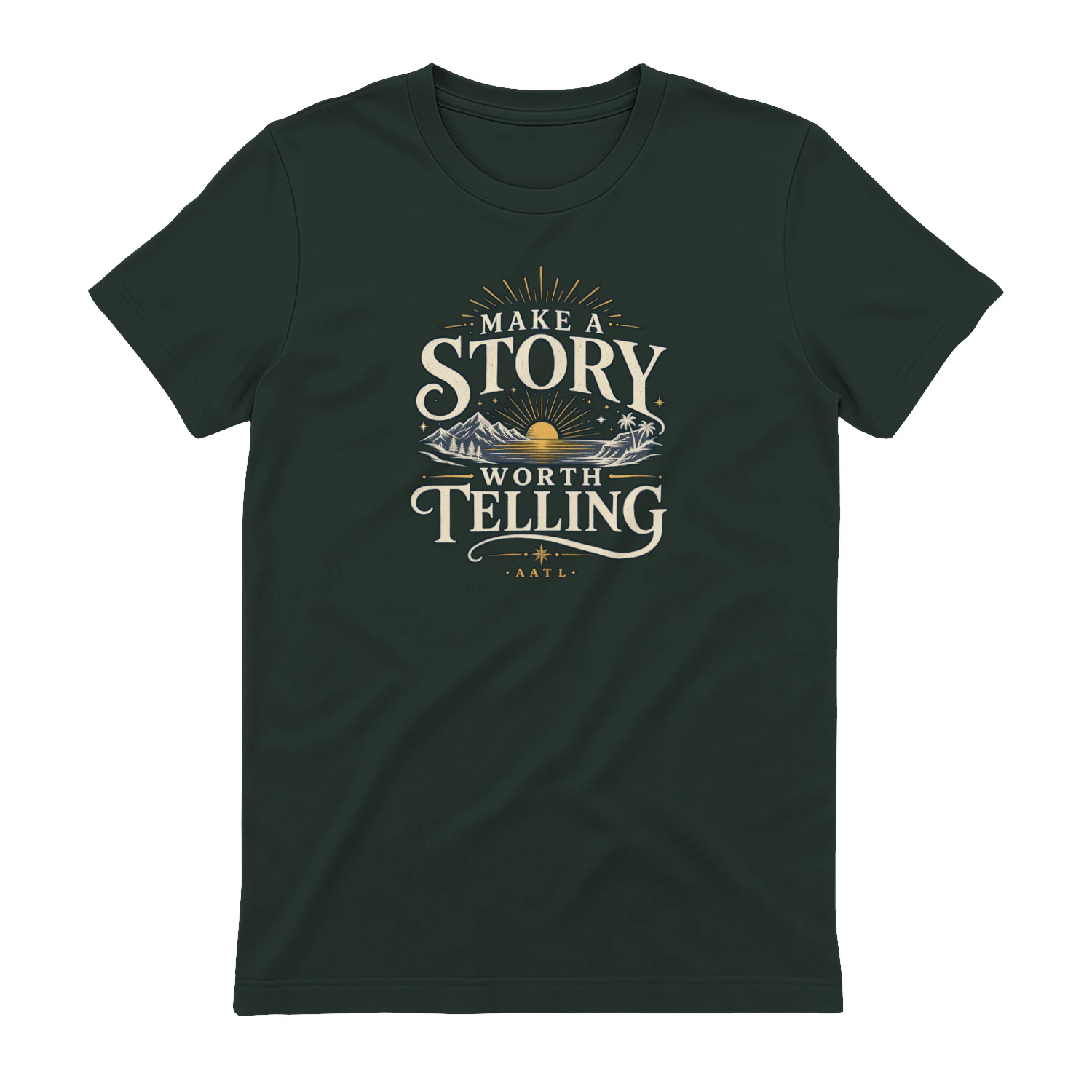
Make A Story Worth Telling
A scenic vintage-inspired design that encourages you to “Make A Story Worth Telling.” Mountains, water, sunset, and tropical details give it an adventurous feel that’s perfect for travelers, explorers, and anyone who wants a life filled with moments worth remembering.