
Video
Why Melvin Maya’s Reaction to The Big Push Feels Like Watching Street Music Find Its Sweet Spot
A simple reaction turns into a bigger appreciation for timing, chemistry, and the kind of live performance that can stop a passerby in place.
Why this reaction lands on first listen
This video works because it starts from a plain question: what happens when someone hears a street performance that sounds tighter than it has any right to be? Melvin Maya is reacting alongside Patrick from Ghost Texas, and the setup matters. Patrick has already been introduced to Ren, and here the listening experience widens out to The Big Push and a busking performance built around a three-song mashup. The immediate takeaway is simple: the performance feels spontaneous, but the arrangement and delivery are controlled enough to make the whole thing feel deliberate.
That is the core of the video’s appeal. Melvin is not treating it like a formal music lecture, and he is not pretending to be surprised by every turn. He is watching someone else process the performance in real time and noticing the specific things that make it work: the vocals, the transitions, the crowd response, and the fact that the performance is happening in a public space rather than a staged concert setting.
What busking means in this video
One useful part of the conversation is that Melvin pauses to explain what busking is for Patrick. In the context of the video, busking simply means street performance: musicians set up in a public area, play for tips, and let whoever is passing by decide whether to stop and listen. That explanation helps shape the rest of the reaction, because it gives the performance a different kind of weight. The audience is not a ticketed crowd already committed to being there. People arrive by choice, often by accident, and the performers have to earn attention quickly.
Melvin makes a point of contrasting that with what he sees in Houston. He says local street performance is not something he experiences at this scale, and he seems genuinely interested in the idea of walking around a corner and finding a group like this already playing. He is not turning that into a bigger cultural claim. He is simply reacting to the kind of live music experience that feels available in the moment, on the street, without much framing.
That helps explain why the performance catches him. The setting makes the music feel exposed in a good way. There is no hiding behind production polish or a carefully edited cut. The group has to carry the room, the sidewalk, and the attention of people who may not have planned to stop.
The appeal of the mashup and the transitions
The performance itself is structured as a mashup of “I Shot the Sheriff,” “Road to Zion,” and hip-hop, and Melvin keeps coming back to how smoothly the songs move into one another. That smoothness is the big story. He does not describe the mashup as flashy for its own sake. Instead, he focuses on how the transitions happen in a way that almost disappears while it is happening. The songs shift, but the performance never feels like it loses its footing.
That matters because mashups can easily become a series of hard edits or obvious switches. Here, Melvin hears the opposite. He notices that the handoff between songs is so clean that it does not feel like a reset. The music keeps its momentum, which is part of why he keeps responding positively as the clip plays.
He also connects that fluidity to the performers themselves. At one point he talks about the subtle body language and facial cues the musicians use to signal changes without verbalizing everything. That observation says a lot about what he values in a live performance: not just sound, but coordination. The group looks like it knows exactly where it is headed, and that shared awareness is what lets the medley stay relaxed instead of awkward.
Why Patrick’s reactions matter
Patrick’s presence changes the way the video unfolds. Because he is hearing this material fresh, his reactions act like a proxy for the viewer who may not already know the songs or the artists. Melvin uses that to move the conversation forward. He points out that Patrick appreciated Ren’s vocals in the earlier reaction, so this next clip is a chance to hear a wider range and a different kind of musical personality.
That shift is important. Instead of just revisiting Ren, the video expands into another part of the same musical universe and lets Patrick respond to something with a different texture. Melvin seems to enjoy watching him notice that the singer can sound different from one project to another. He even remarks that the performer does not seem like the same person at first glance, which captures the surprise of hearing a voice in a new setting and realizing how adaptable it is.
The best part of the reaction is not a single dramatic outburst. It is the back-and-forth between the two of them as they hear the performance, name what stands out, and compare it to familiar music. Melvin’s reaction stays grounded in listening, and Patrick’s fresh perspective gives the video its shape.
Why the performance sticks after the clip ends
What makes this video linger is not just the song choice. It is the idea of a group being able to hold a sidewalk audience through timing, chemistry, and a steady sense of control. Melvin says he would stop if he stumbled across something like this in person, and that feels like the most direct summary of the performance’s effect. It creates the sense that live music can still feel immediate without being messy.
He also connects the hip-hop section of the mashup to a specific memory, noting that people often remember that part even if they do not remember the full song title or artist. That observation gives the performance a practical kind of staying power. It has a hook, but it also has enough movement around the hook to keep it from feeling repetitive.
By the end, the reaction has turned into a small case study in what people respond to when live music is done well in public. The mix of recognizable material, smooth transitions, and understated performance chemistry gives The Big Push a clear edge. Melvin does not oversell any of it. He just listens closely enough to notice why it works.
If you want the original clip, watch the original video here: https://www.youtube.com/watch?v=pPmBgbfRDz4
The broader appeal of the reaction is that it makes room for both the music and the setting. It is not just about hearing songs people know. It is about hearing them reworked in a way that rewards attention, and about seeing how a performer can keep a street crowd engaged without ever making the moment feel forced.
Watch the original video on YouTube ↗
All About The Life
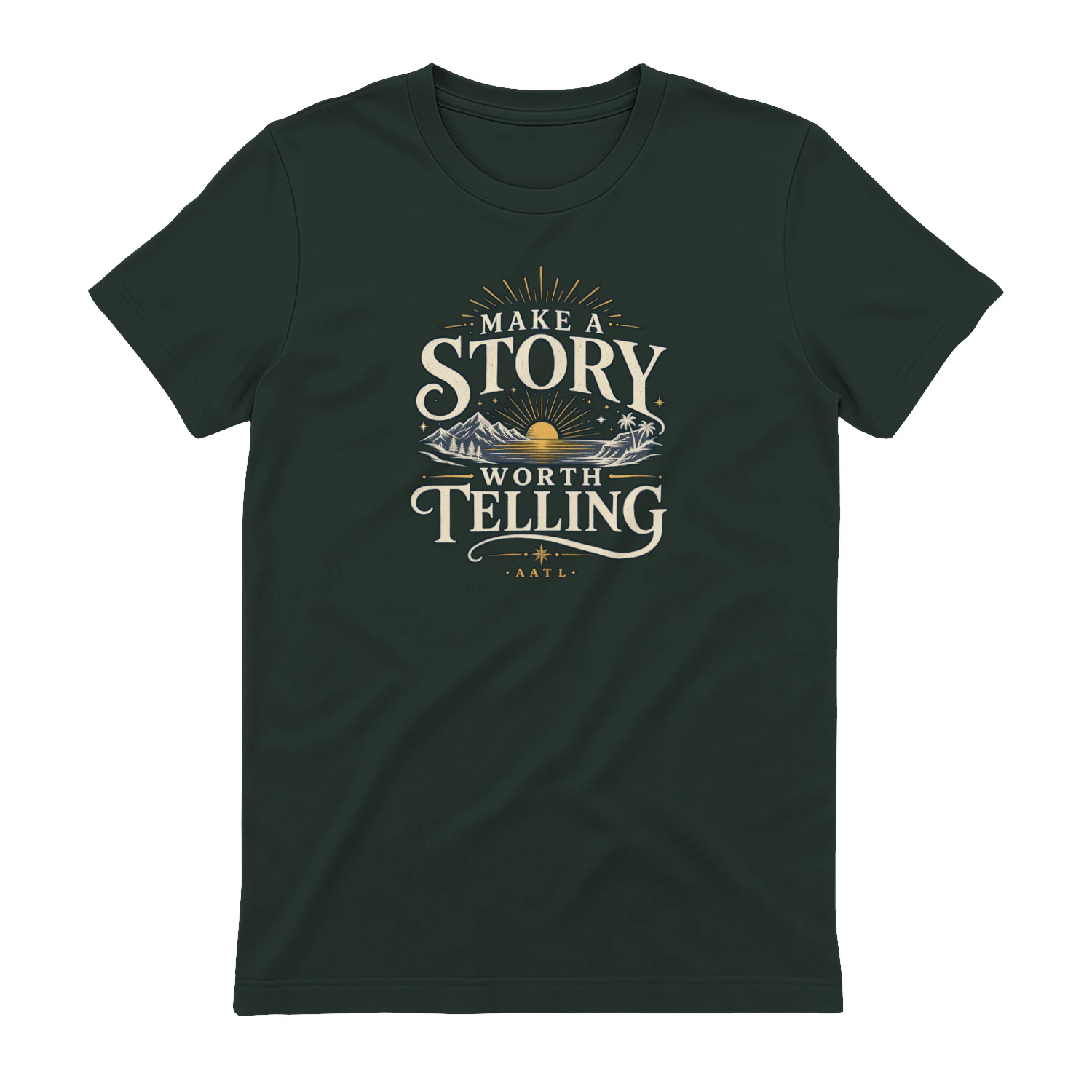
Make A Story Worth Telling
A scenic vintage-inspired design that encourages you to “Make A Story Worth Telling.” Mountains, water, sunset, and tropical details give it an adventurous feel that’s perfect for travelers, explorers, and anyone who wants a life filled with moments worth remembering.