
Video
Why Melvin Maya’s Reaction to The Dead South’s ‘People Are Strange’ Works as More Than a Simple Cover Watch
Melvin Maya responds to The Dead South’s take on a classic song with a mix of curiosity, instrument spotting, and genuine appreciation for a video that leans into its strange idea instead of playing it safe.
The direct read on the reaction
Melvin Maya’s reaction to The Dead South’s cover of “People Are Strange” is straightforward in the best way: he likes it, he gets curious, and he spends the video noticing the parts that make the performance feel distinct from the original. The main appeal is not that the song is unrecognizable. It is that the band gives a familiar track a new shape, then wraps it in a visual concept that clearly matters to the overall effect.
That is the center of the video. Melvin comes in knowing the original song, but not this version, and that gap gives him room to respond honestly to both the sound and the presentation. He is not trying to over-explain it. He is reacting to what stands out: the instrumentation, the playful staging, and the way the cover leans into its own personality.
A familiar song with a different frame
Because the song is already known, the reaction is partly about comparison. Melvin recognizes “People Are Strange” and immediately frames The Dead South’s performance as a cover with its own angle. That matters because a cover can either stay close to the source or use it as material for something else. Here, Melvin sees the second path.
He describes the take as interesting before the song even really settles in, and that early reaction sets the tone. The track is not presented as a faithful replica. It is presented as a reinterpretation that changes the mood by changing the instruments, the arrangement, and the imagery around it. That makes the listening experience more active. Instead of simply hearing a known melody, Melvin is watching for how the band rebuilds it.
The result is a reaction that feels less like a verdict and more like a running read on a creative choice. Melvin is clearly open to the idea that a classic song can survive a total shift in style, and this performance gives him a reason to lean in rather than check out.
Why the visuals keep pulling attention
One of the strongest parts of Melvin’s response is how often he returns to the video concept itself. He does not treat the visuals as decoration. He notices them as part of the performance’s identity.
The image that sticks with him most is the banjo being presented like a spaceship. That is the kind of detail that tells you the video is committed to a weird, playful idea rather than using strangeness as a throwaway joke. Melvin clearly enjoys that commitment. He points out that the concept is already fun, and he keeps that thought alive as the performance continues.
The visual layering also catches his attention. He references the green-screen style and the way the band seems placed into unusual settings, which helps explain why the cover feels different even before the music fully registers. In a reaction video, those kinds of observations matter because they show how presentation can shape the listening experience. Melvin is not just hearing the song; he is reacting to the world built around it.
The instrument questions that shape the viewing
A large part of the video’s personality comes from Melvin’s curiosity about the instruments. He openly pauses to sort out what he is seeing, and that pause becomes one of the most revealing moments in the reaction.
He says he likes the sound of the upright bass and prefers it to a traditional bass guitar in this setting. He describes the tone as sounding more natural to him, which tells you a lot about the kind of listener he is in this moment. He is not making a technical argument. He is simply responding to the feel of the sound.
Then the questions start stacking up. He tries to identify the instrument on the right, thinks one of the instruments may be a banjo, and asks viewers to help name the lineup from left to right. He also notes an instrument that looks like a small guitar but is not immediately clear to him. That uncertainty is not a problem for the video. It is part of the fun.
This is where the reaction becomes more than a yes-or-no response. Melvin is actively trying to understand how the band’s sound is assembled. That curiosity makes the feature of the performance feel tangible: the arrangement is unusual enough to make someone stop, listen, and ask what each player is doing.
A cover that works because it commits
What ultimately seems to win Melvin over is not just the song choice or the musicianship on its own. It is the full package. The Dead South do not seem interested in offering a polite, stripped-back cover. They build a version of “People Are Strange” that feels designed around its own strange identity.
Melvin responds well to that kind of confidence. He says the cover is fun and that the band took the concept in a whole different direction. That direction matters. The alien idea gives the performance a tone that matches the song title in a way that is obvious but still effective. It is a thematic fit that never hides what it is doing.
The reaction also shows that Melvin values performance choices that create a clear mood. The song itself is already about feeling out of place, and this cover gives that idea a visual and musical frame without flattening it. The band’s approach lets the weirdness stay playful instead of becoming heavy-handed. Melvin seems to appreciate that balance.
What the reaction leaves open
By the end of the video, Melvin is still thinking in two directions at once: he wants to know more about the instruments, and he wants more from The Dead South. That combination is what gives the reaction its shape. He is satisfied enough to praise the cover, but curious enough to ask for help and invite viewers to suggest what he should watch next.
That makes the feature feel less like a one-off listen and more like the start of a conversation. The cover works because it gives Melvin a few clear things to react to: a familiar song, an unusual arrangement, and a visual joke that stays consistent from start to finish. He does not need to force a bigger meaning onto it. The appeal is already there in the way the band turns a classic into something odd, musical, and easy to enjoy.
Watch the original video: https://www.youtube.com/watch?v=JHG-f3vHNME
Watch the original video on YouTube ↗
All About The Life
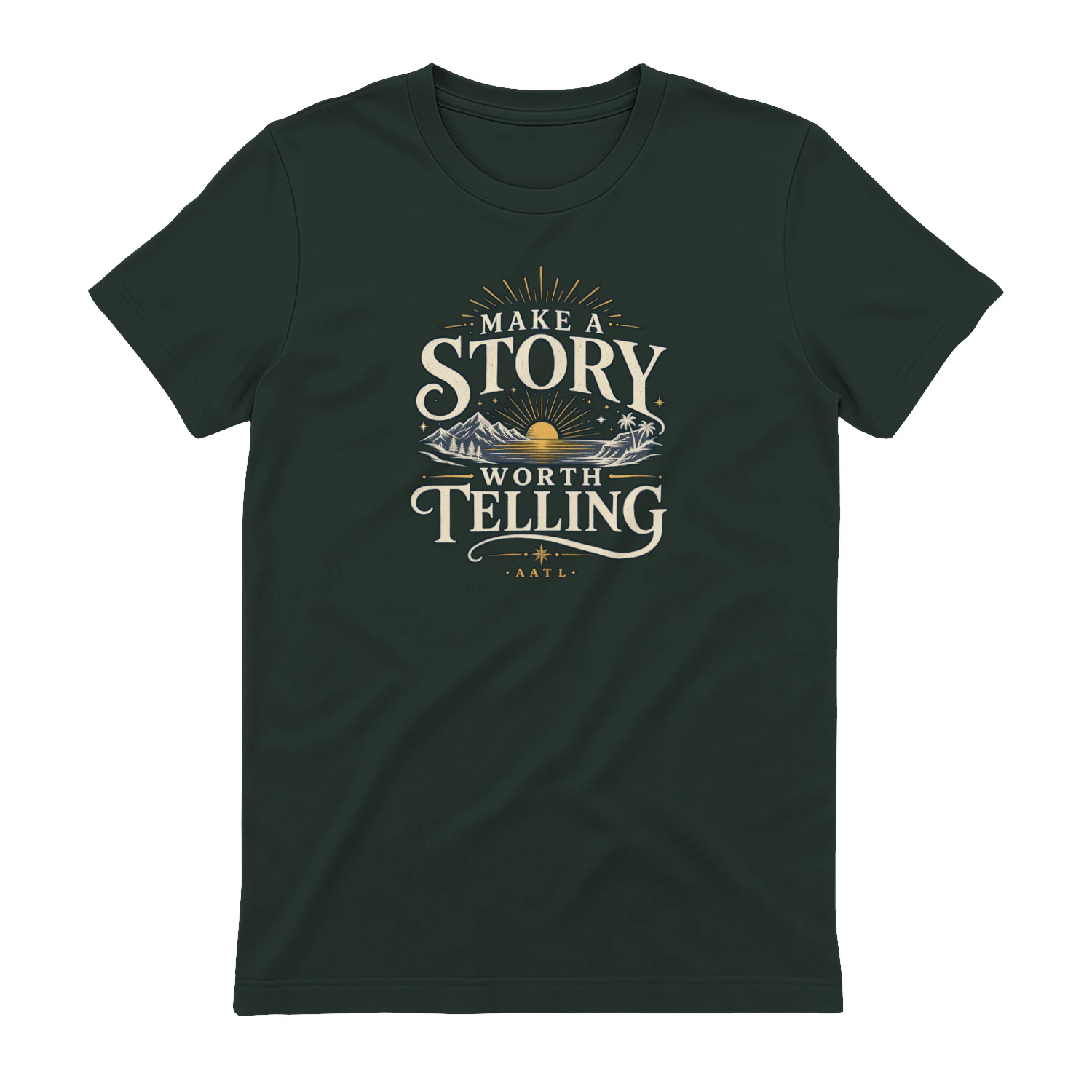
Make A Story Worth Telling
A scenic vintage-inspired design that encourages you to “Make A Story Worth Telling.” Mountains, water, sunset, and tropical details give it an adventurous feel that’s perfect for travelers, explorers, and anyone who wants a life filled with moments worth remembering.