Video
Why Melvin Maya Stepped Away From YouTube and What He Wants to Make Instead
A candid update from Melvin Maya explains the pause, the pressure behind it, and why Houston may become the center of his next chapter.
Load the YouTube player to watch here. YouTube receives technical information when its player loads. This does not enable this site's analytics or marketing tracking.
Watch on YouTube ↗Why the uploads stopped
The direct answer is that Melvin Maya’s break from YouTube came from a mix of burnout, money pressure, and a growing sense that his reaction videos no longer felt natural to make. In his update, he explains that he had been gone for a couple of months, but the pause was not really a planned reset. It was closer to a slow stop — one missed upload becoming two, then three, until the routine was gone.
He frames the whole situation as a shift from fun to friction. YouTube started as a hobby, then grew because earlier photography content found an audience and one video took off. That early growth eventually pushed him toward bigger creative swings, including vlog-style and travel content. But the path from “this is fun” to “this has to work” is where the strain began to show.
The problem with making content that stops feeling real
Melvin is especially honest about why reaction videos became difficult. He says he likes the engagement and enjoys having an audience respond in real time, but he also admits that the format can run out of steam for him. There are only so many ways to respond to songs, performances, or clips before the commentary starts to feel forced.
That point is one of the most revealing parts of the video. He is not saying reaction content is bad; he is saying it stopped matching how he wants to work. For him, the issue is authenticity. If he has to keep inventing reactions just to fill uploads, the video stops being something he enjoys and starts becoming content for content’s sake.
That is also why he draws a line between solo reactions and guest reactions. He suggests he may still do reactions when someone else is on camera with him, or when something unusual is worth responding to, but the solo reaction format appears to be on the way out. The shift is less about abandoning an audience and more about refusing to keep repeating a format that has gone stale for him.
The pressure of volume
A big part of the fatigue comes from the scale of the work. Melvin says he was publishing roughly 100 to 120 videos a month, which is far beyond the pace most viewers would assume from the outside. He spells out the hidden labor behind that output: filming, editing, exporting, uploading, writing descriptions, and making thumbnails.
His point is not just that the work was a lot. It is that the work was a lot without enough return. He says only a small portion of those reaction videos were monetized, so the time investment never matched the income. At that point, the content model was asking for something close to a second full-time job without providing the stability that would justify it.
That tension helps explain why the break was not only creative but practical. If a creator is spending that much time making videos that mostly do not support themselves, the decision to change direction becomes less of a mood and more of a necessity.
Employment stress reshaped the whole picture
Melvin also ties the YouTube pause to a much bigger life issue: he says he has been unemployed since May 18, 2023, after a merger at the company he worked for did not carry over support staff. He says he was expecting to move with the merger and was misled, leaving him without work.
That detail changes how the rest of the video reads. The pressure on his channel is not just about creative boredom. It is also about survival. He says he has been applying for jobs constantly, sometimes sending out 50 to 75 applications a week, using job sites, direct outreach, and networking. Even with that effort, he says he still had not landed a job at the time of filming.
He does not present this part dramatically. Instead, he sounds worn down by uncertainty. He talks about not knowing whether he will have to move or sell things, and that uncertainty seems to sit behind everything else he says. The video becomes less of a creator announcement and more of a snapshot of someone trying to hold a life together while also trying to keep making work.
A pivot toward Houston-based originals
So what comes next? Melvin says he wants to move away from reaction-first uploads and toward original content. The most concrete piece of that plan is a stronger focus on Houston, where he lives.
He describes Houston as an underrecognized food city and says he wants to make videos around places to eat, local entertainment, and the city’s art culture. That is a meaningful pivot because it gives his channel a clearer identity than reaction uploads ever could. Instead of responding to other people’s material, he wants to build a body of work rooted in the place he knows.
This also feels like the most sustainable path he mentions. If his own original videos can be monetized more consistently, then the channel becomes something that can support better production and, in turn, better content. He presents that as a cycle he wants to build: better income leading to better videos leading to more room to create.
Short films, photography, and Ghost Texas
The update is not only about food and city content. Melvin also says he wants to return to photography, make music videos, and explore short films. Those ideas fit together better than they might first appear. They all point toward visual storytelling, just in different forms.
One of the more specific examples he gives is a short film made through the 48 Hour Film Project in Houston. He explains that his friend Tan got involved in acting, the team entered the contest, and they had just 48 hours to write, film, edit, and submit the project after receiving the required prompt elements. Melvin says their team placed second out of 28 teams. He also mentions a second short film, which he says was submitted and may appear later under the title Love Stitched once contest restrictions allow it.
He also wants to put more attention on his other channel, Ghost Texas, which focuses on paranormal investigations. That part of the update matters because it shows he is not running out of interests; he is trying to reorganize them. The issue is not a lack of ideas. It is figuring out which ideas can actually be carried forward.
What viewers can expect next
If you watch this video expecting a polished comeback announcement, that is not really what Melvin gives you. What he offers instead is a practical reset. He says he wants to try different formats until he finds the mix that works for him and for the audience. He asks viewers what they would like to see beyond reactions, which suggests he is still testing the ground rather than presenting a finished plan.
That openness is part of what makes the update land. It does not try to hide the messy parts: the missed uploads, the boredom, the job search, the stress, the uncertainty. At the same time, it does not end in defeat. He is still talking about new projects, still naming directions, and still looking for a version of the channel that feels honest.
For longtime viewers, the useful takeaway is simple: the break was not a disappearance so much as a turning point. Melvin Maya is trying to move from high-volume reactions to work that feels more personal, more local, and more durable. Whether that becomes Houston food videos, short films, music-video experiments, or something else entirely, the video makes one thing clear — he wants the next phase to be built around content he can stand behind.
Watch the original video on YouTube ↗
All About The Life
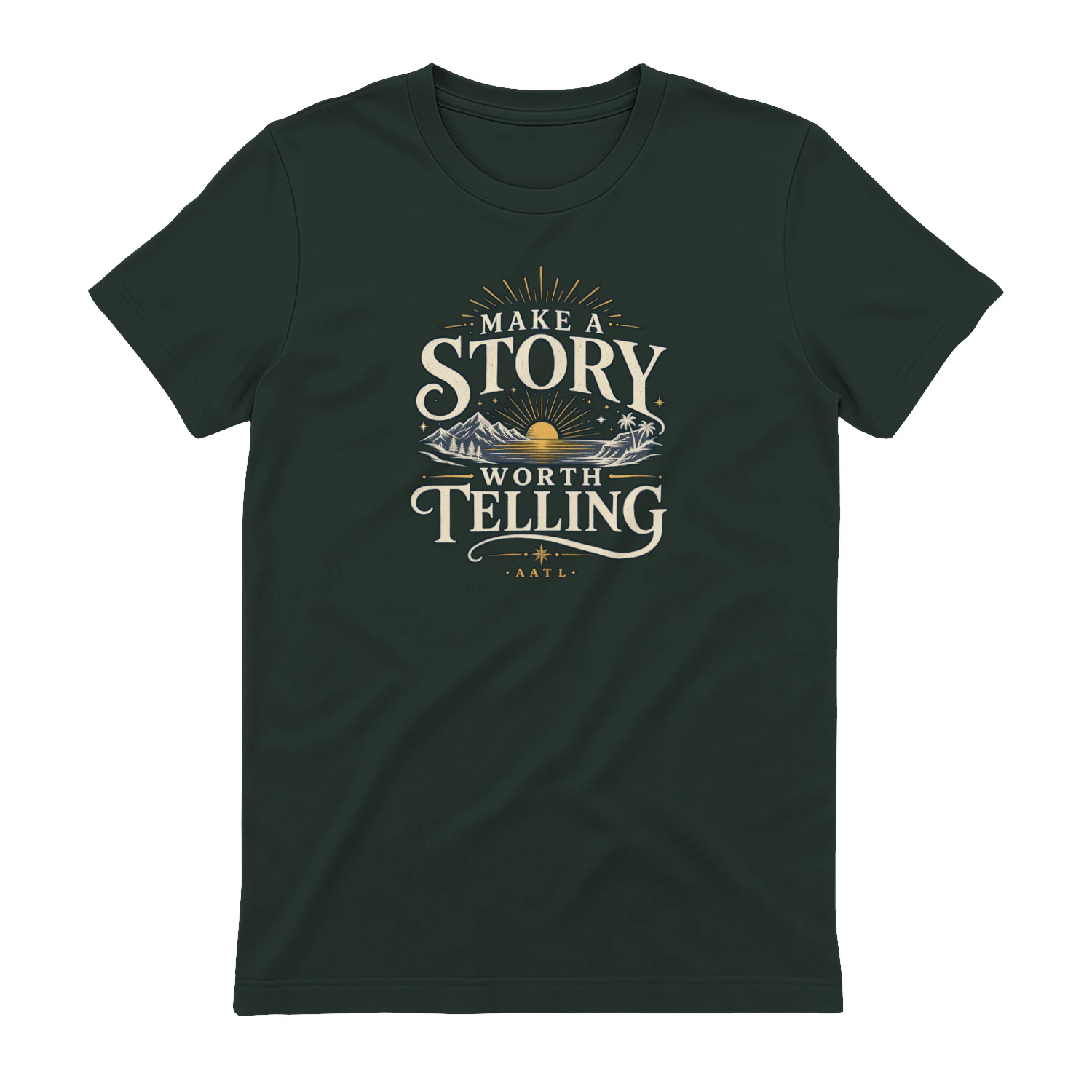
Make A Story Worth Telling
A scenic vintage-inspired design that encourages you to “Make A Story Worth Telling.” Mountains, water, sunset, and tropical details give it an adventurous feel that’s perfect for travelers, explorers, and anyone who wants a life filled with moments worth remembering.