
Video
Why Melvin Maya Treats Alex Melton’s Blink 182 Take on “A Thousand Miles” Like a Small Surprise
A simple premise gives the reaction its shape: a familiar Vanessa Carlton song rebuilt in Blink 182’s lane, with Melvin Maya listening for what changes and what still lands.
Why this Blink 182-and-Vanessa Carlton pairing gets attention
The clearest answer to what this video is doing is simple: it takes a song most people know and hears it through a completely different band’s personality. Melvin Maya’s reaction to Alex Melton’s Blink 182 A Thousand Miles reaction works because the premise is instantly legible. If you know Blink 182, you can imagine the edge and bounce. If you know Vanessa Carlton’s “A Thousand Miles,” you know the melody and the piano-driven shape. Putting those two ideas together creates the kind of curiosity that does not need a long explanation.
Melvin says he had never listened to Alex Melton before and only found the video because it appeared in his suggested music feed. That matters, because the reaction begins from discovery rather than familiarity. He is not arriving with a fan history or a checklist. He is arriving with a hunch that the mashup-style concept could be entertaining, and that is enough to make the setup feel open-ended.
What Melvin Maya notices first
Before the performance even settles in, Melvin frames the whole thing around expectation. He has a personal connection to Blink 182 as one of his longtime favorite bands, and he also treats “A Thousand Miles” as one of those songs that was impossible to avoid for a stretch. That combination gives him a very specific lens: he is not comparing two random artists, but listening for how a familiar pop hook behaves when filtered through a punk-pop sensibility.
That first reaction is less about surprise than recognition. Melvin can already tell the concept is going to be fun if it is executed well. When the song starts, he responds like a viewer who has already decided the core idea makes sense and now wants to see whether the arrangement backs it up. The early reaction is not cautious in a cold way; it is curious in a practical way.
The performance, the arrangement, and the video setup
Once the cover gets going, Melvin’s attention shifts from premise to execution. He says the result is super fun and makes it clear that the song is landing for him because it does what the title promised: it sounds like Blink 182 taking on a piano-pop song. That is a fairly simple standard, but it is the right one here. The appeal of the video is not that it transforms the material into something unrecognizable. The appeal is that it keeps the melody in view while giving it a different attitude.
Melvin also takes note of the performance itself. He compliments the guitar playing and the vocals, which tells you the reaction is not just about the joke or the concept. He is listening for craft. In a video built on stylistic contrast, that matters. A novelty premise only holds if the musician can make the style feel believable, and Melvin seems persuaded that Alex Melton does.
The filming also catches his attention. He notices an impromptu-looking shot of a pallet being dropped onto the roof of a Mini Cooper, and he spends part of the reaction trying to figure out how the video was put together. He spots what looks like a drone controller near Melton’s foot and starts wondering whether the creator is handling the camera work himself. That observation changes the tone of the reaction slightly. It is no longer just a listener’s response to a clever cover; it becomes a small act of media literacy, where the viewer is piecing together how the performance was staged.
Melvin does not claim certainty about any of that. He keeps his language tentative, which is part of what makes the reaction feel grounded. He is inferring from what he can see, not declaring facts he cannot prove. That restraint keeps the focus on the video itself and on the curiosity it generates.
Why Melvin keeps asking where Alex Melton is based
Another thread in the reaction is geographic curiosity. Melvin notices that the video seems to avoid showing a license plate clearly, but at one point he thinks he catches the top of what may be a Texas plate. From there, he starts wondering where Alex Melton is based and invites viewers who know more to say so in the comments.
That detail may seem small, but it says a lot about how the reaction is built. Melvin is not only responding to the performance; he is trying to place the artist in a real-world context. He wants to know whether there is a local scene, a home base, or some broader creative setup behind the video. In other words, the song is interesting, but the person making the song is also part of the draw.
Why the reaction ends on curiosity, not closure
By the end, Melvin is clear that he enjoyed the video, but he does not treat it like a closed case. He wonders whether Melton layered the track himself or had help from a band. He is interested in the drums, the supporting parts, and the way the rest of the arrangement came together. That means the reaction ends with a set of questions rather than a neat verdict.
That is a good fit for the material. A cover like this works because it gives just enough information to make the concept click, but not so much that it becomes mechanical. Melvin’s reaction mirrors that balance. He gives the performance credit, points out what stands out, and then leaves room for the audience to bring in more context if they have it.
For viewers, that makes the video useful in a simple way: if you like genre swaps, if you enjoy hearing a familiar song rebuilt with a different band’s energy, or if you want to see how a creator stages a self-contained music video around a clever idea, this reaction has a clean hook. It is not trying to overexplain the appeal. It just shows Melvin recognizing it in real time.
Watch the original video on YouTube ↗
All About The Life
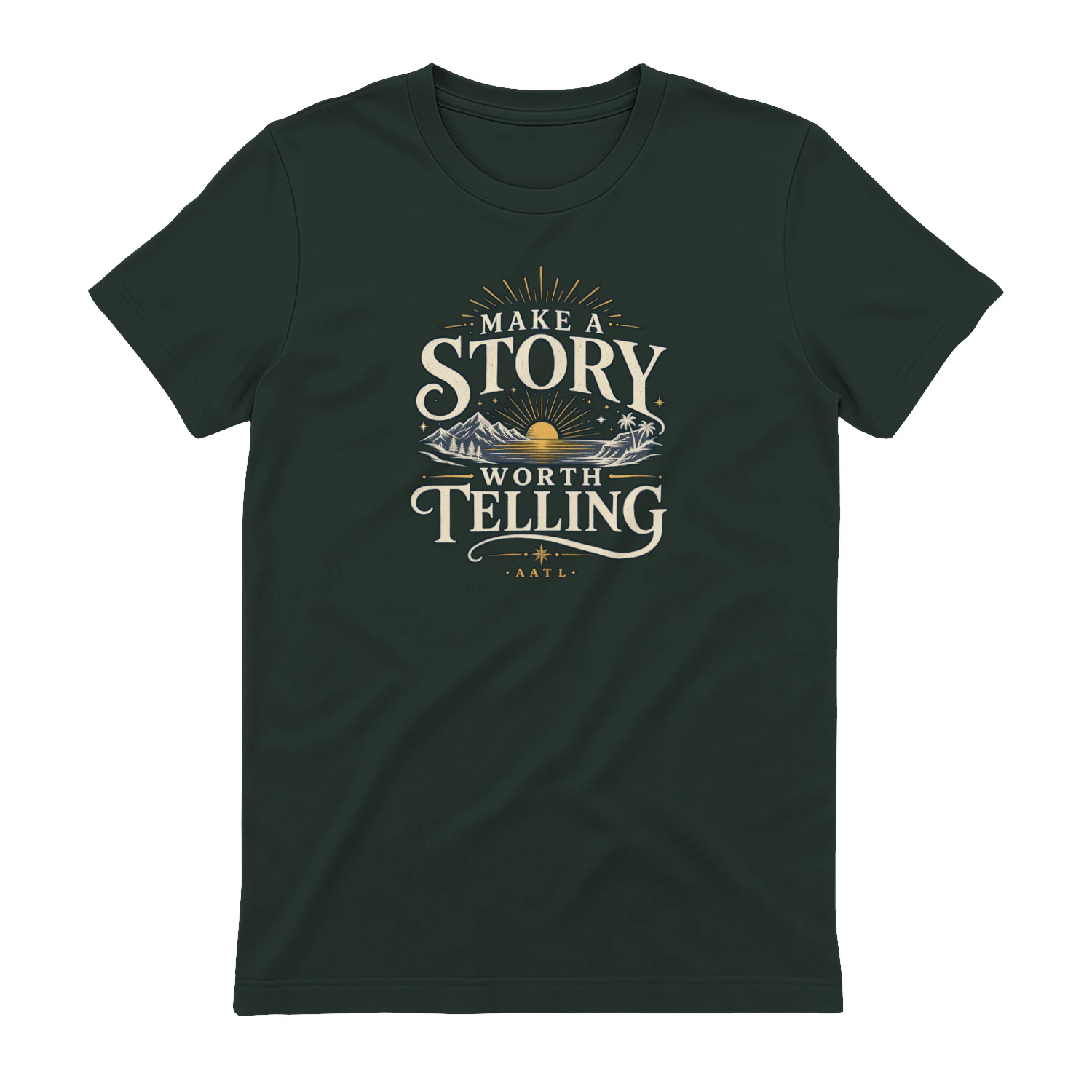
Make A Story Worth Telling
A scenic vintage-inspired design that encourages you to “Make A Story Worth Telling.” Mountains, water, sunset, and tropical details give it an adventurous feel that’s perfect for travelers, explorers, and anyone who wants a life filled with moments worth remembering.