
Video
Why Melvin Maya Treats Ren’s ‘Children Of The Moon’ Like a Full Stage Production
Melvin Maya’s reaction to Ren’s “Children Of The Moon” keeps circling one idea: the song, visuals, and character work all move together, and that is what makes the performance feel bigger than a standard music video.
Load the YouTube player to watch here. YouTube receives technical information when its player loads. This does not enable this site's analytics or marketing tracking.
Watch on YouTube ↗What Melvin Maya sees first
Melvin Maya does not spend long getting to the point: Ren’s “Children Of The Moon” stands out because it feels like a complete creative package, not just a song with visuals attached. That is the clearest thread in his reaction. He is watching for the usual things a viewer might notice — the look of the set, the rhythm, the vocal delivery — but he keeps coming back to the bigger impression that Ren is building a whole world.
For Melvin, the video immediately reads as something theatrical. He describes it like a throwback horror concept, and that comparison matters because it tells you how he is processing the piece. He is not treating it as a straightforward performance clip. He is seeing costume, mood, staging, and editing as parts of the same idea. The result is a reaction that keeps asking the same question in different forms: how does Ren keep making every release feel different?
The short answer, from Melvin’s perspective, is that Ren does not seem interested in repeating a formula. Each video feels like its own lane, with its own visual language and emotional shape.
A performance built like a mini-play
One of the strongest things Melvin says is that the video feels like a play. That is not just a casual compliment; it is the way he explains the structure of what he is seeing. The song has a narrative pull, but the staging pushes it further. Characters, setting, and movement all seem to be working toward a performance that feels more scripted and more staged than a standard music video.
He also notices how unusual that is in the context of the other Ren videos he has watched. In his telling, the artist keeps shifting forms — sometimes intimate, sometimes larger-than-life, sometimes stripped down, sometimes highly constructed. That range is part of what makes the reaction interesting. Melvin is not just reacting to one track. He is reacting to an artist whose identity seems to change shape without losing its core.
That is why he keeps returning to the idea that Ren cannot really be boxed in. He hears the vocals, but he is also taking in the broader artistic expression around them. In his view, the video’s success comes from that unity: the audio does not sit on one side and the visuals on the other. They are fused.
The visual details that keep adding meaning
Melvin’s eye for detail is one of the main reasons the reaction feels useful. He notices the repeated words on the wall, the moon imagery, and the way the set keeps reinforcing the title. Nothing feels accidental to him. He reads those choices as visual emphasis — a way of making the subject of the song impossible to ignore.
He calls out the repetition specifically, suggesting that the words and symbols function almost like a visual echo of the lyric. The message does not just live in the vocals; it shows up across the frame. For Melvin, that repetition creates a kind of subliminal effect. The viewer may not consciously track every instance, but the imagery keeps registering all the same.
That observation lines up with how he responds to the broader production design. He keeps talking about the extra layers: not only the obvious performance elements, but also the sound effects and smaller touches that add texture. He seems to respect work that rewards close viewing, especially when the details do not shout for attention but still shape the experience.
In that sense, the video is doing a lot of quiet work. It does not need to explain itself in a heavy-handed way because the set already carries part of the story.
Why the music feels bright while the story turns dark
Another thing Melvin picks up on is the contrast between mood and message. He says the beat feels upbeat and playful, even cheerful at moments, while the lyrics stay rooted in darker material. That contrast is central to his reaction because it shows why the song feels more complicated than a simple horror-themed aesthetic.
He does not frame that contrast as a problem. He frames it as the reason the song works. The brighter horns and rhythmic energy do not cancel the darker lyrics; they sharpen them. The tension between those two layers gives the track its identity.
That is also why he compares the video to a stage performance. In a play, the tone can shift under the surface of what looks lively. A piece can feel animated and still carry unsettling ideas. Melvin seems drawn to that balance. He hears the movement in the music, but he also hears the discomfort underneath it.
There is a similar split in the imagery he describes. The visuals are styled and deliberate, but the subject matter is not soft. That combination makes the song feel less like a single emotion and more like a constructed atmosphere.
Ren’s range is the point
By the end of the reaction, Melvin’s biggest takeaway is not about a single lyric or one visual moment. It is about range. He keeps returning to the idea that Ren can move through different genres, formats, and moods without losing control of the piece. That is what impresses him most.
He also connects the video to his own creative background, especially his photography work. He talks about liking darker, more conceptual imagery and about appreciating projects that push the edge visually. That connection helps explain why this particular Ren video resonates. Melvin is responding not just as a fan, but as someone who understands the effort involved in building a fully realized concept.
What he values is not spectacle for its own sake. It is the feeling that every choice is serving the same creative goal. The music, the set, the lyrics, the details on the wall, the theatrical framing — all of it points in one direction. For Melvin, that is what makes “Children Of The Moon” compelling.
He also leaves the reaction with the sense that this is not a one-off impression. He talks about wanting to keep moving through Ren’s catalog, which suggests the video succeeds on another level too: it makes him want to see what else the artist has built.
Watch the original video on YouTube ↗
All About The Life
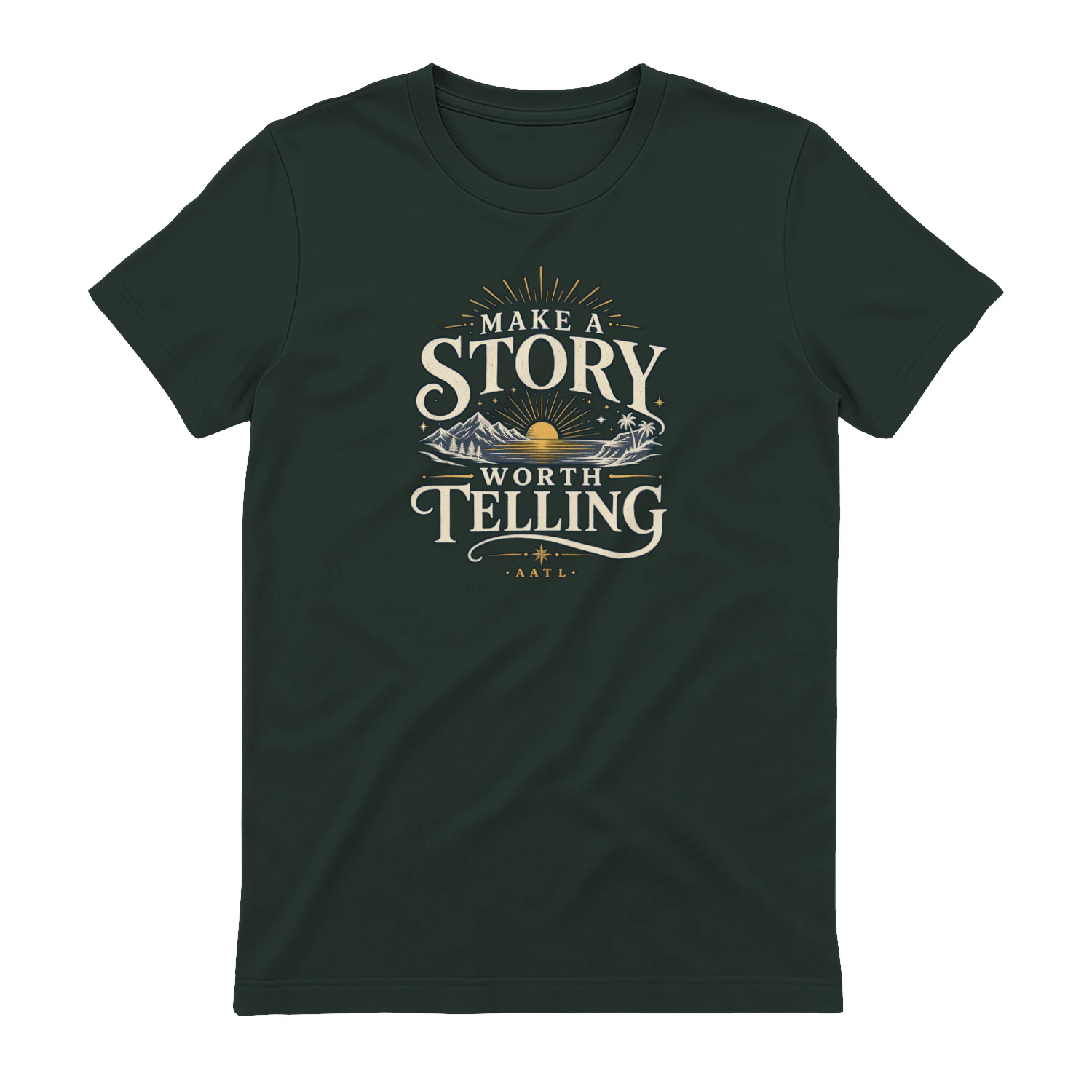
Make A Story Worth Telling
A scenic vintage-inspired design that encourages you to “Make A Story Worth Telling.” Mountains, water, sunset, and tropical details give it an adventurous feel that’s perfect for travelers, explorers, and anyone who wants a life filled with moments worth remembering.