
Video
Why Oliver Anthony’s Viral Song Felt Personal to Melvin Maya
Melvin Maya’s reaction to Rich Men North of Richmond becomes less about surprise and more about recognition: a song about pressure, wages, and power lands hardest when the listener is living through some of the same strain.
A viral song that landed like a personal message
Melvin Maya’s reaction to Oliver Anthony’s “Rich Men North of Richmond” starts with curiosity, but it does not stay there for long. The direct answer is simple: he hears a song about working people, control, and economic strain, and it immediately connects with what he says he is living through himself. That is why the video is more than a standard first-listen reaction. It becomes a personal reading of a song that arrived already loaded with public attention.
He opens by saying he has seen the track circulating across social media and video platforms, but deliberately held off on watching it so he could react in real time. That choice matters. It frames the video as a genuine first encounter rather than a rehearsed take. Once the song begins, his response shifts quickly from observation to recognition. He is not trying to decode the music from a distance; he is listening for what the lyrics are saying about work, exhaustion, and the people who feel squeezed by systems they cannot control.
Why Melvin hears the lyrics as a working-class complaint
The song immediately lands for him because he reads it as a portrait of ordinary pressure. He picks up on the sense that the lyrics are aimed at people who work hard, keep getting taxed, and still feel stuck. He also hears the song as a complaint about power being concentrated above the people carrying the burden below.
Rather than treating that idea as abstract commentary, Melvin ties it to the way he understands his own situation. He talks about being laid off, struggling to find another job, and trying to keep up with rising costs. He says the gap between what he used to pay for groceries and what he pays now has become impossible to ignore. He also points to higher rent, more expensive gas, and a general cost of living that has pushed him into a tighter financial corner.
That section of the video gives the reaction its weight. He is not only reacting to a lyric; he is comparing the song’s message with his own month-to-month reality. That makes the reaction feel less like a commentary on a viral moment and more like an example of why certain songs spread so quickly: they give language to frustrations that many listeners already feel but have not said out loud.
The part of the reaction that turns into self-portrait
A large stretch of the video moves beyond the song itself and into Melvin’s own life. He explains that his background in mortgage and real estate has made the current economy especially hard to ignore. He describes how the industry changed around him as interest rates rose and affordability worsened. In his account, those shifts did not stay confined to headlines or markets; they reached his job, his income, and the kind of opportunities available to him.
He also says the company he worked for declined and eventually merged, which led to his layoff. From there, he describes applying for new work that pays noticeably less than what he used to make. That detail gives his reaction a practical edge. The song’s criticism of people working overtime without getting ahead does not sound theoretical to him. It sounds familiar.
This is where the feature of the video that makes it stand out becomes clear: Melvin does not stay at the level of “I agree” or “I disagree.” He uses the song as a doorway into a broader account of what instability feels like when it shows up in real life. The reaction becomes a self-portrait of a creator whose personal finances, employment, and industry experience are all moving through the same squeeze he hears in the lyrics.
Why he keeps the politics cautious
Melvin is careful about how far he goes politically. He says upfront that he usually tries to keep politics out of his videos because he does not want to divide his audience. That caution shapes the entire second half of the reaction. He shares how he interprets the song’s references, but he avoids turning the video into a partisan speech.
That restraint is part of the video’s tone. He clearly has strong feelings about taxes, wages, inflation, and the pressure placed on ordinary workers, but he keeps returning to the idea that he is speaking from his own experience. He does not claim to settle the wider debate. Instead, he explains why the song resonates with him personally and why he assumes many viewers will recognize similar strain in their own countries.
He also makes a point of speaking to his international audience. He notes that most of his viewers are outside the United States and suggests that economic strain is not unique to one country. That broadens the reaction without making it vague. The point is not that every place is identical. The point is that pressure at the bottom of the ladder tends to rhyme across borders.
What the video says without pretending to solve it
The most useful thing about Melvin Maya’s reaction is that it does not overpromise. He does not claim the song fixes anything. He does not frame his own story as proof of a perfect political interpretation. What he does instead is identify why the track feels urgent: it speaks to people who are working, losing ground, and trying to understand why effort is not translating into stability.
He also recognizes the cultural force of the performance itself. He comments on Oliver Anthony’s voice and the strength of the delivery, and he reacts to the song as something that could connect with a wide audience because it sounds direct rather than polished for its own sake. That plainspoken quality seems to be part of why Melvin thinks the track has traveled so far.
By the end of the video, his reaction has shifted into something broader than a music opinion. It is a record of recognition. He hears a song about economic strain, sees his own situation reflected in it, and uses that overlap to explain why the video hit home. For viewers looking for a simple take, that may not be tidy enough. But it is honest, and the honesty is what gives the reaction its value.
Watch the original video on YouTube ↗
All About The Life
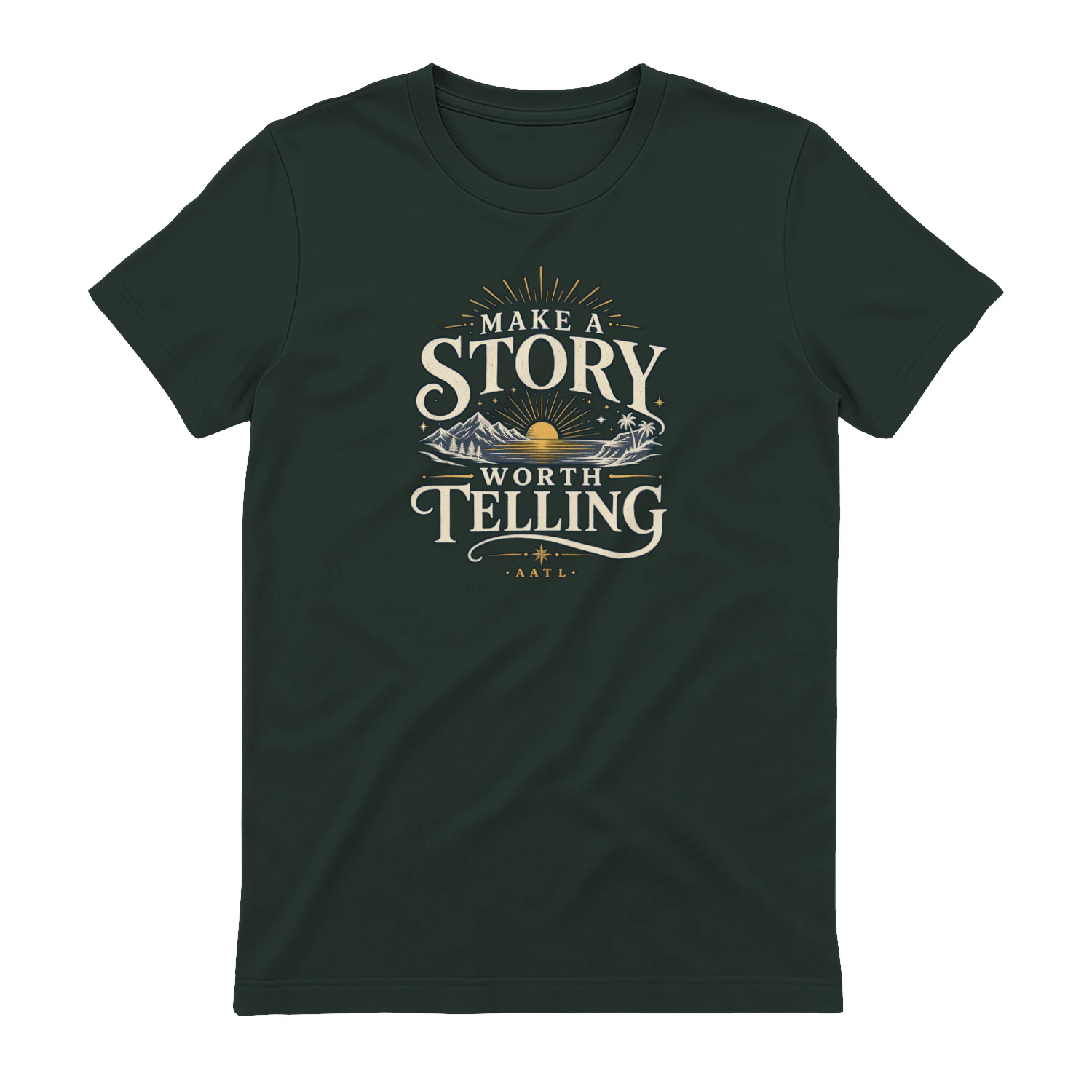
Make A Story Worth Telling
A scenic vintage-inspired design that encourages you to “Make A Story Worth Telling.” Mountains, water, sunset, and tropical details give it an adventurous feel that’s perfect for travelers, explorers, and anyone who wants a life filled with moments worth remembering.