
Video
Why Tessa Violet’s ‘Bad Ideas’ Sparked More Than a Reaction for Melvin Maya
Melvin Maya’s take on Tessa Violet’s “Bad Ideas” is part music reaction, part visual critique, and part creative reset. The song’s playful awkwardness and the video’s monochromatic design give him something real to think about.
A direct answer to why this reaction stands out
Melvin Maya’s reaction to Tessa Violet’s “Bad Ideas” works because he is responding to more than a song he likes. He hears a catchy, flirt-forward track, but he is just as interested in the video’s visual language: clean color blocking, simple setups, and a monochromatic look that feels controlled without feeling stiff. That combination turns the reaction into something more useful than a quick thumbs-up. It becomes a small example of how a music video can send a creator back to his own ideas.
The short version is this: Melvin likes the song, likes the video, and leaves with a specific creative spark of his own.
The song’s charm comes from its awkward honesty
One of the first things Melvin seems to connect with is the way the song plays with attraction and uncertainty at the same time. He reacts to the opening with immediate amusement, picking up on the blunt, slightly awkward way the lyrics frame a crush. Instead of treating that awkwardness as a flaw, he reads it as part of the appeal.
That matters because his response is not just about melody or rhythm. He hears a song that sounds useful in real life, the kind of track that could become shorthand for an emotion people do not always know how to say directly. He even imagines using it as a message to someone he likes, which says a lot about how naturally the song translates into a social situation.
Melvin’s reaction stays grounded in that feeling. He does not overanalyze the writing, but he does notice that the lyric approach is memorable because it is direct without pretending to be polished.
Why the monochromatic visuals stuck with him
The strongest visual thread in Melvin’s commentary is the video’s monochromatic styling. He repeatedly circles back to the way individual rooms or scenes feel built around one dominant color, with small pops of contrast that keep everything from flattening out. That design choice seems to be what made the video feel distinctive to him.
He describes the art direction as simple but impactful, which is a useful summary of the whole visual strategy. The video is not trying to overwhelm the viewer with complexity. Instead, it seems to rely on restraint: a controlled palette, a few strong setup changes, and a look that keeps each frame legible.
Melvin also notices the variation in setting. He mentions the orange jumper and a broader mix of spaces, including what looks like a stadium-like environment and a room defined by one color. He is clearly responding to the fact that the video keeps its concept clean while still moving through different visual moods.
The video gives him a creative reference point
This is where the reaction becomes more personal. As Melvin watches the video, it starts reminding him of an old photography idea he had planned but never fully pursued: a monochromatic series on a white background. He says he wrote the concept down in his notes and had fallen away from shooting as often as he used to.
That detail changes the shape of the reaction. He is not just complimenting the video’s look; he is using it as a prompt to revisit his own creative backlog. The music video makes him think about how a monochromatic concept does not have to be confined to a studio. In his telling, the video suggests that the same visual idea could be adapted into different environments and still work.
What he takes from it is practical and aesthetic at once. He starts thinking about how to capture the same kind of discipline in photography without overbuilding the scene. That is a meaningful outcome for a reaction video because it shows the creator moving from viewer to note-taker in real time.
A reaction shaped by admiration, not just preference
Melvin’s comments about Tessa Violet go beyond simple enjoyment. He seems genuinely impressed by how much personality the release carries. He says he is still surprised she is not more widely known or played on the radio, which is less a factual claim than a reaction to how complete the package feels to him: the song works, the visuals work, and her overall presentation seems ready for a bigger audience.
That reaction fits the tone of the video. He is not acting as if he discovered something obscure and must defend it. He is just expressing a straightforward sense that the work has quality and identity. The praise feels casual because it is rooted in the experience of watching and listening, not in trying to build a grand case.
There is also a sense that he appreciates how Tessa Violet’s output seems consistent enough to invite deeper watching. He mentions that he has already been going down the “rabbit hole” of her work, and this video continues that pattern. The reaction becomes part of a longer viewing habit rather than a one-off discovery.
Why this kind of reaction video works
What makes the video effective is that Melvin does not force the commentary into a dramatic arc. He listens, notices, connects, and then lets the song do some of the work. That creates space for a more natural kind of criticism: one that can move from a lyric idea to a costume choice to a photography note without feeling stitched together.
The result is a compact reaction that still leaves behind a few clear takeaways:
• the song is playful and easy to latch onto
• the video’s monochromatic concept is the visual hook
• the art direction is simple without being plain
• the performance nudges Melvin back toward a creative idea he had already shelved
That mix gives the piece a little more weight than a standard first listen. It shows how a music video can work on two levels at once: as entertainment and as a creative reference point for someone watching closely.
If you are coming to this reaction for the first time, the value is not just in hearing that Melvin liked it. It is in seeing what he noticed, what stayed with him, and how a short music video can still shift the way he thinks about his own work.
Watch the original video on YouTube ↗
All About The Life
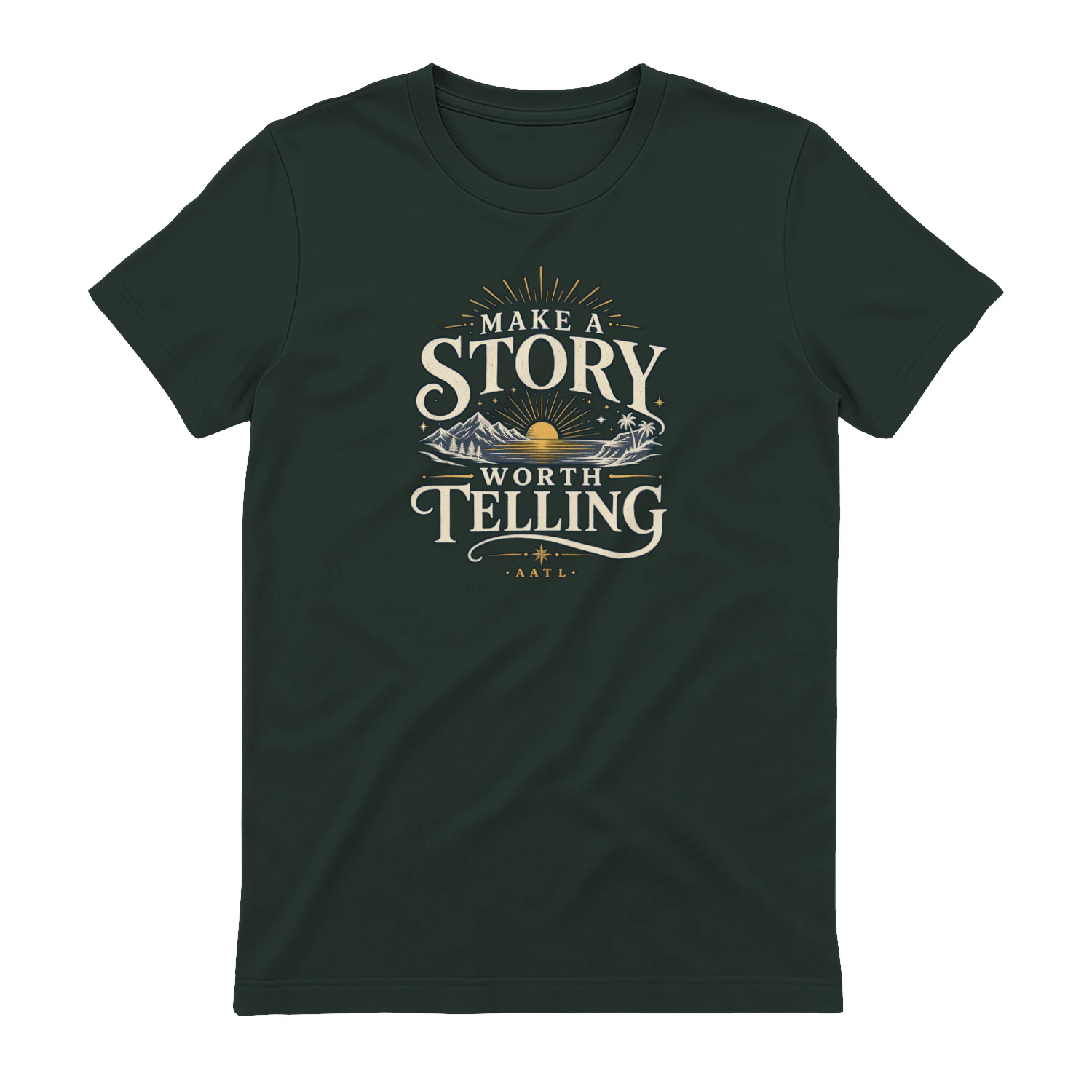
Make A Story Worth Telling
A scenic vintage-inspired design that encourages you to “Make A Story Worth Telling.” Mountains, water, sunset, and tropical details give it an adventurous feel that’s perfect for travelers, explorers, and anyone who wants a life filled with moments worth remembering.