
Video
Why The Big Push’s Live ‘Lonely Boy’ Cover Lands So Hard for Melvin Maya
Melvin Maya reacts to The Big Push covering The Black Keys’ “Lonely Boy,” and the big takeaway is simple: the live setting, band chemistry, and visual presentation make the performance hit harder than he expected.
A cover that wins him over in real time
Melvin Maya’s reaction to The Big Push performing “Lonely Boy” works because he starts from a simple place: he already likes the song. That matters. He is not discovering the material from scratch, and he is not pretending the cover exists in a vacuum. He comes in curious about how a familiar Black Keys track will translate through The Big Push, and the answer he arrives at is clear pretty quickly. The live version gives the song a different charge.
The short version of his takeaway is this: he thinks the cover works because the band sounds locked in, Ren’s guitar playing stands out, and the whole thing feels captured in a way that makes the performance bigger than a straightforward playthrough. He is responding to the music, but he is also responding to how the music is presented.
Why the live setting matters more than repetition
A big part of Melvin’s reaction is built on contrast. He keeps circling back to the idea that he has seen enough from this group to trust that they rarely miss, and this performance fits that pattern. But he is especially interested in the live version of the song. He says that hearing it this way makes sense of what other people have told him about the live Big Push material being stronger than the studio version.
That does not mean he dismisses the recorded version entirely. Instead, he treats the live setting as the place where the song’s qualities show up most clearly. The pace, the energy, and the band interaction all seem to matter more when the song is happening in front of an audience. In his reading, the song becomes less about reproduction and more about momentum.
That is one of the reasons this reaction feels grounded. Melvin is not turning the cover into a grand statement about the history of rock or the meaning of live performance. He is just noticing what happens when a group with chemistry performs a song he already likes and gives it extra movement.
Ren’s guitar is the first thing he keeps coming back to
If there is one musical detail that anchors the reaction, it is Ren’s guitar work. Melvin points out that the guitar part is one of the most recognizable elements of “Lonely Boy,” and he clearly hears the value of hearing that line delivered well inside a live cover. He does not treat it like background support. He treats it like the spine of the arrangement.
That focus says a lot about how he listens. He is attentive to the part of the song that carries identity. In a cover like this, that means he is checking whether the performance keeps the signature energy of the original while still feeling alive in its own moment. His answer seems to be yes. Ren’s playing gives him something concrete to latch onto, and the rest of the band keeps the arrangement moving around it.
Melvin also makes a point of crediting the whole band, not just the front-facing part. He names the players and signals that what he likes is not a single standout move but the collective shape of the performance. That balance between individual skill and group cohesion is one of the main reasons he stays engaged.
A song that can chill out and still hit hard
One of Melvin’s most useful observations is about the song’s feel. He describes “Lonely Boy” as a track that can sit in a laid-back lane and still open up into moments where the band can really jam. That dual quality is part of why the cover works for him.
He is responding to the way the performance moves between groove and release. The song does not have to stay in one emotional register to be effective. It can coast, build, and then stretch out when the band leans into it. Melvin seems to enjoy that flexibility because it lets the live version breathe.
That is also why his reaction does not sound like a one-note praise clip. He is paying attention to structure, but he is doing it in practical terms: when does the song settle, when does it open up, and where does the performance create space for the players to have fun with it? Those are the kinds of questions he answers by listening.
Cinematography as part of the performance
Melvin does something especially telling when he starts praising the people behind the camera. He does not treat the visuals as decoration. He treats them as part of why the performance lands.
He notes that the filming appears to use more than one camera angle and says that the cinematography helps capture the live moment in a way that feels visually entertaining. For him, that is not a side note. It is part of the experience. The camera work helps turn the performance into something that feels immediate rather than static.
That’s a useful lens for this video because it shows how Melvin evaluates creator work. He is not only listening for musicianship. He is also noticing how image, angle changes, and live capture shape the viewer’s experience. In his view, the band’s music and the visual treatment support each other.
Why this reaction points him toward more Ren and Big Push videos
By the end of the video, Melvin’s reaction has moved from initial curiosity to a broader endorsement of what this group keeps doing. He says he has not really seen a bad performance from them, and this cover reinforces that impression. The live format especially seems to strengthen his confidence that the group is worth following further.
That is also where he connects this reaction to the wider set of Ren and Big Push videos he has been tracking. He mentions that he has a live version of another Ren performance on his list and that he expects to get to it soon. He also frames this reaction as part of a growing “Reniverse” playlist idea, grouping related artists and collaborators together rather than treating each video as isolated.
For viewers, that matters because it shows where the reaction sits in his larger viewing habit. This is not a one-off response to a cover song. It is part of an ongoing path through a connected set of performances, and this one gives him another reason to keep going.
The bottom line
Melvin Maya’s reaction to The Big Push’s live “Lonely Boy” cover is shaped by three things: a song he already likes, a band he already trusts, and a live presentation that makes both feel stronger. Ren’s guitar work gets his attention, the full band earns his praise, and the cinematography helps sell the moment. The result is a reaction built less on surprise than on confirmation: this group can take a familiar song and make it feel worth hearing again.
Watch the original video on YouTube ↗
All About The Life
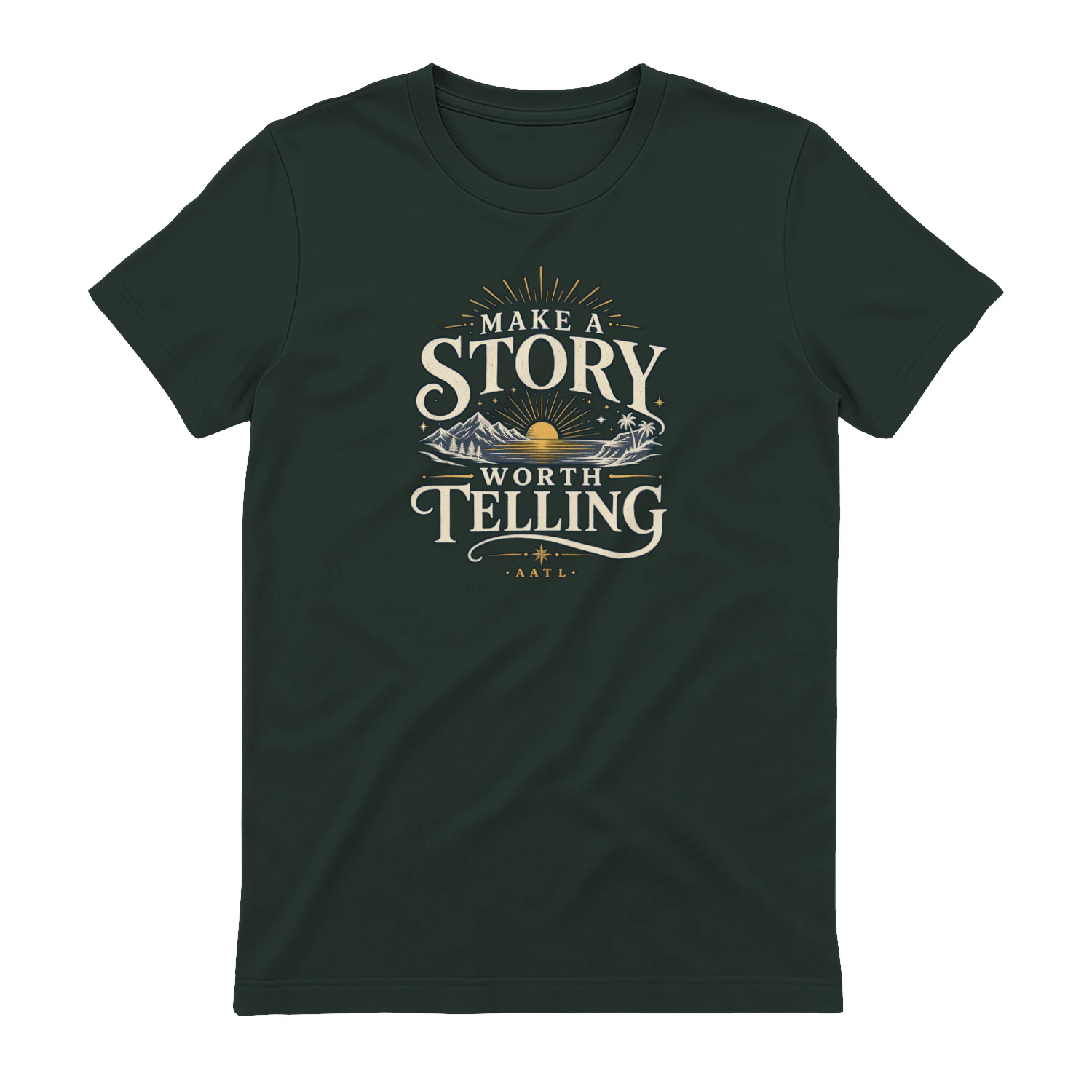
Make A Story Worth Telling
A scenic vintage-inspired design that encourages you to “Make A Story Worth Telling.” Mountains, water, sunset, and tropical details give it an adventurous feel that’s perfect for travelers, explorers, and anyone who wants a life filled with moments worth remembering.