
Video
Why Trick the Fox’s “Run Away” Feels Like a Different Gear for Ren’s Earlier Band
Melvin Maya’s reaction to Trick the Fox’s “Run Away” centers on a simple shift: the song feels heavier, more rock-forward, and newly shaped by drummer Tommy Frampton.
A familiar name, but the song lands in a new register
Melvin Maya’s reaction to Trick the Fox’s “Run Away” is built around a straightforward takeaway: this performance feels different from the Ren clips he has been watching, and that difference is what grabs him. He opens by situating the band in Ren’s history, describing Trick the Fox as the earlier band Ren played in before going solo. That context matters because it frames the video as part comparison, part discovery. Melvin is not approaching the track like a first-time listener with no reference point. He is hearing it against everything he has already seen from the same artist’s catalog.
The direct answer to why this reaction stands out is simple. Melvin thinks “Run Away” hits with a stronger rock feel than much of the other material he has encountered from Ren, and he says it may be his favorite Trick the Fox song so far. That response gives the video its shape. It is less about a precise technical breakdown than about the feeling that this performance opens another side of the band.
Why this performance hits differently
Melvin is careful to describe the sound in relative terms. He does not present the song as some radical break from Ren’s broader style. Instead, he hears it as more rock-oriented than some of the other material he knows, with a bit more weight in the arrangement. He even reaches for a comparison to Three Doors Down, using that reference to explain the song’s mood rather than to pin it down too rigidly.
That comparison tells you a lot about how he is listening. He is responding to texture, momentum, and atmosphere. The song feels familiar enough to be accessible, but it also has enough drive to separate itself from the more stripped-down or singular performances he associates with the clips he has seen before. Melvin’s reaction is strongest when he notices that shift in feel and treats it as the main event rather than an aside.
There is also a sense of surprise in the way he talks through the performance. He does not sound like someone checking off a playlist item. He sounds like someone who expected one thing from a known artist and found another shade of that same artist’s work. That is often what makes reaction videos worth watching: not just the song itself, but the moment a viewer realizes the material is doing something slightly different than expected.
Tommy Frampton changes the shape of the song
A big part of Melvin’s response centers on the mention of Tommy Frampton, the new drummer credited in the title and in the performance itself. Melvin is quick to connect the drummer’s presence to the overall feel of the track. He says Tommy seems to make a big difference in how the song plays, and he follows that thought all the way to a question: where did Tommy end up afterward?
That question is telling. It shows that Melvin is not only enjoying the performance in the moment; he is also reading it as a specific band configuration that mattered to the sound. In his view, the drums are not just a background layer. They are part of what gives the song its distinct energy.
He also notes that, in most of the Trick the Fox material he has seen so far, the setup appears to have been mostly Ren and the other guitarist, with Tommy’s addition making this performance feel like a change of pace. That is the key editorial point buried inside the reaction: a lineup shift can alter the whole listening experience, even when the song remains rooted in the same artist’s universe.
Melvin’s comparison says a lot about the feel
The Three Doors Down comparison is not random filler. It gives the video a useful shorthand for the way Melvin hears the track. He is signaling a certain kind of accessible rock sound—one that feels familiar, direct, and a little heavier than the more intimate or experimental material he has been watching from Ren’s later work.
That’s also why his praise lands clearly. He does not need elaborate language to explain why the song works for him. He points to the rockier tone, the stronger drumming, and the fact that it stands apart from the other Trick the Fox performances he has seen. By the time he calls it his favorite so far, he has already made the case through his listening.
Melvin also seems interested in the place this song occupies within the larger arc of what he has been reacting to. He suggests that the track may sit near the end of the Trick the Fox library he is exploring, and he wonders aloud if it came from the period just before Ren’s solo work took shape. That kind of speculation stays cautious—he is not stating a fact he cannot verify in the video—but it does show how reaction content can become a kind of informal archive in the viewer’s mind.
What viewers can take from this reaction
For viewers following Melvin’s run through Trick the Fox material, this video offers a useful checkpoint. It is not simply another reaction to another song. It marks a point where the music feels more band-driven and where the drums become a focal element rather than a supporting detail.
It also shows how Melvin watches with memory in mind. He is constantly comparing what he hears now with what he has already seen from Ren, The Big Push, and earlier clips from the same orbit. That makes his reaction feel cumulative instead of isolated. Each new song adds another piece to the picture.
In practical terms, the video answers a few questions for anyone curious about the performance:
• It sounds more rock-forward than some of the other material Melvin has reacted to.
• Tommy Frampton’s drumming leaves a clear impression on the overall feel.
• Melvin considers it one of the strongest Trick the Fox performances he has seen so far.
• The song seems to sit close to a transitional moment in the artist’s wider catalogue, at least from Melvin’s perspective.
That is enough to make the reaction feel worthwhile on its own terms. It is a short watch, but it captures a listener noticing the exact moment a band’s setup changes the emotional temperature of a song.
Watch the original video on YouTube ↗
All About The Life
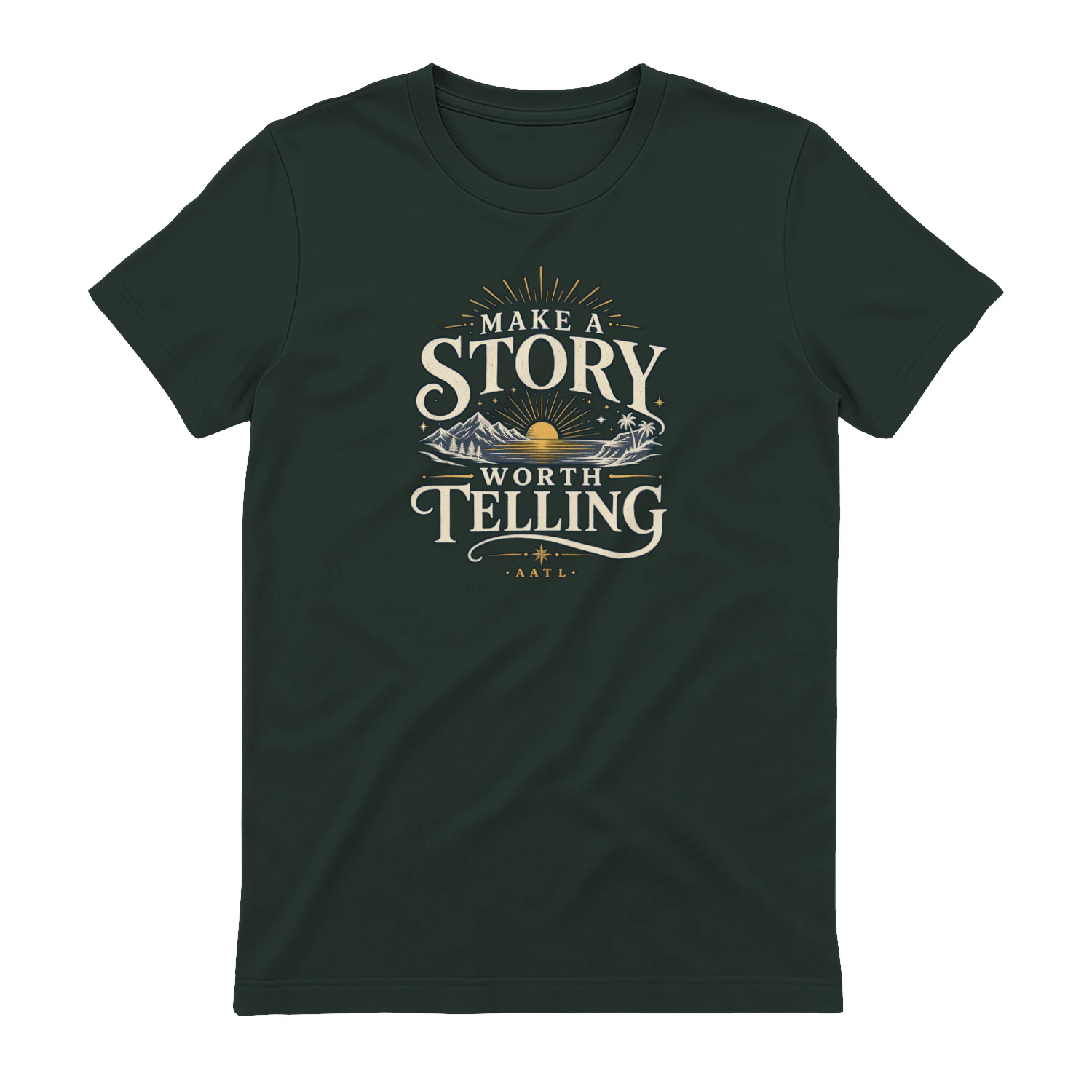
Make A Story Worth Telling
A scenic vintage-inspired design that encourages you to “Make A Story Worth Telling.” Mountains, water, sunset, and tropical details give it an adventurous feel that’s perfect for travelers, explorers, and anyone who wants a life filled with moments worth remembering.