
story
Allen’s Landing: Why Houston Began Along the Bayou
Houston’s origin story begins along the bayou, at a place that is easy to pass without realizing how much of the city’s history is tied to it.
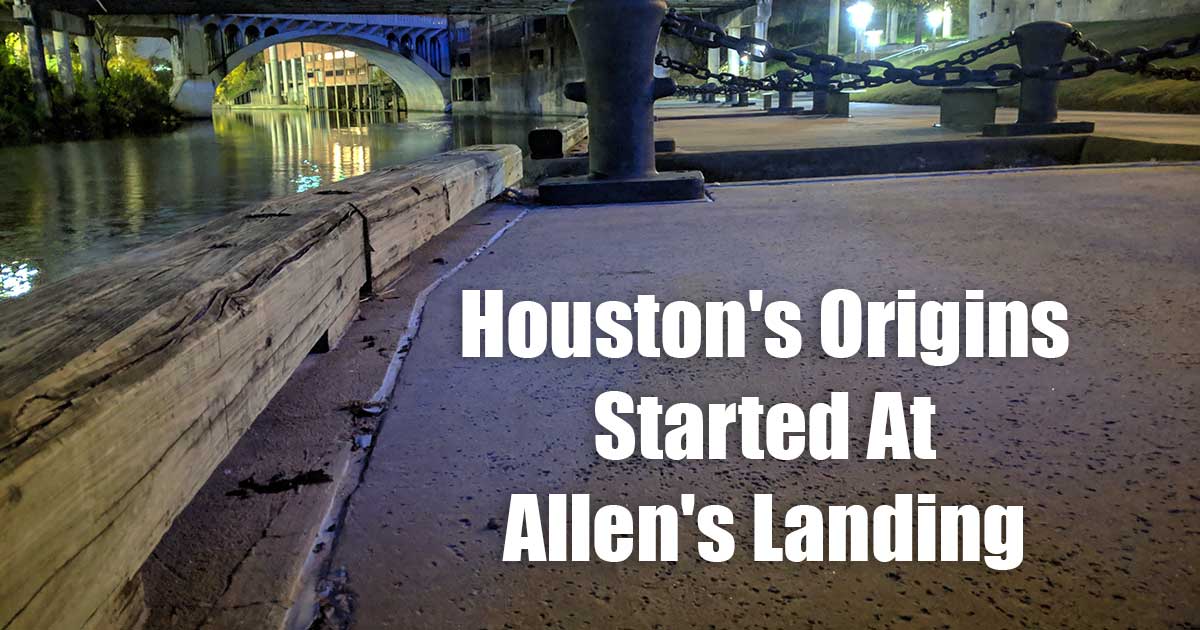
Houston’s origin story begins along the bayou, at a place that is easy to pass without realizing how much of the city’s history is tied to it. Allen’s Landing sits near the meeting of Buffalo Bayou and White Oak Bayou in downtown Houston. The modern skyline makes the scale of the original landing easy to underestimate.
This is a useful place to start understanding Houston because the geography still explains the choice. Before the city became a vast network of roads, neighborhoods and industries, the bayou offered a way to connect an inland settlement to trade. Looking at that waterway gives the founding story a physical setting rather than leaving it as a date on a marker.
Why the Allen brothers chose the bayou
Brothers Augustus C. Allen and John K. Allen founded Houston in 1836. Their new town took shape along Buffalo Bayou, close to White Oak Bayou. The location offered a natural turning basin and a landing at the head of navigation, giving the development a connection to the coast. The Texas State Historical Association’s Allen’s Landing entry explains that early transportation role.
That is the key to reading the site. The water was not a decorative feature beside an already established city. It helped make the proposed city commercially plausible. A landing meant a place where people and goods could arrive, change direction and connect with activity on shore.
Calling Allen’s Landing Houston’s birthplace is therefore more useful when it leads to a question: why here? The answer is visible in the relationship between the bayou, the bank and the surrounding land. The modern park commemorates that starting point, even though the working waterfront and the city around it have changed enormously.
From an early landing to a port city
The steamer Laura reached the landing on January 26, 1837. Houston formally established its port in June 1841. Later development of the ship channel shifted the scale and geography of maritime activity; the historical association distinguishes Allen’s Landing from the later turning basin farther east. Historical chronology.
Those dates describe stages of growth rather than a single event. Founding a town, receiving a steamer and formally establishing a port were related steps, but they were not the same occasion. Keeping them separate makes the story clearer and avoids compressing several years into one dramatic scene.
It also helps explain why the landing matters even though it is not the modern industrial port. A place can be central to a city’s development without continuing to perform its original job. Here, the earlier waterfront gives the much larger port story a starting point that can still be visited on foot.
Read the park as a place of memory
Allen’s Landing Memorial Park was dedicated in 1967. The Harris County historical marker record connects the commemorative site with the original landing and the city’s founders. Later public-space improvements have made the waterfront part of downtown’s pedestrian landscape.
There are two layers to notice: the history being remembered and the choices made to present it today. A path, marker or restored public space is a way of bringing attention back to a place whose original use has changed. The park is not an untouched nineteenth-century waterfront, and it does not need to be one to make the history understandable.
The county inventory notes that its Main Street marker is missing, so save the online text rather than relying on finding that marker in place. A useful visit can begin with that record, then a look toward the bayou and back at the surrounding streets and buildings. That comparison gives the founding story a sense of scale. The small physical footprint of the landing sits within a city that grew far beyond it.
Look beyond the marker
Buffalo Bayou Partnership’s downtown guide places Allen’s Landing within the trail connections between Buffalo Bayou Park and Buffalo Bayou East. It also identifies the nearby Sunset Coffee Building as the organization’s headquarters. The landing can therefore be one stop in a longer walk, rather than an isolated historical point.
For a short visit, let the waterfront be the focus. For a longer one, choose a direction and a turnaround point before adding more destinations. Downtown distances can look compact on a screen while still involving time, heat and crossings on foot.
If you bring a camera, consider framing the older waterfront setting together with the contemporary city. The contrast helps communicate why this small place is interesting. Leave room for people using the trail and move aside before stopping to review images or read a map.
Plan a downtown visit around current access
The Partnership currently lists paid parking near Allen’s Landing at the Bayou Lot, 901 Commerce Street, and advises checking surrounding street signs. Its downtown hours distinguish lighted areas from other areas, which close at dusk. Check the current visitor information for access and any changes before your walk.
Choose a comfortable time for the weather, carry water and allow enough time to return without rushing. If part of the waterfront is closed, follow the posted route rather than treating a historic destination as an exception to current conditions.
Allen’s Landing rewards attention more than a complicated itinerary. Read the dates, look at the water and consider the practical reason a city began here. The bayou turns an abstract founding story into a place you can understand through the landscape in front of you.

All About The Life
Make A Story Worth Telling
A scenic vintage-inspired design that encourages you to “Make A Story Worth Telling.” Mountains, water, sunset, and tropical details give it an adventurous feel that’s perfect for travelers, explorers, and anyone who wants a life filled with moments worth remembering.