
story
Madison Blue Spring: A Clear-Water Florida Park Day
Madison Blue Spring offers a very specific kind of Florida water day: a clear spring basin, a limestone setting and a connection to the Withlacoochee River.
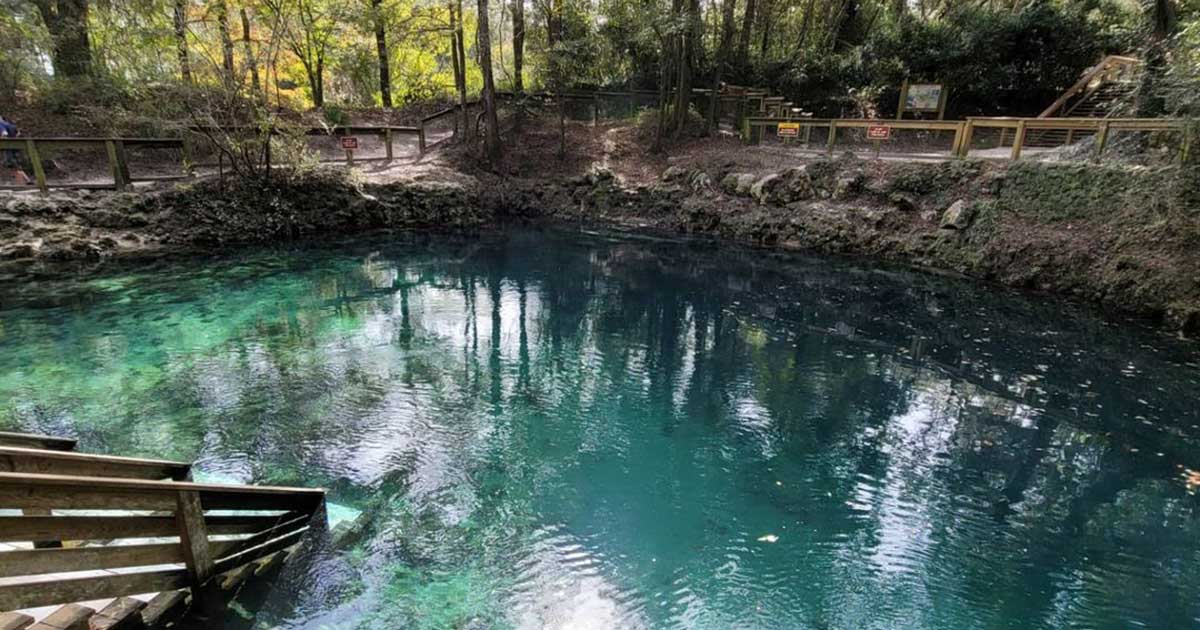
Madison Blue Spring offers a very specific kind of Florida water day: a clear spring basin, a limestone setting and a connection to the Withlacoochee River. The park is near Lee in north Florida. It is worth looking at as its own destination, rather than assuming every park with “Blue Spring” in the name offers the same experience.
The spring itself is the reason to come. Swimming and snorkeling put the water at the center of a visit, while a picnic can give the day a slower pace. The practical questions are whether the park has room when you arrive, what facilities you need and which water activity you actually intend to do.
Understand the spring and its surroundings
Florida State Parks describes Madison Blue as a first-magnitude spring with a basin about 82 feet wide and 25 feet deep. Its water flows into the Withlacoochee River. Those dimensions describe a natural feature, not a uniformly shallow pool with a predictable bottom.
The park’s geology page explains the limestone and underwater cave setting. That gives the place another layer of interest even if your visit stays entirely above water. The visible basin is part of a larger groundwater landscape.
It is useful to keep that in mind when making plans. Clear water lets you see more; it does not remove depth, currents or the need to respect boundaries. Enjoy the view without treating visibility as an invitation to go farther than your swimming ability or the park rules allow.
Arrive with a capacity backup
The park currently lists hours of 8 a.m. to sunset throughout the year. Florida State Parks warns that it can reach capacity, especially between 10 a.m. and 3 p.m. on weekends and holidays, and does not allow roadside waiting when entry is suspended. Check the park’s current notices close to your visit.
An early arrival can improve your options, but it does not reserve a place. If your group is arriving in several vehicles, discuss what you will do if not everyone can enter. A shared backup plan is more useful than having one car inside while the rest wait without a clear next step.
Keep the entrance fee and current payment instructions handy. Do not rely on an old price quoted in a travel post; use the park’s own page. If you are driving a large vehicle or towing, also check its current vehicle-access notice, because the turnaround space may affect whether the site fits your plans.
Choose one water activity and prepare for it
The park’s experiences and amenities page describes swimming and snorkeling in water around 72 degrees. It states that there are no lifeguards and prohibits jumping or diving from rocks. Cave and cavern diving requires appropriate certification; it is not an extension of a casual swim.
For a simple swimming visit, pack around that activity. A towel, dry clothing and drinking water are useful basics. Keep the things you need afterward protected from wet gear, and decide how the group will supervise children before anyone enters the water.
A person who wants to spend the day snorkeling may have a different plan from someone who wants a quick dip and a picnic. Agree on that beforehand so nobody feels pushed into a longer or more demanding water activity. Clear expectations make a small group outing much easier to manage.
Separate river paddling from spring access
The same amenities page distinguishes paddling on the Withlacoochee from entering the spring: vessels are not permitted in the spring or its run, and the park does not provide an in-park launch or rentals. Do not bring a kayak assuming the spring entrance doubles as a boat launch. Official activity guidance.
If paddling is the main purpose of your day, establish the legal launch, takeout and transportation plan separately. A river alongside a park is not enough information to plan a route. Confirm the arrangements with the relevant land manager or operator before loading equipment.
The distinction is helpful even for a swim-only visit. It keeps expectations centered on what the park actually offers instead of a list of activities that require different access points, skills or equipment.
Leave room for a simple park day
A picnic gives everyone a break from the water and keeps the visit from becoming a rush to do something continuously. Bring what you need for your meal and remove what you bring. Check the facility list before counting on changing rooms or other conveniences; the park’s current amenities guidance identifies temporary toilets rather than a full bathhouse.
Choose a plan that works if you spend less time swimming than expected. You might want a longer picnic, a shorter stay or a different stop afterward. The spring does not need a packed itinerary around it to be the reason for the trip.
If you are comparing natural swimming destinations, Blue Hole in Wimberley uses timed swim reservations, while Madison Blue’s capacity notices call for a different approach. The common thread is to settle access and expectations first, then leave enough room to enjoy the place at its own pace.

Travel With Melvin
Sail Away Distressed
A bold distressed Sail Away design inspired by the moment the ship pulls away and the vacation officially begins. With a simple hashtag-style look and a worn-in texture, it is made for cruisers who love open water, new ports, and that unbeatable feeling of setting sail.